Wyoming's energy economy runs on superloads. Wind farms, coal operations, and oil and gas infrastructure all depend on massive components that have to travel across the state's interstate corridors, mainly I-80 and I-25. Many shippers underestimate what it takes to move freight this large through Wyoming until permits get denied or a route collapses under a bridge weight restriction.
This guide breaks down what actually qualifies as a superload in Wyoming, how the permitting process works, what safety requirements apply, and how to find a heavy haul partner who won't leave you stranded at a port of entry.
Key Takeaways
- Wyoming superloads exceed 18 ft wide, 17 ft high, 120 ft long, or 160,000 lbs
- Permits require route research, engineering review, and coordination with WYDOT's Overweight Loads Office
- Overweight fines range from $25 to $1,000+ for loads over 20,000 lbs excess
- High winds and aging bridges routinely disrupt superload schedules on I-80 and I-25
- Experienced heavy haul partners reduce risk through route planning, permitting, and real-time tracking
What Is a Superload in Wyoming?
The Wyoming Highway Patrol's Overweight Loads Office draws a hard line. Once a load crosses certain thresholds, it's no longer a standard oversize/overweight permit. It becomes a superload, triggering additional engineering review and route analysis.
Wyoming's superload escalation thresholds:
- Width: more than 18 feet
- Height: more than 17 feet
- Combination length: more than 120 feet
- Gross weight: more than 160,000 lbs (80 tons)
Compare that to Wyoming's everyday legal limits: 8 feet 6 inches wide, 14 feet tall, and 80,000 lbs under standard Table II weight limits (though axle-spacing formulas can push that closer to 117,000 lbs). The gap between "legal load" and "superload" is stark: a truck you barely notice versus one that shuts down a highway.
The Load That Defines the Category
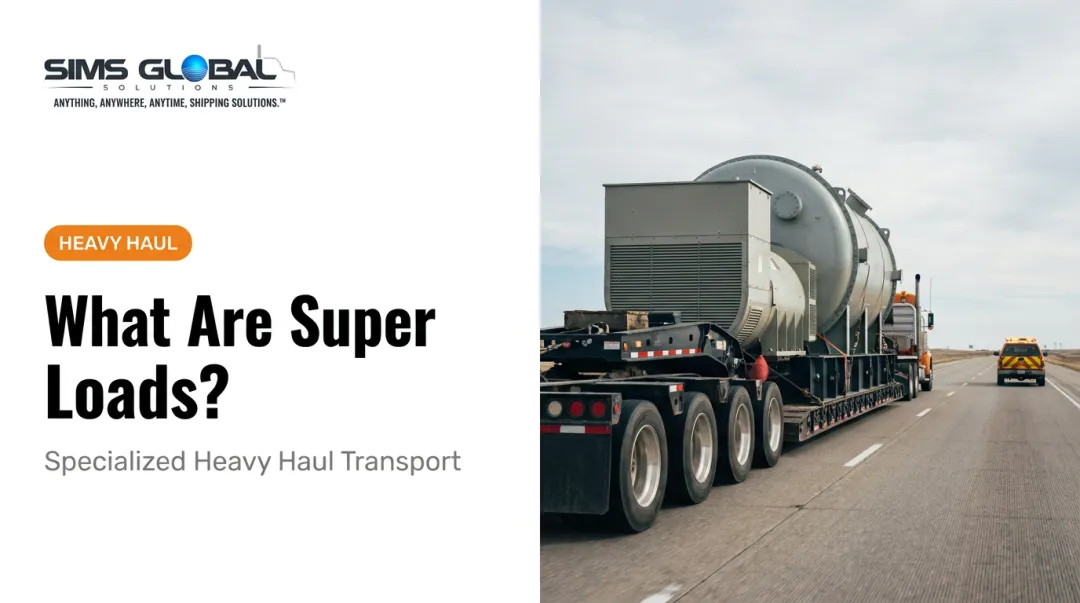
In 2024, a transformer transport moved between Laramie and Medicine Bow that puts these numbers into perspective. The loaded transporter weighed roughly 1.5 million pounds, stretched 385 feet long, measured 26 feet wide, and stood 17 feet 3 inches tall. According to Cowboy State Daily's coverage of the Aeolus substation project, the transformer itself weighed about 670,000 lbs, with the specialized transporter accounting for the rest.
Why Wyoming Sees So Many of These Moves
Wyoming sits at a crossroads. Wind farm buildout in the southeastern part of the state, coal operations around Gillette, and oil and gas infrastructure across the Powder River Basin all generate freight that exceeds standard limits. Rail yards in Laramie regularly transfer transformers onto multi-axle transporters for the final leg to substations like Aeolus near Medicine Bow.
Add in I-80 and I-25 as the primary east-west and north-south corridors connecting manufacturing hubs to energy sites, and superloads become routine rather than rare, a standard part of doing business in the state.
Wyoming Superload Permitting & Regulatory Requirements
Getting a superload legally on Wyoming roads starts with WYDOT's Overweight Loads Office, not a generic permit portal. The process demands detail most shippers don't expect.
The Application Process
Carriers submit a completed "Electronic Request to Move" form directly to the Overweight Loads Office. That submission has to include:
- Full load specifications — dimensions, weight, axle configuration
- Proposed routing — every highway segment the load will travel
- Clearance information — for loads over 16 feet high, carriers must state whether and how far the load can be lowered
- Structure details — bridge analysis requests need additional forms before WYDOT engineers can begin review
Loads over 18 feet wide or high generally need at least 24 hours' lead time for approval. Requests submitted after 4 p.m. typically wait until the next business day. If bridge analysis is required, that clock doesn't even start until the Overweight Loads Office has every form in hand.
How WYDOT Engineers Route Around Weak Infrastructure
Not every bridge on the map can handle 160,000+ lbs. WYDOT maintains an Inventory Rating for routine crossings and an Operating Rating for maximum occasional loads. When a superload's weight exceeds what a structure can safely absorb, engineers reroute the load, sometimes through on/off ramps or entirely different highways, rather than risk structural damage.
That's part of why a "permitted route" rarely matches the shortest route on a map.
What Permits Actually Cost
Fee structures follow the state's formulas rather than a flat rate:
| Permit Type | Base Fee | Additional Cost |
|---|---|---|
| Oversize | $25 | $0.03 per foot, per mile |
| Overweight | $40 minimum | $0.06 per excess ton-mile |
| Loads over 80 tons | Permittee pays | State-incurred route/structure analysis costs |
Beyond the permit fee itself, carriers typically absorb costs for escort vehicles, utility line adjustments (when overhead lines sit too low), and, in some cases, temporary road closures.
Fines for Skipping the Process
Wyoming's overweight fine schedule under current statute makes non-compliance expensive fast:
| Excess Weight | First-Offense Fine |
|---|---|
| 0–2,000 lb | $25 |
| 4,001–6,000 lb | $125 |
| 10,001–12,000 lb | $300 |
| 18,001–20,000 lb | $700 |
| Over 20,000 lb | $1,000 + $200 per additional 1,000 lb |
That last tier climbs quickly. A load 25,000 lbs over its permitted weight faces a fine of $2,000 or more.

Speed Limits and Lead Time
WYDOT's July 2025 transformer move between Laramie and Medicine Bow was restricted to 25-30 mph on open highway, dropping to 10 mph over bridges, according to WYDOT's official news release on the second transformer move. These conditions were specific to that permit rather than a blanket statewide rule, but they illustrate what shippers should expect: superload speeds get dictated by the permit itself, not by posted highway limits.
Given the lead time required for engineering review, route coordination, and escort scheduling, shippers should plan six to eight weeks ahead.
Escort, Safety & Travel Requirements for Superloads
Superloads don't travel alone. Wyoming's escort requirements kick in well before a load hits superload thresholds.
Escort vehicle requirements:
- Two-lane roads require two escorts for loads 14 feet wide or greater
- Interstates require a rear escort for loads 15 feet wide or greater
- Loads exceeding 17 feet high need a front escort equipped with a height-measuring device
Required safety equipment includes:
- "OVERSIZE LOAD" signage at least 60 inches wide by 10 inches high, with 8-inch black lettering
- Amber or red warning lights visible from 1,000 feet
- Red or fluorescent-orange flags, minimum 12 inches square, at corners and overhangs
Beyond meeting these escort and equipment requirements, superload transport often changes traffic patterns entirely. Superloads frequently occupy both lanes of a highway, and when that happens, law enforcement escorts manage traffic directly. Motorists should expect full stoppages, not just slow-downs, during transit windows.
Real-World Wyoming Superload Movements
Wyoming's superload traffic isn't theoretical. Recent moves show exactly what these projects look like on the ground.
The Medicine Bow transformer corridor stands out. Multiple moves in 2024 and 2025 delivered transformers from the Laramie railyard to PacifiCorp's Aeolus substation as part of the broader Gateway energy-transmission project. One 2025 move alone involved a transporter carrying 1.48 million pounds, stretching 371 feet long and 25 feet 10 inches wide.
Gillette's coal operations generate a different kind of complexity, requiring precise route coordination:
- A January 2026 move carried construction equipment from Evanston to Gillette via WYO 372, WYO 28, and US 191, bypassing the Green River Tunnels entirely
- Another move transported two roughly 200,000-lb, 27-foot-wide coal-hauler buckets through Opal, Farson, South Pass, and Casper before connecting to I-25
These aren't single-highway trips. They're multi-day journeys stitched together across state and federal routes, each segment individually cleared for structure and clearance limits.
Challenges of Hauling Superloads Through Wyoming
Wyoming consistently ranks among the toughest states for moving oversized freight. Superload carriers face three compounding risks that shrink already-tight scheduling windows.
Wind Shuts Down Routes Without Warning
Wyoming's wind creates a year-round scheduling variable for superload carriers. A March 2026 windstorm produced 109 mph gusts, causing 32 blowover crashes statewide, including 12 on I-80 alone, according to Oil City News's coverage of the high-wind event.
Winter winds in the 30-40 mph range with 50-60 mph gusts are common enough that carriers build wind holds directly into superload schedules.
Bridges Don't Always Cooperate
WYDOT inspects nearly 1,960 state structures on a rolling basis, and load ratings define what each bridge can handle before requiring engineering review. A route that worked for one shipment may not clear for a heavier or wider load next time. Aging infrastructure means route planners often build detours into the plan from the start.
Terrain and Traffic Add Another Layer
Combined with weather and infrastructure limits, Wyoming's terrain and traffic patterns push it toward the top of lists ranking difficult states for trucking. That combination is exactly why experienced heavy-haul carriers, rather than general freight brokers, make or break a superload timeline.
How to Choose the Right Heavy Haul Partner for Wyoming Superloads
None of the permitting, routing, or escort coordination above happens by accident. Superload success depends on who's managing the details before the truck ever leaves the yard.
Look for a partner who can demonstrate:
- Permitting and route engineering experience: understanding bridge ratings and clearance restrictions before submitting a request, not after
- Equipment access: lowboys, multi-axle trailers, and specialized transporters capable of handling extreme weight and dimensions
- Escort coordination: established relationships with pilot car services and law enforcement scheduling
- Real-time visibility: GPS tracking that lets shippers monitor a multi-day, multi-route move as it happens
Sims Global Solutions' Heavy Haul Trucking division combines company-owned trucking assets with the SimsTrak Transportation Management System to plan and execute complex superload moves nationwide, including in demanding states like Wyoming. That asset-based model matters.
"Company-owned equipment opens up opportunities that a traditional freight brokerage would have a difficult time tapping into." — Billy, Corporate Sales Manager, Heavy Haul Trucking
Sims also draws on a network of more than 150,000 carriers, giving shippers access to specialized equipment even when in-house assets are already committed. That combination serves industries where superload freight originates most often, including aerospace and defense, energy, and material handling.

For moves that stretch across multiple days and highway segments, 24/7 support and real-time tracking make the difference between a smooth delivery and a stalled shipment.
If you're planning a Wyoming superload project, get ahead of the permitting timeline. Contact Sims Global Solutions for a heavy haul consultation before you lock in a move date.
Frequently Asked Questions
What is a superload in Wyoming?
A superload is any load exceeding 18 feet wide, 17 feet high, 120 feet long, or 160,000 lbs gross weight. These loads require review by WYDOT's Overweight Loads Office beyond standard oversize/overweight permitting.
How much does it cost to permit a superload in Wyoming?
Oversize permits run $25 plus $0.03 per foot-mile, while overweight permits start at a $40 minimum plus $0.06 per excess ton-mile. Total costs vary based on load size, route length, and any required escorts or structure analysis.
How fast can a superload travel on Wyoming highways?
Wyoming sets speed limits per permit rather than following a fixed statewide rule. WYDOT restricted recent transformer moves to 25-30 mph on open highway, dropping to 10 mph over bridges to protect infrastructure.
Do superloads require police escorts in Wyoming?
Yes, most superloads require law enforcement and/or pilot car escorts. Requirements scale with width and height, starting with rear escorts at 15 feet wide and front escorts with height-measuring devices above 17 feet.
How long does it take to get a superload permit approved in Wyoming?
Timelines depend on route complexity and bridge review requirements. Loads over 18 feet wide or high need at least 24 hours' lead time, while complex routes can take weeks, so partnering with a heavy haul specialist like Sims Global Solutions helps keep approvals on track.
What happens if a load exceeds Wyoming's weight limits without a permit?
Fines start at $25 for minor overages and scale sharply, reaching $1,000 plus $200 for every additional 1,000 lbs once excess weight exceeds 20,000 lbs. Unpermitted moves also risk a full stop at a port of entry.