Results vary wildly based on how the load is classified, how well it's measured, and whether the carrier has actual heavy haul experience. One wrong measurement or a missed permit can mean a roadside shutdown, a fine, or a multi-day delay that blows the whole schedule.
This guide breaks down what qualifies as oversize, the step-by-step shipping process, what to prepare before you move, the mistakes that trip up even experienced shippers, and how to pick a partner who can actually handle it.
Key Takeaways
- Oversize thresholds: 8.5 ft wide, 13.5+ ft tall, 53+ ft long, 80,000+ lbs
- No national permit — each state, county, and municipality requires sign-off
- Pilot cars, signage, and securement become mandatory past certain size limits
- Permit turnaround ranges from minutes to several weeks for superheavy loads
- Choosing a carrier on price alone, without heavy haul experience, is costly
What Qualifies as an Oversize Load?
Classification is the first domino. It determines your permits, your equipment, your escort requirements, and even which roads you're allowed to use. Get this wrong and everything downstream falls apart.
Legal Thresholds That Trigger Oversize Status
Here's where the numbers actually come from:
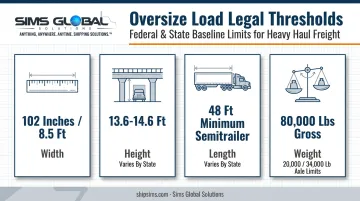
- Width: Federal law sets the National Network limit at 102 inches (8.5 feet). Wider loads generally need a state permit, and the exact trigger depends on the specific road, according to FHWA's federal size regulations report.
- Height: There's no federal height ceiling. States set their own limits, typically 13.6 to 14.6 feet, according to FHWA. Oklahoma caps at 14 feet, the exact limit a load exceeded before striking six overpasses in a December 2025 incident.
- Length: Federal rules require states to allow at least a 48-foot semitrailer on the National Network, though many states permit longer configurations (Texas allows up to 59 feet in certain combinations).
- Weight: The Interstate baseline is 80,000 lbs gross, with axle limits of 20,000 lbs (single) and 34,000 lbs (tandem). The Federal Bridge Formula matters just as much as the gross number: a load under 80,000 lbs can still be illegal if the axle spacing doesn't comply.
Oversize vs. Wide Load vs. Overweight vs. Nondivisible
These terms get used interchangeably, but they're not the same thing:
- Oversize refers to any dimension — width, height, or length — that exceeds legal limits.
- Wide load is really just the overwidth subset of oversize freight.
- Overweight means the gross, axle, or Bridge Formula weight limit is exceeded.
- Nondivisible is the term that actually decides permit eligibility: a load qualifies if breaking it apart would damage its use or value or take more than eight work-hours to disassemble.
Inconvenience alone doesn't make a load nondivisible. That distinction matters more than shippers often realize when applying for permits.
Common Cargo That Requires Oversize Permits
Typical examples include:
- Construction machinery (excavators, cranes, dozers)
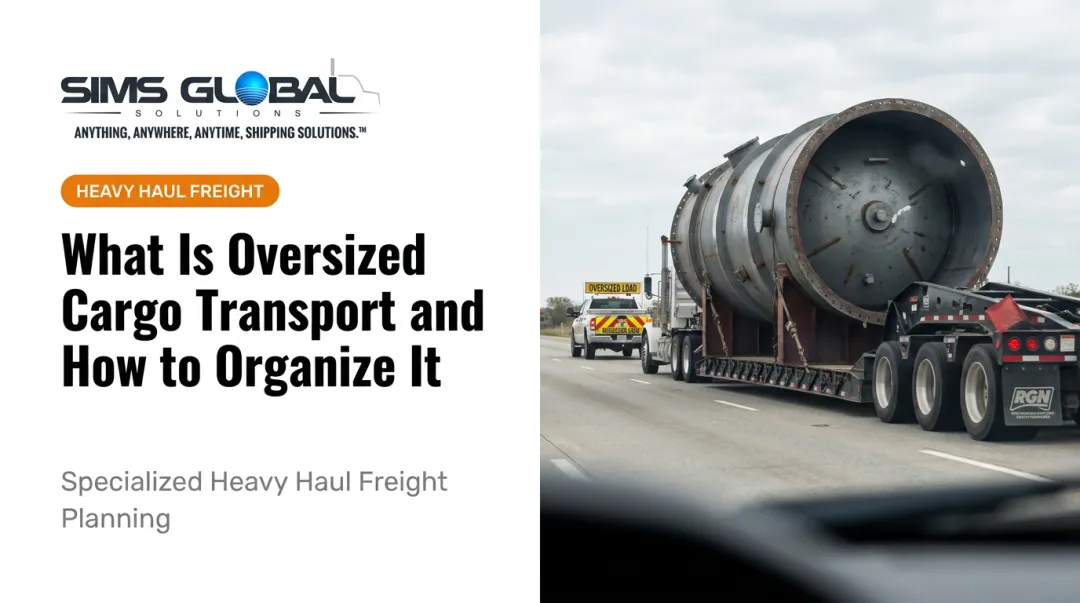
- Industrial tanks and pressure vessels
- Wind turbine blades and nacelles
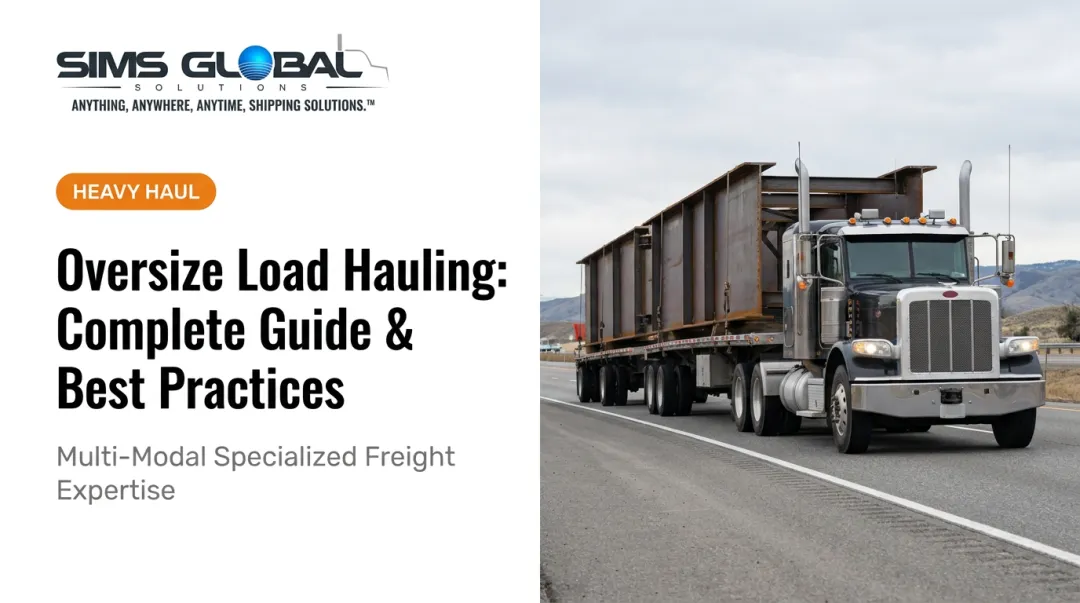
- Structural steel beams and girders
- Modular buildings and mobile homes
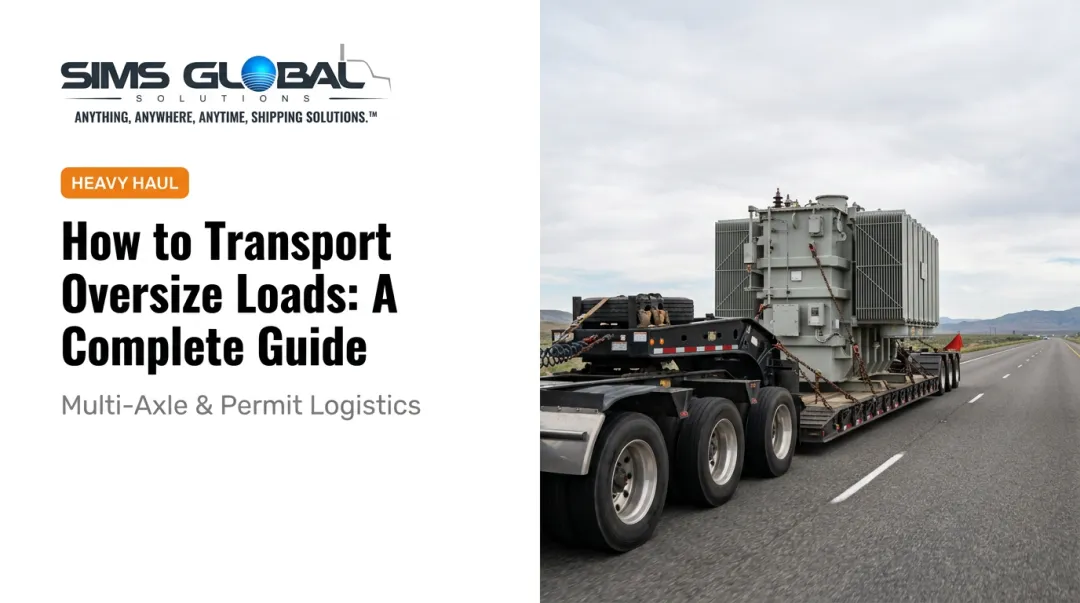
- Data center infrastructure and transformers
How to Ship an Oversize Load: Step-by-Step Process
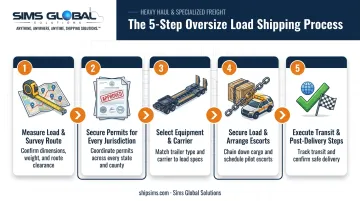
Step 1: Measure the Load and Survey the Route
Get exact dimensions — width, height, length, and total weight, including trailer, rigging, and packaging. States like Texas require precise figures before they'll even process a permit application.
Then survey the route. You're checking for:
- Low bridges and overhead utility lines
- Tight turns and narrow lanes
- Weight-restricted roads and bridges
For very large or complex loads, a physical pre-run or drone survey is the only way to confirm clearances that a map can't show you.
Step 2: Secure Permits for Every Jurisdiction on the Route
Every state, county, and municipality your route crosses may require its own permit. There's no single national authorization that covers you everywhere.
Submit complete applications with dimensions, route, and travel dates. Permits are date-specific and generally nonrefundable once issued, so accuracy matters before you file, not after.
Lead times vary enormously:
- Illinois often issues permits immediately through its online system
- Colorado processes single-trip permits in roughly 12 minutes for standard loads
- California requests at least 14 business days for annual permits and 30 days for variance permits involving structural review, based on FHWA's best practices report on OS/OW permitting
Build your schedule around the slowest jurisdiction on your route, not the fastest.
Step 3: Select the Right Equipment and Carrier
Match the trailer to the load profile:
- Flatbed for standard oversize freight
- Step deck for taller cargo needing extra vertical clearance
- Lowboy or RGN (removable gooseneck) for heavy equipment loading from the ground
- Extendable trailers for unusually long loads
Verify the carrier holds proper operating authority, adequate insurance, and demonstrated heavy haul experience — not just a truck that's technically big enough. If the load or route calls for specialized assets like SPMTs or bucket trucks, confirm access before you commit to a timeline.
Step 4: Secure the Load and Arrange Required Escorts
Load securement is federal law, governed by FMCSA cargo securement rules. Equipment and machinery over 10,000 lbs generally require at least four tiedowns, with total working-load limits equal to at least half the cargo's weight.
Escort requirements vary by state and by size:
- Virginia requires escorts on Interstate routes for loads over 14 feet wide
- North Carolina triggers escorts above 12 feet wide
- Texas requires one escort for loads 16–18 feet wide, with more added beyond that
Required markings (oversize load banners, flags, and amber warning lights) must match the specific state's rules, since there's no single federal standard.
Step 5: Execute Transit and Complete Post-Delivery Steps
Follow the permit-specified travel window. Many states restrict oversize movement to daylight hours and block travel entirely on certain holidays.
Keep constant communication between the driver, escorts, and dispatch so you can reroute fast if conditions change. After delivery, inspect the load, finalize documentation, and confirm the permit's closeout requirements before calling the move complete.
What You Need Before Shipping an Oversize Load
Staying on schedule and on budget takes more than permits. Solid preparation across equipment, insurance, and documentation makes the difference.
Equipment and Carrier Capabilities
Confirm the trailer's actual weight ratings and axle configuration match your load's real profile. A trailer rated for 80,000 lbs isn't automatically legal for your specific axle spacing.
Working with a provider that combines owned heavy haul equipment with a large vetted carrier network gives you more flexibility for hard-to-place loads. Sims Global Solutions, for example, pairs its own heavy haul fleet with a network of 35,000+ truckload carriers, which matters when your first-choice trailer isn't available on your timeline.
Insurance and Compliance Readiness
Verify cargo insurance covers the full value of high-value or specialized freight before the move begins. Confirm the operator also holds the credentials and safety training required for oversize/heavy haul operation.
Documentation and Planning Inputs
Gather blueprints, spec sheets, load layout, and center-of-gravity data before you start equipment planning. Also confirm site access constraints:
- Crane availability at pickup and delivery
- Dock clearance and gate width
- Ground conditions for staging heavy equipment
Common Mistakes to Avoid When Shipping Oversize Loads
Even experienced shippers fall into these traps:
- Underestimating permit lead times — superheavy loads can require weeks of engineering review, not days
- Choosing a carrier on price alone without verifying heavy haul experience, which creates compliance gaps that cost more than the initial savings
- Submitting inaccurate measurements, which leads to denied or mismatched permits and forces a costly re-file
- Ignoring post-delivery logistics, assuming a standard dock or site can handle oversize equipment without additional crane or clearance planning
Beyond these planning errors, bridge clearance deserves special attention. The NTSB has flagged oversize load bridge strikes as a recurring, preventable cause of structural damage and injuries. A permit route doesn't guarantee clearance: a 2013 I-5 case involved a permitted load that still failed to clear a bridge.
Choosing the Right Shipping Partner for Oversize Freight
Each model offers a different trade-off:
- Asset-based carriers give you direct control over equipment, but their reach is limited to what they own
- Brokers and 3PLs offer wider carrier access and permit coordination expertise, but they don't own the trucks moving your freight
The strongest option combines both models. Owned heavy haul equipment covers your standard moves, while a large carrier network fills gaps for unusual or hard-to-place loads.
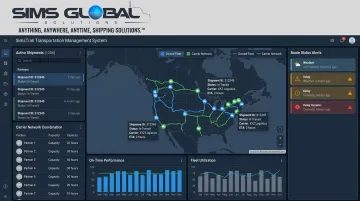
Sims Global Solutions operates this way — pairing its own heavy haul fleet with a network of 150,000+ carriers and its proprietary SimsTrak TMS for tracking and coordination across North America.
For shippers juggling multiple jurisdictions on a single move, having one point of contact instead of five separate carrier conversations makes a real difference in how smoothly the load actually moves.
Frequently Asked Questions
What is considered an oversized shipment?
A shipment is oversized when it exceeds standard legal limits for width, height, length, or weight, generally around 8.5 feet wide, 13.5–14.5 feet tall, or 80,000 lbs gross. Exact thresholds vary by state and road.
How wide does a load have to be to be oversized?
Federal law sets 102 inches (8.5 feet) as the width states must allow on the National Network without a permit. Anything wider typically triggers oversize permit requirements, though specific roads may have tighter limits.
Who is responsible for getting oversize permits: the shipper or the carrier?
Carriers typically handle permitting since they hold the operating authority and route knowledge required. Shippers should still confirm this upfront and provide accurate load dimensions to avoid delays.
How much does it cost to ship an oversize load?
Cost depends on permit fees, escort requirements, equipment type, and route complexity. Prices vary by state and load tier, so get a route-specific quote rather than relying on general estimates.
Do all oversize loads require a pilot car escort?
No. Escort requirements depend on state-specific width and height thresholds — some states require escorts starting at 12 feet wide, others at 14 or 16 feet. Not every oversize load triggers one.
How far in advance should I book an oversize shipment?
Book as early as possible. Routine loads may clear permits in minutes, but superheavy or structurally complex shipments can take several weeks of engineering review before approval.