Introduction
Florida's ports, jobsites, and manufacturing plants depend on rigging, crane, and hydraulic equipment every day. Statewide construction spending has grown steadily, and marine terminals from Jacksonville to Miami handle increasingly heavy cargo each year.
Choosing the right sling, shackle, or crane is only half the job. Many companies struggle just as much with getting that equipment to the site safely and legally.
This guide breaks down what rigging actually is and the equipment you'll encounter on Florida jobsites. You'll also learn how cranes and hydraulics work together, how to select the right gear, and what it takes to transport this equipment across the state without a permit violation or a stalled shipment.
Key Takeaways
- Rigging includes slings, shackles, hooks, wire rope, and chains, each suited to specific load types.
- Load weight, sling angle, environment, and safety factor rating determine the right rigging choice.
- OSHA standards 1926.251, Subpart CC, and 1910.184 govern rigging and crane use based on the work setting.
- Florida's Department of Transportation (FDOT) requires permits, and sometimes escorts, for oversized rigging and crane transport.
- Sims Global Solutions pairs owned heavy haul trucking assets with a 150,000+ carrier network for these moves.
What Is Rigging in Lifting and Why Is It Used?
Rigging is the system of ropes, chains, slings, and hardware used to lift, position, and secure heavy loads during a move. It's the connective tissue between a crane's hook and the load itself.
The purpose is straightforward: distribute the load's weight evenly, keep the equipment from shifting or dropping, and protect the workers standing anywhere near the lift. Get rigging wrong, and you risk damaged cargo, injured workers, or worse.
Florida leans on rigging heavily across a few key industries:
- Construction, where cranes hoist structural steel and precast panels
- Marine and port operations, moving containers and heavy machinery
- Aerospace and defense manufacturing, handling sensitive, high-value components
- Material handling, where warehouses and distribution centers lift palletized freight
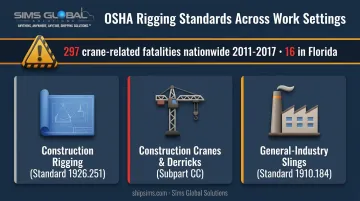
The stakes are real. The Bureau of Labor Statistics documented 297 crane-related fatalities nationwide between 2011 and 2017, averaging 42 deaths per year. Florida recorded 16 of those fatalities, and more than half of all incidents involved workers struck by an object or piece of equipment.
That's why rigging safety isn't optional. OSHA governs the practice through separate standards depending on your work setting:
| Work Setting | OSHA Standard |
|---|---|
| Construction rigging | 1926.251 |
| Construction cranes & derricks | Subpart CC |
| General-industry slings | 1910.184 |
Certified, properly rated equipment and trained personnel are the baseline requirement for every lift, not an optional extra.
Common Types of Rigging Equipment
Rigging gear isn't one-size-fits-all. The right choice depends on the load, the environment, and how the piece connects to the crane.
Primary sling types:
- Wire rope slings – Strong and abrasion-resistant, ideal for heavy, rough-surfaced loads
- Chain slings – Durable and adjustable, well-suited to high-heat or abrasive job sites
- Synthetic slings – Lightweight and non-marring, best for delicate or finished surfaces
Beyond slings, rigging setups rely on connecting hardware:
- Shackles – Join slings to load points; screw-pin models suit frequent use, while bolt-nut-cotter versions handle more permanent connections
- Hooks – Attach the sling to the crane; Grade 80 or Grade 100 alloy hooks are required for overhead lifting
- Spreader bars – Distribute weight across multiple attachment points, with standard models rated from 2 tons up to 130 tons for larger jobs
A few more essentials round out the setup:
- Eye bolts for fixed lifting points
- Turnbuckles for tensioning and adjustment
- Swivel hoist rings that pivot to align with the sling's actual pull direction
Every piece carries a working load limit, and that number changes with hitch type, angle, and condition. Load charts exist for a reason. Skip them, and you're guessing.
Florida's climate adds another wrinkle. Humidity and salt air accelerate corrosion on standard steel components, so many riggers working near coastal or marine environments opt for stainless steel or galvanized wire rope rated specifically for that exposure.
Cranes and Hydraulics: How They Work Together in Heavy Lifting
Rigging equipment connects the load, but cranes and their hydraulic systems handle the actual lifting. Understanding how they work together helps you match the right crane to the job.
Types of Cranes Used in Florida Industries
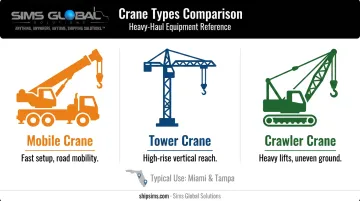
| Crane Type | Best For |
|---|---|
| Mobile crane | Fast setup and site-to-site mobility on road projects |
| Tower crane | High-rise construction requiring vertical reach |
| Crawler crane | Heavy industrial lifts on soft or uneven ground |
Mobile cranes dominate Florida's road and commercial construction work because they move easily between sites. Tower cranes show up on high-rise builds in Miami, Orlando, and Tampa, where vertical reach matters more than mobility. Crawler cranes handle the heaviest industrial and infrastructure lifts, especially where ground conditions rule out outriggers.
The Role of Hydraulic Systems in Crane and Rigging Operations
Hydraulic pumps generate pressure. Hydraulic cylinders convert that pressure into controlled, precise movement. Together, they power the boom, extend the outriggers, and manage load control during a lift.
Outriggers rely on telescoping beams and hydraulic jacks to stabilize the crane before any load leaves the ground. Skip proper outrigger deployment, and you've compromised the entire lift before it starts.
Hydraulic failures show up repeatedly in crane incident reports, and OSHA investigations have repeatedly flagged leaking hydraulic hoses as a contributing factor in crane collapses and equipment fires. Regular inspection of hoses, cylinders, and pumps catches small leaks before they turn into expensive failures.
How to Choose the Right Rigging for Lifting
Picking rigging gear requires careful calculation. Skipping a single step can compromise the entire lift.
- Calculate total load weight – Include dynamic forces from movement and acceleration, not just the static weight sitting on the ground.
- Check the sling angle – As the horizontal angle decreases, stress on the rigging increases sharply. OSHA guidance advises against horizontal angles below 30 degrees unless the manufacturer specifically approves it.
- Account for environmental factors – Heat, chemical exposure, moisture, and Florida's constant outdoor humidity all influence which material holds up best.
- Confirm the safety factor rating – Wire rope typically uses a 5:1 design factor, but manufacturer-rated hardware can run 4:1, 5:1, or 6:1 depending on the product. Always check the marked rating, not a generic assumption.
- Consult load charts or a certified rigger – Manufacturer specs exist for a reason. When in doubt, get a second opinion before the lift, not after.
One more step matters just as much as the calculation: inspect the gear. Wear, corrosion, and hidden damage don't announce themselves. A quick pre-use inspection catches problems before they become failures on the job site.
Transporting Rigging, Crane, and Hydraulic Equipment Across Florida
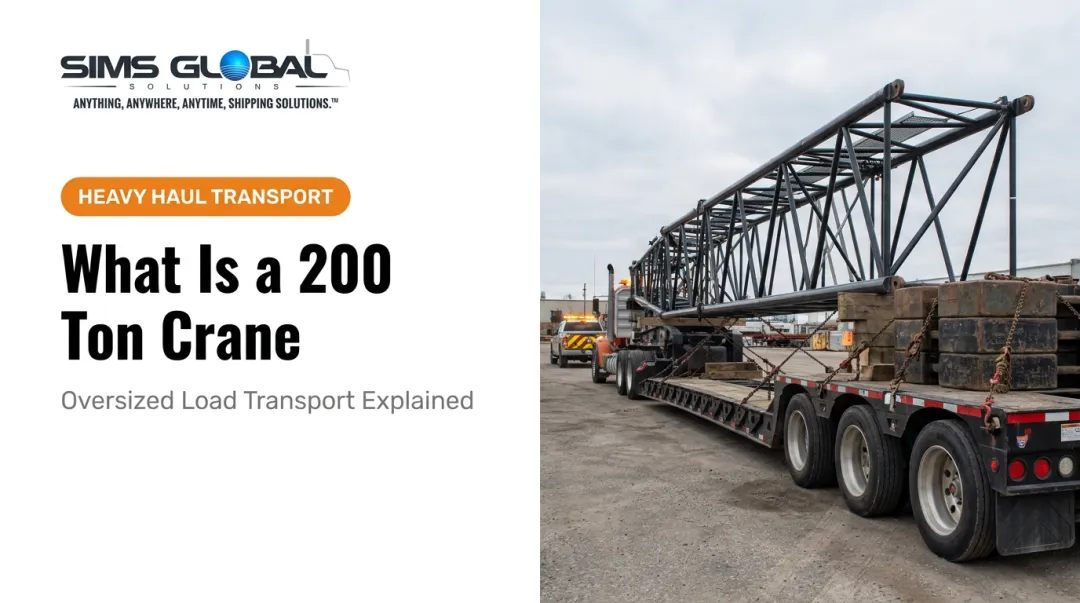
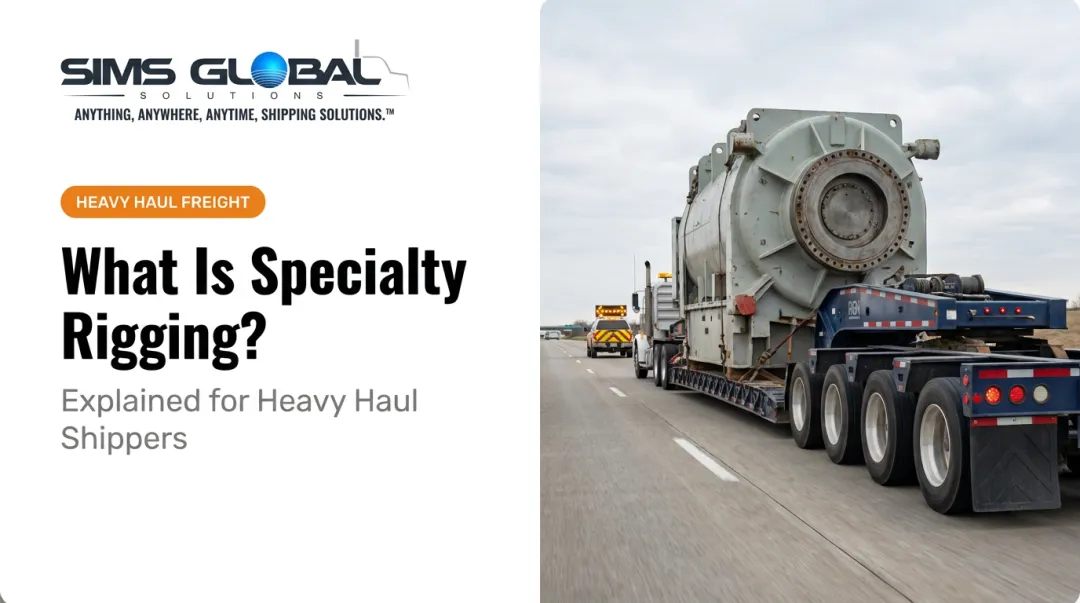
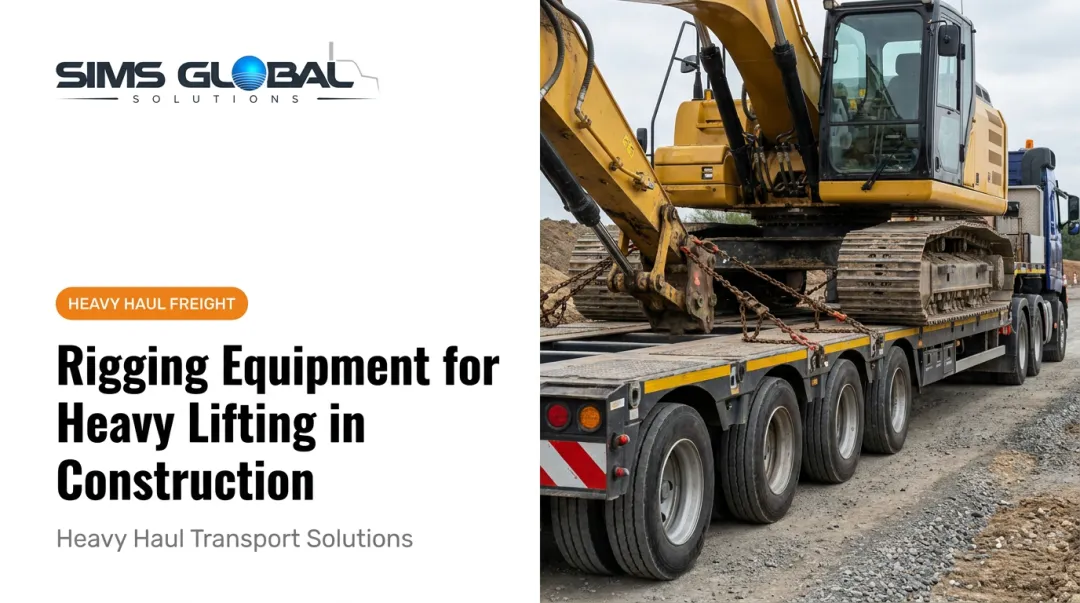
Selecting the right rigging is one challenge. Getting an oversized crane, spreader bar, or hydraulic component from the manufacturer to the job site is an entirely different logistics problem.
Florida's Department of Transportation sets legal size limits before a permit even enters the picture. Standard legal limits include:
- 102 inches wide (96 inches on roads with narrower travel lanes)
- 13 feet 6 inches in height
- 40 feet for single-unit vehicles, 48 feet for semitrailers
Exceed those numbers, and you're into oversize/overweight permit territory, which brings route restrictions, travel time windows, and sometimes pilot car escorts into play. Width beyond 12 feet typically triggers one escort vehicle, and anything over 14 feet wide requires two.
This is where a lot of shippers get stuck. Permitting rules vary by load configuration, and a missed requirement can delay a shipment or trigger a fine on the road.
Sims Global Solutions runs a dedicated heavy haul division built for exactly this kind of move. The company operates its own trucking assets alongside a network of more than 150,000 carriers, giving it flexibility that a broker-only provider often can't match.
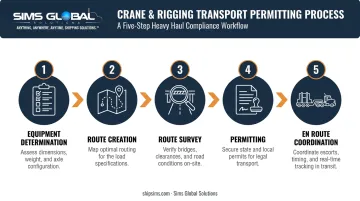
Its proprietary SimsTrak platform adds real-time visibility from pickup through delivery. An in-house permitting team follows a structured five-step process:
- Equipment determination
- Route creation
- Route survey
- Permitting
- En route coordination
Sims also brings experience across aerospace, defense, and material handling, industries where rigging and crane equipment moves are routine, not occasional. For companies moving specialized equipment across Florida, that combination of owned assets and permitting know-how removes a lot of the guesswork.
Frequently Asked Questions
What are the common types of rigging?
The primary categories include wire rope slings, chain slings, synthetic slings, shackles, hooks, and spreader bars. Each is suited to different load types, environments, and connection points.
What is rigging in lifting and why is it used?
Rigging is the system of ropes, chains, slings, and hardware that connects a load to lifting equipment. It distributes weight evenly and keeps loads secure during a lift, protecting both equipment and workers.
How do I choose the right rigging for lifting?
Start with total load weight, including dynamic forces, then factor in sling angle, environmental conditions, and the component's rated safety factor. Always check manufacturer load charts before finalizing your selection.
What size crane do I need for my project?
Crane size depends on load weight, lift height, lift radius, and site conditions like ground stability. The manufacturer's load chart for the specific crane model gives the definitive answer.
Do I need special permits to transport heavy rigging or crane equipment in Florida?
Yes. Loads exceeding Florida's legal size or weight limits require an oversize/overweight permit from FDOT, and wider or longer loads may also need pilot car escorts. Sims Global Solutions coordinates permitting and escort logistics as part of the move.
How much does it cost to transport crane or hydraulic equipment in Florida?
Cost depends on distance, equipment dimensions and weight, permit requirements, and route complexity. Because every load is different, requesting a custom quote from Sims Global Solutions is the most accurate way to budget for the move.