Introduction
A single-axle trailer can only carry so much weight before it breaks federal and state road laws, which cap single-axle loads at 20,000 pounds. Push past those limits, and shippers face fines, delayed shipments, or worse, damage to the bridges and roads that oversized freight travels on.
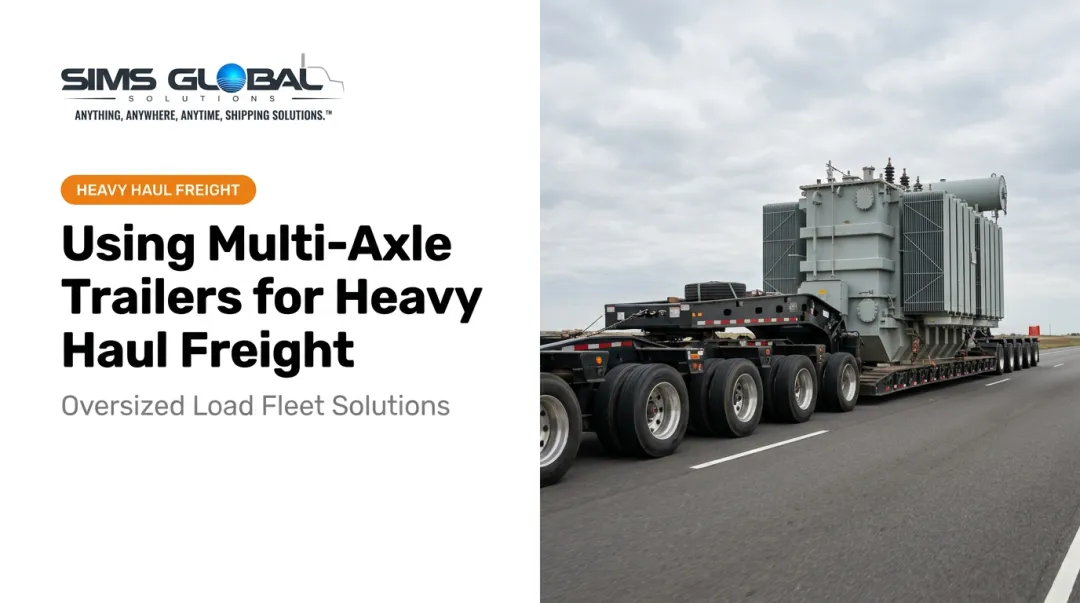
Multi-axle trailers solve this problem. By spreading cargo weight across three or more axle lines instead of one, these trailers keep heavy shipments legal, stable, and safe for transport.
This guide breaks down what multi-axle trailers are, the axle types and configurations behind them, and why they matter for heavy-haul freight. It also covers which industries depend on them and how to choose the right trailer and hauling partner for your next oversized shipment.
Key Takeaways
- Multi-axle trailers spread cargo across three or more axles to meet weight limits.
- Lowboy, RGN, modular, and extendable trailers each handle different cargo types.
- Carriers use the FHWA Bridge Formula to calculate axle count and spacing.
- Construction, energy, aerospace, defense, and manufacturing rely on these trailers most.
- An asset-based heavy-haul provider ensures the right trailer, permits, and routing.
What Is a Multi-Axle Trailer?
An axle is the central shaft connecting a set of wheels. In heavy-haul freight, "multi-axle" refers to any trailer built with three or more axles, designed specifically to carry loads that a standard single-axle setup can't legally or safely handle.
Single-axle trailers pivot on one support point and work fine for everyday, lighter freight. Multi-axle trailers spread weight across multiple axle groups, which means higher capacity and better stability under heavy loads.
Think of it like building foundations. A small shed needs a modest concrete pad. A skyscraper needs a much larger, reinforced foundation to support its weight. Heavier cargo works the same way: more weight means more axles are needed to support it safely.
How Multi-Axle Trailers Differ From Standard Semi-Trailers
A standard semi-trailer used for everyday freight typically runs on two or three axles and stays under normal weight thresholds. Multi-axle heavy-haul trailers are purpose-built differently:
- Reinforced frames designed to carry concentrated, uneven loads
- Deck heights engineered for tall or irregularly shaped equipment
- Axle groups that can be added, removed, or repositioned depending on the shipment
The term "multi-axle" also describes certain trucks and buses, but this guide focuses specifically on trailers used in commercial heavy-haul freight, where weight compliance and infrastructure protection carry the highest stakes.
Types of Axles and Multi-Axle Trailer Configurations
Before choosing a trailer, it helps to understand the axle types that make heavy-haul transport possible.
The Four Core Axle Types
- Steer axle – Controls the direction of the truck or trailer combination.
- Drive axle – Powers the wheels and moves the vehicle forward.
- Tag axle – Adds weight capacity without powering the wheels; sits behind the drive axle.
- Pusher/dead axle – A non-powered axle positioned ahead of the drive axle; it can often be lifted when the trailer runs empty to reduce tire wear.
Common Multi-Axle Trailer Configurations
Different cargo calls for different trailer setups. The most common heavy-haul configurations include:
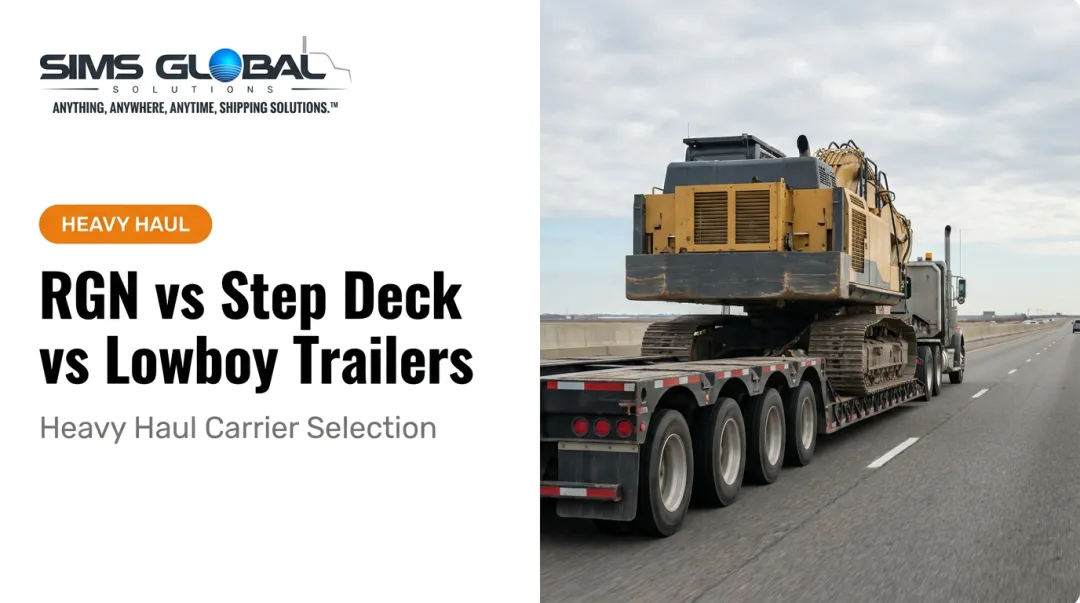
- Lowboy/lowbed trailers – Feature a low deck height, ideal for hauling tall equipment like excavators without exceeding legal height limits.
- RGN (removable gooseneck) trailers – The gooseneck detaches, allowing equipment to be driven directly onto the deck instead of craned, which speeds up loading and unloading.
- Modular/perimeter trailers – Use adjustable axle lines arranged around the load's perimeter, built for extreme weight and irregular dimensions.
- Extendable flatbeds – Stretch to accommodate long industrial components like beams or pipe sections.

Axle spacing matters just as much as axle count. Wider spacing between axles generally supports more weight under federal formulas, which is why carriers can't simply add axles anywhere on a trailer and expect the math to work out.
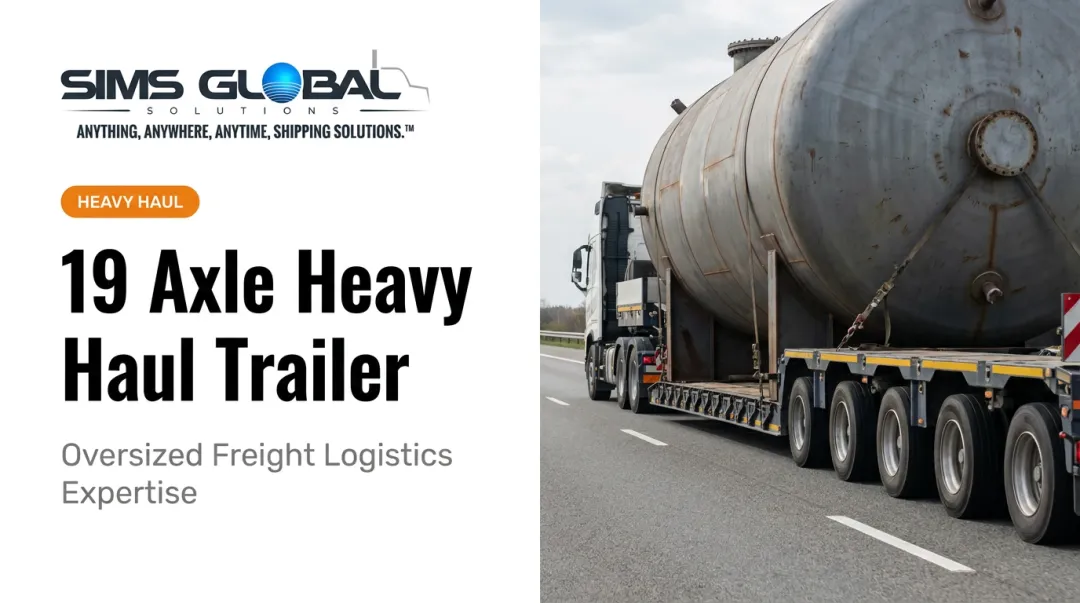
At the extreme end of the spectrum, XL Specialized Trailers documents a 13-axle heavy-haul combination rated at 170,000 pounds, built specifically to transport wind-turbine nacelles. It combines a jeep, a mechanical-gooseneck main trailer, and a booster into one hauling system.
The right configuration always depends on cargo weight, dimensions, and job-site access. That's why load planning by Sims Global Solutions' heavy-haul team happens before equipment is ever selected.
Why Multi-Axle Trailers Are Essential for Heavy-Haul Freight
Weight Distribution and Legal Compliance
Every added axle spreads cargo load further, keeping any single axle from exceeding legal limits. This protects the trailer's structural integrity and the roads and bridges it travels over.
Federal rules set clear thresholds. According to FHWA's Bridge Formula guidance, a single axle is capped at 20,000 pounds and a tandem axle group at 34,000 pounds. Gross weight on the Interstate System tops out at 80,000 pounds, unless the Bridge Formula calculation produces a lower allowable figure.
The formula itself, known as Formula B, calculates maximum allowable weight (W) based on the distance between outer axles (L) and the number of axles in the group (N):
W = 500[(LN/(N-1)) + 12N + 36]
Carriers use this formula to determine the minimum axle count and spacing required for a given shipment weight. Add more axles or space them farther apart, and the allowable weight generally increases.
Stability, Safety, and Long-Term Savings
More wheels on the road doesn't just satisfy weight formulas. It also delivers:
- Improves braking performance under heavy loads
- Sharpens turning control on tight routes
- Balances load for top-heavy or unevenly distributed cargo
These stability gains don't replace regulatory oversight, though. States enforce axle weight limits directly and require permits for loads exceeding standard limits. For nondivisible loads, meaning cargo that can't reasonably be broken down without excessive cost or damage, states can issue permits that exceed normal federal weight rules entirely.
The economics add up too. Fewer trips, reduced tire and suspension wear, and a lower risk of fines or infrastructure damage all translate into real savings for shippers moving oversized equipment on a regular basis. Sims Global Solutions runs its own RGN, lowboy, and multi-axle trailer fleet to keep heavy-haul freight compliant, on schedule, and cost-efficient.
Industries and Cargo That Rely on Multi-Axle Trailers
Multi-axle trailers show up wherever equipment outgrows standard freight limits. Key industries include:
- Construction and mining – Excavators, bulldozers, and other heavy machinery
- Energy infrastructure – Power transformers and wind-turbine components like nacelles
- Aerospace and defense – Mission-critical, oversized components requiring precise handling
- Data centers – Cooling systems, generators, and modular enclosures
- Heavy manufacturing – Industrial equipment too large for conventional flatbeds

Data center construction alone has surged in recent years. Cargo like HVAC systems, generators, and equipment enclosures destined for these projects often exceeds standard freight dimensions and weight, making multi-axle trailers essential for these shipments.
Sims Global Solutions' Heavy Haul Trucking division serves a similarly broad range of customers, from Fortune 100 manufacturers to specialized sectors like aerospace, defense, and material handling. Whatever the industry, the underlying challenge stays the same: moving equipment that's too heavy, too tall, or too wide for a standard trailer, without risking compliance issues or damage along the route.
How to Choose the Right Multi-Axle Trailer and Heavy-Haul Partner
Booking the right equipment starts well before the trailer shows up. Shippers should evaluate:
- Total shipment weight and dimensions – Determines the minimum axle count and spacing needed.
- Route restrictions – Bridges, tunnels, and turning radius can all limit which paths are viable.
- Required permits – Oversize and overweight loads typically need state-issued permits, sometimes with escort requirements.
- Carrier equipment availability – Not every provider has the right trailer configuration on hand when you need it.
Why an Asset-Based Partner Makes the Difference
Working with an asset-based provider means matching cargo specs to the correct axle configuration isn't guesswork. It also means one team handles permits, escorts, and routing rather than juggling multiple vendors.
Sims Global Solutions' Heavy Haul Trucking team combines its own fleet of heavy-haul assets with the SimsTrak Transportation Management System and an extensive carrier network. That combination helps identify the right multi-axle trailer solution for oversized freight across industries like aerospace, defense, and material handling, where getting the equipment match wrong isn't an option.
Frequently Asked Questions
What is meant by multi-axle?
Multi-axle refers to any vehicle or trailer built with three or more axles. The extra axles distribute weight across more support points, increasing total load capacity while staying within road weight limits.
What is the difference between single axle and multi-axle?
Single-axle trailers pivot on one support point and carry lighter loads within standard weight limits. Multi-axle trailers spread weight across several axle groups, allowing for much higher capacity and better stability.
What is a multi-axle trailer?
A multi-axle trailer is a heavy-haul trailer engineered with multiple axle lines to safely transport oversized or overweight cargo. It's built to comply with federal and state road weight laws while protecting infrastructure.
What are the four types of axles?
The four core types are steer axles (control direction) and drive axles (power the wheels). Tag axles add capacity without powering, while pusher/dead axles are non-powered and often liftable when the trailer runs empty.
How many axles do heavy-haul trailers typically have?
It varies by cargo weight. Standard heavy-haul setups often use three axles, while specialized trailers built for extreme loads, like wind-turbine nacelle transport, can use 13 or more axles across the full hauling combination.
Do I need special permits to ship freight on a multi-axle trailer?
Yes. Oversized or overweight loads typically require state-issued permits and sometimes escort vehicles. Experienced partners like Sims Global Solutions manage this process on behalf of shippers, start to finish.