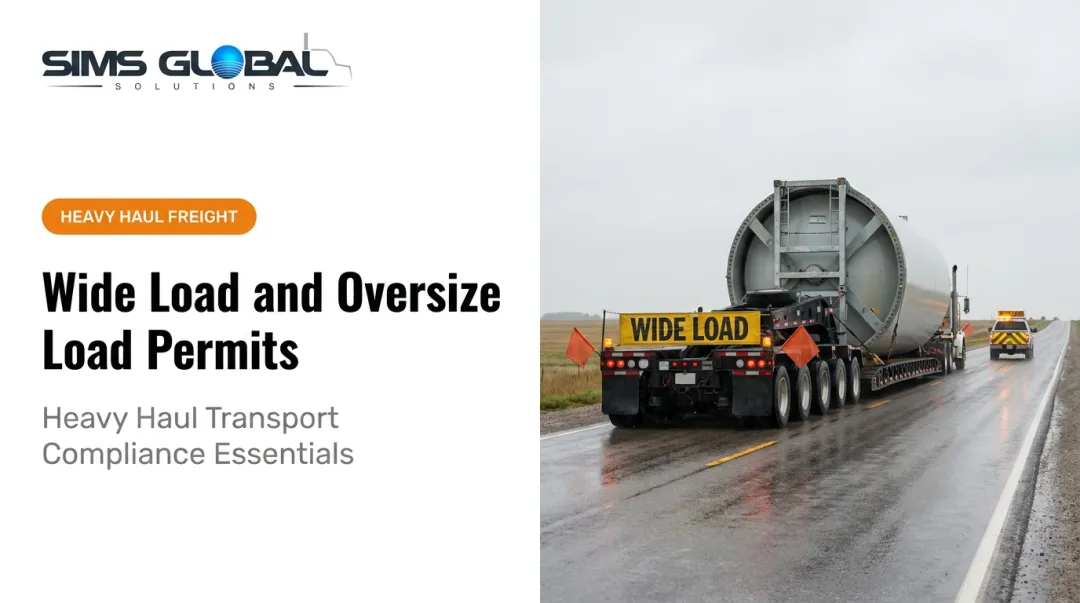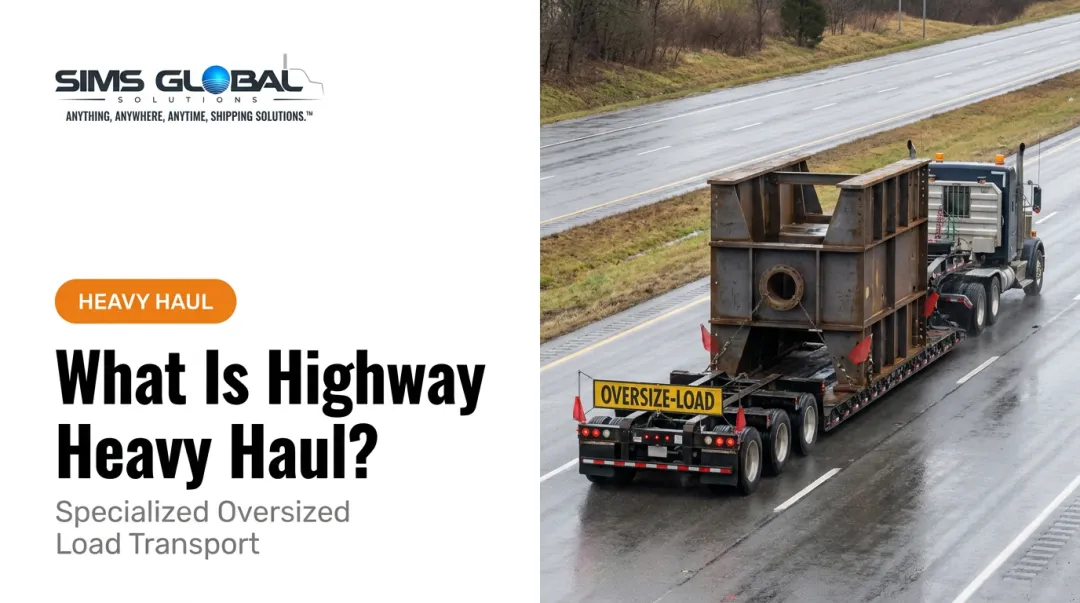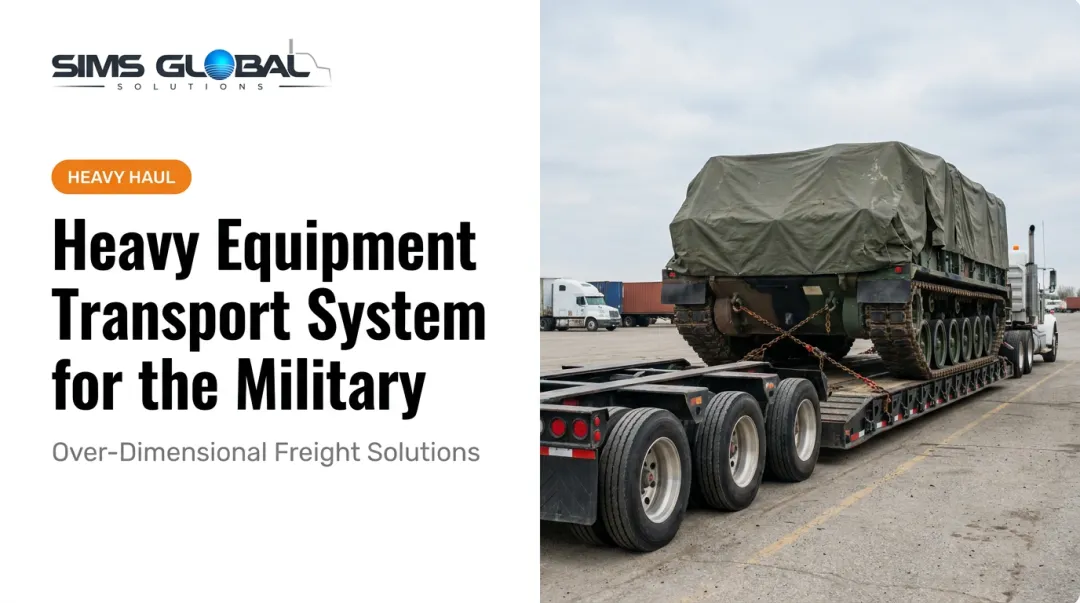
None of these loads fit on a standard flatbed. None of them can move with a regular commercial driver's license and a same-day dispatch. This is where standard trucking hits a wall, and heavy haul logistics takes over.
Heavy haul logistics is the specialized planning, equipment, and permitting required to move freight that exceeds normal legal weight and size limits. It's not just a bigger truck. It's route surveys, state-by-state permits, escort vehicles, and engineering oversight working together so an oversized load can legally and safely get from point A to point B.
This guide breaks down what heavy haul logistics actually involves, how the process works from quote to delivery, and what separates a capable provider from one that will leave you stuck at a permit desk.
Key Takeaways
- Heavy haul freight exceeds standard weight or dimension limits, requiring specialized trailers, permits, and route planning
- Route surveys, state permitting, equipment matching, and pilot car escorts complete the process
- Construction, energy, aerospace, and material handling industries depend on heavy haul logistics
- Providers with owned equipment and a broad carrier network reduce cost, risk, and capacity gaps
What Is Heavy Haul Logistics?
Heavy haul logistics is the specialized transportation and coordination of freight that exceeds standard legal weight and/or dimension limits. It requires more than a truck and a driver willing to take the job.
The "logistics" part matters here, and it covers:
- Permitting across every state a load will cross
- Route surveys to confirm bridges, turns, and roads can handle the load
- Escort coordination for pilot cars where required
- Engineering oversight for axle weight distribution and trailer selection
Common heavy haul cargo includes:
- Construction equipment (excavators, cranes, dozers)
- Industrial machinery and transformers
- Wind turbine components (blades, nacelles, tower sections)
- Aerospace structures
- Oil & gas equipment and modular process units
Weight and Dimension Thresholds
Federal interstate limits set the baseline: standard trucks are capped at 80,000 lb gross vehicle weight, 20,000 lb on a single axle, and 34,000 lb on a tandem axle, according to FHWA's compilation of state truck size and weight laws. Cross any of those, and you're in permit territory.
Dimension limits vary by state: California requires a single-trip permit for anything wider than 8 ft 6 in, taller than 14 ft, or over 80,000 lb, per Caltrans' transportation permits program. Washington applies similar width and height triggers but adds its own length rules by vehicle configuration.
There's no single national "heavy haul" cutoff; each state sets its own thresholds, which is exactly why route-by-route permitting matters so much.
Heavy Haul vs. General Oversize/Overweight (OS/OW) Freight
The terms overlap, but they're not identical.
- Overweight refers to loads exceeding gross or axle weight limits
- Oversize refers to loads exceeding width, height, or length limits
- Heavy haul is the industry term for the specialized market handling both, though it leans toward weight-driven complexity
A wind blade might be oversize without being overweight, while a steel coil often works the opposite way: overweight without being oversize. Many heavy haul shipments are both at once.
How Heavy Haul Logistics Works: The End-to-End Process
Moving an oversized load involves a coordinated sequence of steps, and skipping any one of them creates risk.
1. Route survey. Before a load moves, the carrier checks bridge clearances, turn radii, road weight limits, and construction detours along the route. FHWA's route planning guidance recommends documenting it turn by turn to catch restrictions early.
2. State-by-state permitting. Every state the load crosses requires its own permit, each with different documentation and lead times. A load can't move until every state signs off, making permit lead time the biggest scheduling constraint.
3. Equipment selection. The load's exact dimensions and axle weights determine the trailer. Common configurations include:
- RGN (removable gooseneck) trailers for ground-level loading of heavy or tracked equipment
- Lowboys/double-drops for tall machinery needing the lowest possible deck height
- Step-decks for extra vertical clearance on a standard flatbed footprint
- Multi-axle configurations to spread weight across more axle groups
4. Pilot cars and escorts. Depending on the state and load dimensions, front and/or rear escort vehicles guide the load through tight turns, narrow lanes, or low clearances.
5. Loading, securing, and rigging. Heavy, unbalanced, or irregularly shaped freight needs specific tie-down and weight-distribution planning to keep the load stable and within axle limits during transit.
6. Tracking and communication. Modern TMS platforms give shippers visibility into where a load is and whether it's on schedule. Sims Global Solutions runs its heavy haul shipments through SimsTrak, its proprietary TMS, giving shippers ongoing status updates rather than waiting on a phone call from dispatch.

Industries That Rely on Heavy Haul Logistics
Heavy haul isn't a niche corner of freight. It's a recurring need across several major sectors:
- Construction: Cranes, excavators, and large machinery moving between job sites
- Energy: Wind turbine components, oil & gas equipment, and transformers
- Aerospace & defense: Custom rigging for structural components and specialized units
- Material handling: Industrial equipment too large for standard trailers
- Agriculture and manufacturing: Oversized production equipment and machinery
Wind energy shows just how demanding this can get. FreightWaves reported that a project on Oahu required moving wind turbine blades as long as 240 feet, with route and permit planning starting up to a year ahead of the actual move. That's the kind of lead time heavy haul work often demands when dimensions get extreme.
Sims Global Solutions supports this full range of freight, from Fortune 100 manufacturers to specialized sectors like aerospace, defense, and material handling. Its heavy haul solutions are built around the specific equipment and route challenges each shipment presents.
Heavy Haul vs. Standard Freight: Key Differences
Standard freight and heavy haul freight aren't priced, scheduled, or insured the same way.
| Factor | Standard Freight | Heavy Haul |
|---|---|---|
| Cost drivers | Linehaul rate, fuel, distance | Linehaul plus permits, escorts, specialized trailers |
| Lead time | Often same-day or next-day | Days to weeks for route surveys and permit approval |
| Risk & liability | Standard cargo insurance | Higher-value cargo demanding tighter safety protocols and coverage |
The biggest gap is planning time. A standard truckload can be booked and moving within hours. A heavy haul shipment needs its route validated and its permits approved first, which is why last-minute heavy haul requests are often the hardest ones to fill.
How to Choose the Right Heavy Haul Logistics Partner
Not every carrier or broker can handle an oversized load well. Here's what actually separates a capable partner from a risky one:
- Proven heavy haul experience with comparable cargo weight, dimensions, and states
- In-house permitting expertise rather than a scramble every time a load crosses a new state line
- Access to the right trailer types matched to your specific cargo, not a generic flatbed forced to fit
Beyond these baseline capabilities, the bigger advantage comes from flexibility: a provider with owned trucking assets can commit capacity directly, while one with a broad carrier network can still find capacity when the market tightens and owned equipment is tied up elsewhere. Having both gives shippers options a single-mode operation can't offer.
Sims Global Solutions combines its own heavy haul fleet, including RGN, lowboy, and multi-axle equipment, with a network of over 150,000 vetted carriers. Paired with SimsTrak's real-time tracking, that combination gives shippers cost-effective options and visibility that a traditional broker working without owned assets simply can't match.

Frequently Asked Questions
What is heavy haul logistics?
Heavy haul logistics is the transport and coordination of freight exceeding standard legal weight or dimension limits. It involves specialized trailers, state permits, and detailed route planning beyond what standard trucking requires.
What qualifies as a heavy haul load?
Loads exceeding federal weight thresholds, such as 80,000 lb gross vehicle weight, or state dimension limits like 8 ft 6 in wide or 14 ft tall, typically qualify. Examples include cranes, transformers, and wind turbine components.
How much does heavy haul shipping cost?
Pricing depends on weight, permits, escorts, equipment type, and route complexity, so it's calculated per shipment rather than a flat rate. Request a quote from Sims Global Solutions for figures specific to your load and route.
What permits are required for heavy haul trucking?
Permits vary by state and typically depend on the load's weight, width, and height. A multi-state route usually requires a separate permit from each state crossed.
What is the difference between heavy haul and oversized freight?
Heavy haul generally emphasizes weight-driven complexity, while oversized freight can also involve width or height. In practice, the terms overlap since many loads exceed both weight and dimension limits.
What equipment is used in heavy haul transport?
Common trailer types include RGNs, lowboys, step-decks, double-drops, and multi-axle configurations. The right choice depends on the load's exact weight, height, and shape.