Introduction
Shipping freight without filling an entire trailer sounds simple — until you're comparing 10 different carriers, each with different service centers, terminal networks, and pricing structures across hundreds of lanes.
LTL (less-than-truckload) freight gives businesses of all sizes access to shared trailer space, paying only for what they use. That makes it essential for retail, manufacturing, healthcare, and industrial supply chains nationwide. According to SJ Consulting's 2025 report, the US LTL market generated $52.8 billion in revenue in 2024 — a number that reflects how much of US commerce depends on shared freight capacity.
The challenge: picking the wrong carrier costs more than just a bad rate quote. Damaged freight, missed delivery windows, and unexpected accessorial fees eat into margins on every shipment.
This guide breaks down the top 10 LTL freight shipping companies in the US — what each carrier does well, where they fall short, and which selection criteria actually matter when you're matching a carrier to specific lanes and freight types.
TL;DR
- LTL shipping consolidates multiple shippers' freight into a single trailer — each shipper pays only for the space they use
- The best carrier depends on your lanes, freight type, and service requirements — no single carrier wins everywhere
- FedEx Freight leads by revenue; Old Dominion leads on reliability and claims performance
- Regional carriers like Southeastern and Averitt often outperform nationals on southern lanes
- Choose carriers based on coverage, on-time rates, claims ratio, accessorial transparency, and tech integration
- A 3PL with direct API connections to top LTL carriers lets shippers compare rates across carriers in one place
What is LTL Freight Shipping?
LTL shipping moves freight that doesn't fill a full trailer. Your shipment consolidates with other shippers' goods and travels through a hub-and-spoke terminal network — picking up and dropping off freight at multiple stops along the way.
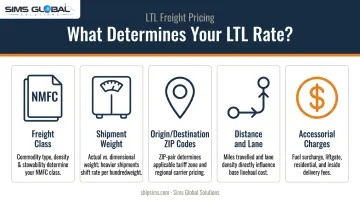
Typical LTL shipments range from 100 to 10,000 lbs, though some carriers accept up to 20,000 lbs depending on their tariff rules. Pricing is based on:
- Freight class (NMFC classification, driven by density, stowability, and liability)
- Weight of the shipment
- Origin and destination ZIP codes
- Distance and lane between terminals
- Accessorial charges for services like liftgate, residential delivery, or inside pickup
The US LTL market includes large nationals with coast-to-coast reach and regional specialists that dominate specific lanes. The 10 carriers below cover both — giving you a clear starting point depending on where you ship and what your freight requires.
Top 10 LTL Freight Shipping Companies in the US
These carriers were selected based on network coverage, on-time delivery performance, claims handling, freight type versatility, and overall market presence in the US. No single carrier is the right fit for every lane or freight type — the rankings below highlight where each excels so you can match the carrier to your shipment.
1. FedEx Freight
FedEx Freight is the largest LTL carrier in the US by revenue, generating $8.9 billion in 2024 according to Transport Topics. Headquartered in Memphis, TN, it operates approximately 355 service centers across the country and completed its spin-off from FedEx Corporation on June 1, 2026, becoming an independent publicly traded company.
Two service tiers — Priority and Economy — let shippers choose between speed and cost. Coverage spans all 50 states, Canada, Mexico, Puerto Rico, and the US Virgin Islands, making it the default choice for shippers who need a single carrier across every domestic lane.
| Attribute | Details |
|---|---|
| Service Coverage | All 50 states, Canada, Mexico, Puerto Rico, US Virgin Islands |
| Best For | Shippers needing coast-to-coast coverage and integrated parcel + freight solutions |
| Key Differentiator | Dual Priority/Economy tiers; strong EDI/API integration; now an independent public company |
2. Old Dominion Freight Line (ODFL)
Founded in 1934 and headquartered in Thomasville, NC, Old Dominion is the industry's reliability benchmark. It has been named the #1 National LTL Carrier for Quality by Mastio & Company for 16 consecutive years as of 2025. In Q1 2024, ODFL reported a 99% on-time delivery rate and a 0.1% claims ratio — carrier-reported figures, but ones no competitor publicly matches.
ODFL's focus on minimizing terminal touches keeps damage rates among the lowest in the industry. For high-value or damage-prone freight, the premium pricing is worth it.
| Attribute | Details |
|---|---|
| Service Coverage | Continental US plus Canada, Mexico, Puerto Rico (Alaska/Hawaii with limitations) |
| Best For | High-value, time-sensitive, or damage-prone freight — medical devices, industrial equipment |
| Key Differentiator | Industry-leading claims ratio and on-time performance |
3. XPO Logistics
XPO operates 301 North American LTL service centers and covers over 99% of US ZIP codes, ranking 4th in Transport Topics' 2025 LTL list with $4.9 billion in 2024 revenue. Its LTL network traces back largely to Con-way, acquired in 2015.
XPO's technology platform sets it apart for data-driven shippers. Advanced API integrations, dynamic ETAs, and real-time shipment visibility make it the top pick for e-commerce businesses and high-volume shippers needing TMS connectivity.
| Attribute | Details |
|---|---|
| Service Coverage | US, Canada, Mexico, Alaska, Hawaii, Puerto Rico |
| Best For | E-commerce, retail supply chains, high-volume shippers needing TMS integration |
| Key Differentiator | Technology-forward platform with API access and live tracking |
4. Estes Express Lines
Founded in 1931, Estes is North America's largest privately held freight transportation company, headquartered in Richmond, VA. Its current network includes more than 300 service centers and nearly 7,000 next-day lanes across the US, Canada, Mexico, Puerto Rico, and the Caribbean.
Private ownership means no quarterly earnings pressure shaping service decisions. Estes is especially strong in Mid-Atlantic and Southeast lanes, with competitive transit times across a wide range of freight types.
| Attribute | Details |
|---|---|
| Service Coverage | All 50 states, Canada, Mexico, Puerto Rico, Caribbean |
| Best For | Mid-Atlantic and Southeast lanes; industrial freight, building materials, manufacturing |
| Key Differentiator | Privately held for long-term service consistency; extensive next-day lane coverage |
5. ABF Freight (ArcBest)
ABF Freight is the LTL arm of ArcBest Corporation, with roots dating to 1923 in Fort Smith, AR. It operates 240 service centers across all 50 states and Puerto Rico. ABF is a 10-time winner of the ATA's Excellence in Cargo Claims and Loss Prevention award (most recently for 2022) and a 12-time Excellence in Security winner.
ABF handles complex, oversized, and high-value freight with above-average care — a reputation built partly on better-than-industry-average driver compensation, which correlates directly with freight handling quality.
| Attribute | Details |
|---|---|
| Service Coverage | All 50 states, Canada, Puerto Rico |
| Best For | Complex, oversized, or high-value freight requiring special handling |
| Key Differentiator | Award-winning claims and security record; strong managed solutions division |
6. R+L Carriers
Founded in 1965 and headquartered in Wilmington, OH, R+L Carriers is a family-owned national LTL carrier with a combined fleet of 21,000+ tractors and trailers. Company-published figures cite 99.6% exception-free delivery and 98% on-time performance, though these are undated carrier claims rather than current benchmarks.
R+L provides liftgate capability on the vast majority of its fleet — a meaningful advantage for shippers delivering to locations without a loading dock, where dock-free surcharges from other carriers add up quickly.
| Attribute | Details |
|---|---|
| Service Coverage | All 50 states, Canada, Puerto Rico, Dominican Republic, Caribbean |
| Best For | Residential, liftgate-required, or dock-restricted deliveries |
| Key Differentiator | Broad liftgate availability — significant cost advantage for locations without loading docks |
7. Saia LTL Freight
Established in 1924 in Houma, LA and now headquartered in Johns Creek, GA, Saia has aggressively expanded its network following its acquisition of 28 former Yellow Corporation terminals through two auction rounds in 2023–2024. Today, Saia covers nearly 60,000 ZIP codes and 12,000 one- and two-day lanes, with 85% of shipments delivered within 48 hours (carrier-published).
Saia is filling expanded capacity from those terminal acquisitions, which creates a favorable pricing window for shippers willing to qualify it on their lanes — particularly in the Southeast and Gulf Coast.
| Attribute | Details |
|---|---|
| Service Coverage | Contiguous US (partner networks extend to Alaska, Hawaii, Puerto Rico, Canada, Mexico) |
| Best For | Southeast and Gulf Coast lanes; shippers seeking competitive pricing from a growing national carrier |
| Key Differentiator | Rapid post-Yellow network expansion; aggressive capacity growth |
8. Southeastern Freight Lines
Founded in 1950 and headquartered in Lexington, SC, Southeastern operates 89 service centers across 13 southern states and Puerto Rico, with extended US reach through service partners. For next-day lanes within its core footprint, the carrier reports more than 99.35% on-time performance — carrier-reported, but consistent with the regional density that makes it possible.
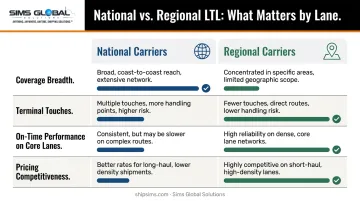
Fewer terminal touches means less freight handling and lower damage risk. Southeastern consistently outperforms national carriers on short-to-medium southern lanes because it's built specifically for that geography.
| Attribute | Details |
|---|---|
| Service Coverage | 13 southern states + Puerto Rico; extended US coverage via service partners |
| Best For | Southeast-focused shippers needing next-day regional service |
| Key Differentiator | Regional density delivers superior performance vs. nationals on southern lanes |
9. Averitt Express
Privately held and headquartered in Cookeville, TN, Averitt Express has operated under current ownership since 1971. It provides asset-based regional LTL across the South and Southeast, with partner-based nationwide and cross-border service into Canada and Mexico. Averitt was recognized as a leading asset-based carrier in the 2024 Mastio Quality Awards and won Clarios' 2024 LTL Carrier of the Year.
For businesses routing freight through Tennessee, Florida, the Gulf Coast, or anywhere in the South-Central region, Averitt's local network depth and customer service reputation give it an edge over larger nationals on those lanes.
| Attribute | Details |
|---|---|
| Service Coverage | Southeast and South-Central US; partner-based North American coverage |
| Best For | Southeast and Gulf Coast regional shipping; businesses valuing local relationships |
| Key Differentiator | Regional depth and customer service reputation; competitive on South-Central lanes |
10. TForce Freight
TForce Freight was formed when TFI International completed its $800 million acquisition of UPS Freight on April 30, 2021, rebranding the operation under the TForce name. Headquartered in Richmond, VA, it operates an extensive terminal network across the US with cross-border coverage into Canada and Mexico.
TForce carries the legacy infrastructure and terminal footprint of the former UPS Freight network — a solid option for shippers seeking broad domestic coverage on standard LTL lanes at competitive rates.
| Attribute | Details |
|---|---|
| Service Coverage | US, Canada, Mexico |
| Best For | National standard LTL shipments across major lanes |
| Key Differentiator | Extensive legacy terminal network with broad domestic and cross-border coverage |
How to Choose the Right LTL Carrier
These carriers were evaluated on network coverage, on-time delivery performance, claims ratio, freight type versatility, technology capabilities, financial stability, and industry reputation — not just revenue size.
The Most Common Mistake Shippers Make
Choosing a carrier based on national averages. A carrier with a 97% national on-time rate may have a weak terminal on your most critical corridor. Always request lane-level performance data before committing volume — your corridor's actual performance can differ sharply from a carrier's headline number.
How to Evaluate Carriers Effectively
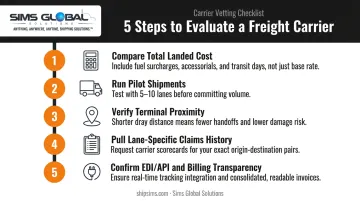
- Compare total landed cost (base rate + fuel surcharges + accessorials + historical claims risk), not just the lowest quoted rate
- Run 5–10 pilot shipments before routing significant volume to any new carrier
- Verify terminal proximity to your origin and destination; fewer touches typically means less damage
- Pull damage claims history specific to your freight type and lane, not company-wide averages
- Confirm EDI/API connectivity, real-time tracking, and billing transparency — these matter as much as the rate
All 10 carriers on this list are part of the Sims Global Solutions network. Through direct API integrations with 70+ LTL carriers, Sims Global's SimsTrak platform lets shippers compare rates across carriers in one place, without managing each relationship individually.
Conclusion
No single LTL carrier is the right fit for every shipper. The best choice depends on your lanes, freight type, volume, and service requirements. A carrier that dominates Northeast corridors may underperform on Southeast regional moves. A national carrier with strong brand recognition might lose to a regional specialist on the lanes that matter most to your operation.
Evaluate carriers on total landed cost, pilot before committing volume, and always request lane-specific data when available.
That comparison process is exactly what Sims Global Solutions automates. With direct API integrations to 70+ top LTL carriers — including every carrier on this list — Sims pulls lane-specific rates instantly so you can make a data-driven decision before committing volume. Contact Sims at 855-326-8671 or ContactSims@ShipSims.com to get a quote and let the operations team manage carrier selection, rate comparison, and booking on your behalf.
Frequently Asked Questions
What is LTL freight shipping and how does it work?
LTL (less-than-truckload) shipping allows multiple shippers to share space in the same trailer, with each paying only for the space their freight occupies. Shipments move through a hub-and-spoke terminal network, making it cost-effective for freight that's too large for parcel carriers but doesn't fill a full truck.
How is LTL freight pricing calculated?
LTL rates are based on freight class (NMFC classification), shipment weight, and origin/destination ZIP codes. Carriers layer fuel surcharges and accessorial fees — liftgate, residential delivery, inside pickup — on top of the base rate, often adding 15–30% above the initial quote.
What is the difference between LTL and FTL shipping?
FTL means one shipper fills the entire trailer and the truck moves directly from origin to destination. LTL combines multiple shippers' freight in one trailer, with stops at carrier terminals along the way. LTL is more cost-effective for smaller loads; FTL is faster and better for large, time-sensitive, or high-value shipments.
Which LTL carrier has the best on-time delivery rate?
Old Dominion Freight Line consistently leads industry rankings, reporting 99% on-time performance and a 0.1% claims ratio in Q1 2024. However, on-time rates vary significantly by lane — always request lane-specific performance data rather than relying on a carrier's national average.
How do I choose the right LTL carrier for my business?
Evaluate carriers by lane, not national averages. Compare at least three carriers per lane, check terminal proximity, and review damage claims history for your freight type. Pilot new carriers on a handful of shipments before committing volume — or work with a 3PL like Sims Global Solutions that provides multi-carrier access and does this legwork for you.
Can a freight broker get better LTL rates than going direct to a carrier?
Yes. Brokers aggregate volume across multiple customers, giving them contracted pricing leverage that smaller individual shippers can't negotiate alone. They also manage carrier relationships, track shipments, and handle claims — reducing the administrative burden on your team.