
Introduction
Moving an excavator takes far more coordination than a standard freight shipment. These machines can't simply be loaded onto a flatbed and sent down the highway — most full-size excavators exceed federal weight and width limits the moment they hit a trailer, triggering oversize permit requirements in every state along the route.
Skip a step and the consequences stack up fast: permit violations, fines, load impoundment, and potential liability for road or bridge damage. Done right, your machine arrives on time, in compliance, and ready to work.
This guide covers everything construction companies, project managers, and equipment owners need to know — from trailer selection and permit requirements to load preparation and cost factors.
Key Takeaways
- Most excavators require a lowboy or RGN trailer; standard flatbeds cannot legally or safely accommodate full-size machines
- Loads exceeding 8.5 ft wide or 80,000 lb gross require oversize/overweight permits in each state crossed
- Costs depend on machine size, distance, permits, and escort needs — get an itemized quote before committing
- Prep the machine before loading: lower the boom, secure attachments, and lock the doors
- A heavy haul freight partner handles permitting, routing, and carrier coordination in one place
What Is Excavator Transport?
Excavator transport is the process of moving excavators from one location to another using specialized heavy haul trailers, permitted routes, and drivers holding a Class A CDL. Unlike standard freight, it requires oversize load classifications, state-issued permits, and, in many cases, pilot escort vehicles.
The machines that fall under this category vary dramatically in size:
| Machine Type | Approximate Weight | Typical Trailer |
|---|---|---|
| Mini excavator (e.g., John Deere 35 P-Tier) | 7,760–8,715 lb | Step-deck or flatbed |
| Mid-size excavator (e.g., John Deere 350 P-Tier) | ~81,000 lb | Lowboy or RGN |
| Large crawler excavator (e.g., Cat 395) | ~207,400 lb | Multi-axle RGN |

That range — from under 10,000 lb to well over 200,000 lb — means there's no single transport solution. Trailer type, permit tier, and escort requirements all change based on the specific machine. A carrier equipped for a mini excavator may be entirely unqualified for a large crawler without a completely different rig.
How Excavator Transport Works
Step 1: Quote and Equipment Assessment
The process begins with measurements. To generate an accurate quote, the hauler needs:
- Make, model, and operating weight
- Boom-folded height and overall width
- Transport origin and destination
- Any attachments still connected to the machine
These dimensions determine trailer type, permit requirements, and final cost. Providing inaccurate figures at this stage is one of the most common — and expensive — mistakes shippers make.
Step 2: Carrier and Trailer Assignment
Once dimensions are confirmed, the freight partner assigns a carrier with the appropriately rated trailer. This is where a partner with a large, vetted carrier network has a clear advantage over calling carriers directly. Sims Global Solutions, for example, maintains a network of over 35,000 truckload carriers, all cleared through a structured vetting process, which means faster equipment sourcing and more competitive rates for non-standard configurations.
Step 3: Permit Procurement and Route Survey
Every state the load passes through requires its own oversize/overweight permit. The shipping manager or freight partner secures these permits, confirms bridge and height clearances, and coordinates pilot car requirements before the truck is dispatched.
Permit timelines vary significantly by state:
- Illinois processes most permits immediately through their online system
- Pennsylvania approves roughly 80% automatically within about one minute
- Washington state requires at least 7 calendar days for loads exceeding 16 ft wide or high

Plan accordingly. Assuming next-day permit approval on a multi-state move is how job sites get delayed.
Step 4: Equipment Preparation and Loading
At pickup, the excavator is driven or winched onto the trailer on level ground. Federal regulations under 49 CFR 393.130 require a minimum of four tiedowns for tracked heavy equipment over 10,000 lb, with aggregate working load limit equal to at least half the cargo's weight. The boom, arm, and bucket must be fully lowered and resting on the trailer deck — both to reduce height and to prevent movement during transit.
Step 5: Transit and Delivery
The driver follows the permitted route and adheres to state-specific travel windows. Some states prohibit oversize movement at night or during holidays. Washington, for instance, restricts night travel for loads exceeding 12 ft wide. Texas bars loads over 14 ft wide on six designated major holidays unless TxDMV grants an exception. At the destination, the excavator is offloaded using the same procedures as loading in reverse.
Choosing the Right Trailer for Excavator Hauling
The Three Main Trailer Options
Standard flatbed — Suitable only for the smallest mini excavators where height and weight stay within standard limits. A flat-deck trailer typically sits around 58 inches off the ground, which places most excavators well above legal height thresholds once you add machine height.
Step-deck — The step-down design reduces load height compared to a flatbed. Practical for mid-size excavators where a lowboy isn't required but height needs to come down.
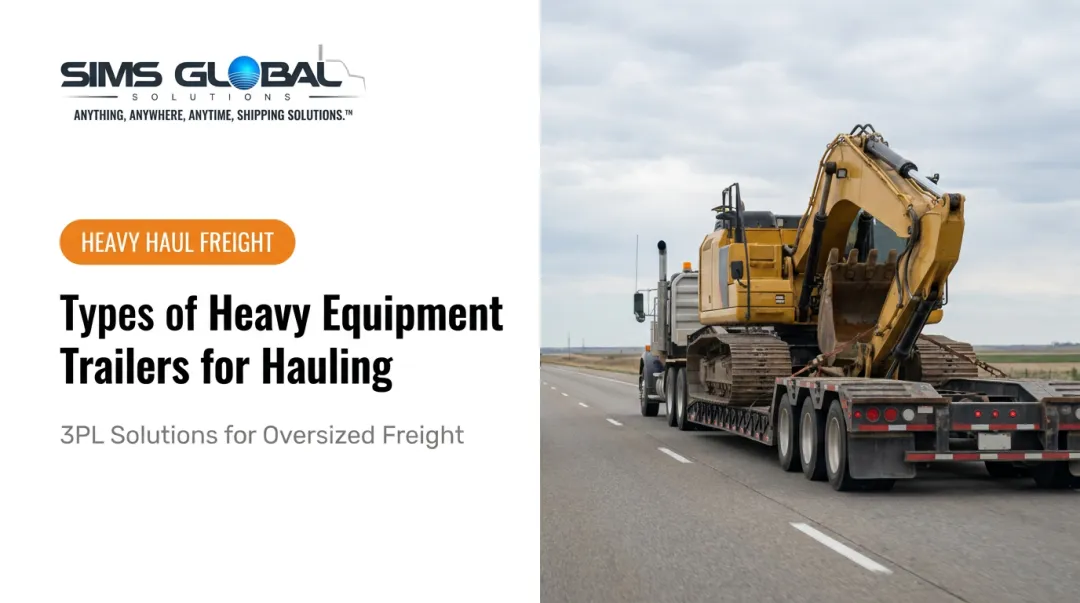
Lowboy / RGN (Removable Gooseneck) — The industry standard for full-size excavators. Lowboy decks sit as low as 12–18 inches off the ground depending on the model, which keeps overall load height within legal limits. Current trailer models from manufacturers like Talbert and XL Specialized carry ratings from 80,000 to 130,000 lb.
Why RGN Trailers Work for Large Machines
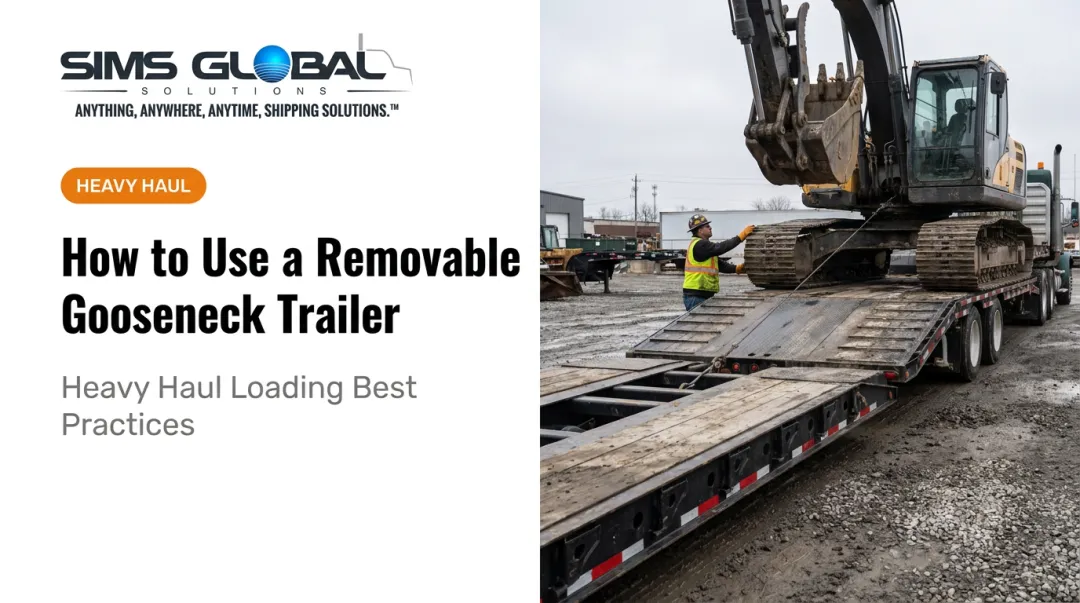
The RGN's key advantage is its detachable gooseneck. Loading works like this:
- Operator unlocks the neck and lowers the deck
- Disconnects air and electrical lines
- Pulls the tractor forward, leaving the deck flush with the ground
- Excavator drives directly on — no ramps needed

For machines in the 80,000+ lb range, that ground-level loading isn't optional. It's the only practical way to get the machine onto the trailer safely.
Axle Count Matters
More axles distribute the load across a greater number of contact points, keeping per-axle weights within legal limits. Federal Interstate limits set the standard at 80,000 lb gross, 20,000 lb single axle, and 34,000 lb tandem axle, subject to the bridge formula. Trailers must be rated for the excavator's actual operating weight — not its base weight — and the right axle configuration is part of that calculation.
Once the weight and axle math is settled, trailer selection follows. This isn't a decision shippers should make independently — the carrier or freight partner reviews the equipment specs and assigns the right configuration. Mismatching trailer type to machine weight creates permit violations and potential load failure.
Excavator Transport Permits, Regulations, and Costs
When Permits Are Required
Any load exceeding federal legal baselines triggers a permit requirement in each state it crosses:
- Width: Over 102 inches (8.5 ft) on the National Network
- Gross weight: Over 80,000 lb on Interstate highways
- Height: State-specific, generally 13 ft 6 in to 14 ft
Most full-size excavators exceed at least one — often two or three — of these thresholds at once.
Multi-State Permit Complexity
Each state runs its own permit system with its own fees, forms, and travel restrictions. A single cross-country haul may require permits from five or six separate state agencies. Permit fees themselves are relatively modest — California lists $16 for a single-trip permit; New York lists $40 — but the coordination burden on multi-state routes is where delays and compliance gaps tend to emerge.
Pilot car requirements are one of the clearest examples of that complexity — they vary significantly by state and load dimensions. Washington, for example, requires:
- Front and rear escorts for loads over 11 ft wide on two-lane highways
- One rear escort for loads over 14 ft wide on multilane highways
- A front escort with height pole for loads over 14 ft 6 in high
What Determines the Final Cost
No single verified per-mile benchmark applies universally to excavator transport — costs depend on too many variables. The key factors shaping the final rate are:
- Machine weight and dimensions
- Distance (priced per loaded mile)
- Number of states crossed and permits required
- Pilot car requirements (front only, rear only, or both)
- Fuel surcharges
- Trailer type and axle configuration needed
Always confirm whether permits and escort costs are included in the quoted rate — they're frequently excluded and can add hundreds or even thousands of dollars to the final bill.
How to Prepare Your Excavator for Transport
Proper preparation is non-negotiable. Skipping steps creates loading delays, opens you up to cargo claims, and puts the driver at risk.
Pre-Transport Checklist
- Remove or secure all loose attachments and tools
- Clean the machine so visual inspection is possible at pickup
- Disconnect or isolate the battery
- Drain any fluids with a history of leaking
- Document the excavator's condition with timestamped photos before the carrier arrives
Loading-Specific Steps
- Put the machine in transport mode per the manufacturer's guidance
- Lower the boom, arm, and bucket so they rest on the trailer deck — this reduces height and eliminates movement
- Lock all pivot points, hinges, cab doors, and storage covers
- Apply the parking brake once the machine is positioned on the trailer
- Confirm four-corner chain attachment to the trailer frame

Attachments: Declare Them in Advance
If the excavator has a hydraulic hammer, thumb, or specialty bucket attached, tell the carrier before pickup. Attachments change overall dimensions and may push the load into a higher permit tier or require a larger trailer entirely. The carrier must approve the configuration before the truck rolls. Surprises at pickup cause delays and can void the original rate.
Common Mistakes to Avoid When Hauling an Excavator
Underreporting Dimensions
Providing inaccurate measurements leads to wrong trailer assignment, incorrect permits, and potential fines at weigh stations. If the machine is measured incorrectly and the permitted width is lower than actual, the load is technically out of compliance for the entire move.
Assuming Standard Carriers Can Handle It
A standard flatbed carrier is not equipped — legally or physically — to move a full-size excavator. Class A CDL covers the tractor-trailer combination based on weight thresholds, but the driver also needs experience with oversize loads, proper securement, and permitted routing. Booking the wrong carrier type means the wrong trailer shows up — and everything downstream breaks from there.
Skipping Permits
Operating without proper oversize/overweight permits can result in fines, load impoundment, and liability for road or bridge damage. Assuming the driver will sort out permits is not a plan. Florida, for example, caps vehicle penalties at $1,000 per violation — but the bigger risk is the load being stopped and held until permits are obtained, which derails project timelines far more than the fine itself.
The consequences of skipping permits include:
- Fines assessed per violation, not per trip
- Load impoundment until compliant permits are secured
- Carrier liability exposure for road or bridge damage
- Project delays that cascade far beyond the original delivery window
Underestimating Lead Time
Permit procurement timelines vary widely — simple same-state moves may process in minutes, while complex multi-state routes crossing states with manual review requirements or superload thresholds can take several business days to over a week. For excavators approaching or exceeding 16 ft in height or width, Washington state requires at least seven calendar days of review before permits are issued. Build that into project scheduling, not after the fact.
Every move with a realistic timeline starts with knowing the permit window. Coordinate with your carrier or logistics provider before committing to a delivery date.
Conclusion
Excavator transport involves the right trailer, valid permits for every state along the route, proper load preparation, and a carrier with proven heavy haul experience. Skipping any one of these steps creates real safety, legal, and financial risk.
Working with an experienced freight partner eliminates most of the coordination burden. Sims Global Solutions has been handling heavy haul logistics since 2010, with a dedicated heavy haul team, a strict 5-step planning methodology, and access to over 35,000 vetted truckload carriers. Permit procurement, route planning, trailer assignment, and transit monitoring are all handled through a single point of contact — so excavators arrive on time, undamaged, and without compliance issues.
Frequently Asked Questions
How much does it cost to transport an excavator?
Excavator transport costs depend on machine size, distance, permits required, and whether escort vehicles are needed. There's no single market average — a short regional move with a mini excavator costs far less than a cross-country haul of a large crawler excavator. Confirm whether permits and escort fees are included in any quote before accepting it.
How do you transport an excavator?
The process follows a standard sequence:
- Measure the machine's height, width, and weight
- Book a carrier with the appropriate heavy haul trailer
- Secure oversize/overweight permits for each state on the route
- Load and secure the excavator per carrier requirements
- Follow the permitted route to the destination
A freight partner handles most of these steps on your behalf.
What permits are required to haul an excavator?
Oversize and/or overweight permits are required in each state the load passes through. Thresholds that trigger permits include width over 8.5 ft, gross weight over 80,000 lb, and height above the state limit (typically 13 ft 6 in to 14 ft). Most full-size excavators exceed at least one threshold; many exceed several at once.
What is the best trailer for transporting an excavator?
Lowboy and RGN trailers are the standard choice for full-size excavators — their low deck heights (as low as 12–18 inches) keep overall load height within legal limits. Mini excavators may be transported on a step-deck or appropriately rated flatbed, depending on height and weight.
Can an excavator be transported with attachments?
Attachments can sometimes stay on the machine during transport, but must be declared to the carrier before pickup. They change overall dimensions and may require a larger trailer or additional permits. The carrier must approve the configuration before arrival at the loading site, not after.
How long does cross-country excavator transport take?
Transit time depends on distance, route, and state-specific travel restrictions including nighttime and holiday prohibitions. Factor in permit procurement lead time as well. Complex multi-state moves may require several business days to over a week of planning before the truck can be dispatched.