Introduction
Billions of dollars worth of food, pharmaceuticals, and perishables move across the US every day inside temperature-controlled trailers. When a carrier fails — equipment breaks down, a temperature deviation goes undetected, a compliance protocol gets skipped — the consequences aren't just inconvenient. Spoiled product, regulatory violations, and lost customer trust can cost far more than any freight savings.
That stakes-driven reality plays out inside a massive and growing industry. According to Mordor Intelligence, the US refrigerated trucking market was valued at $31.14 billion in 2025 and is projected to reach $45.38 billion by 2031, a 6.46% CAGR driven by rising demand across food service, pharmaceuticals, and specialty cargo.
Choosing the right reefer carrier goes well beyond comparing rates per mile. Fleet maintenance standards, real-time temperature monitoring, FMCSA safety ratings, and FSMA compliance all separate reliable partners from costly ones. This guide breaks down ten reefer carriers US shippers should evaluate — what each does well, where they specialize, and what to weigh before committing.
Key Takeaways
- The US reefer trucking market hit $31.14B in 2025 — temperature-controlled freight is a high-stakes, growing sector
- The right carrier depends on your freight type, lane, and compliance needs — fleet size and specialization vary widely across top providers
- Reefer rates currently average around $2.05/mile nationally, running higher than dry van
- FMCSA safety rating and FSMA compliance records matter more than brand name alone
- Working with a 3PL that maintains a vetted carrier network saves shippers the time and risk of qualifying reefer carriers individually
What Is Reefer Trucking and Why It Matters
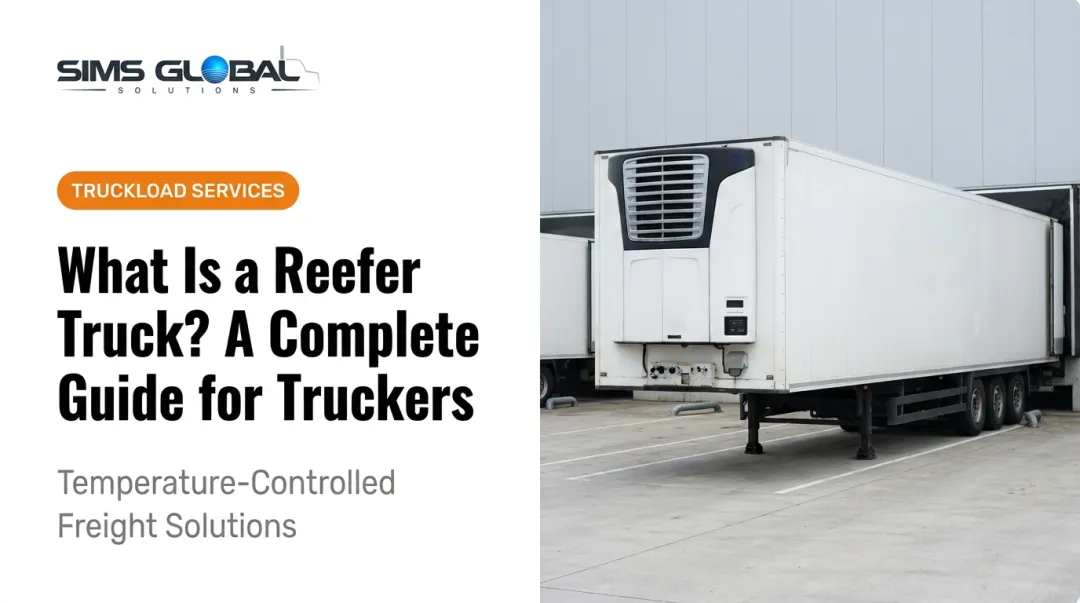
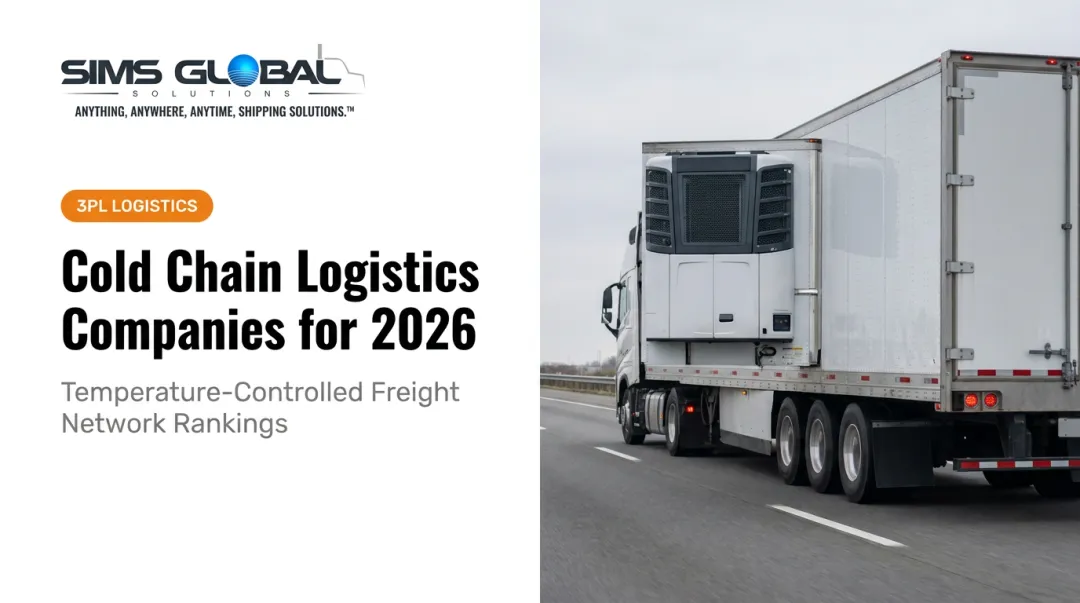
Reefer trucking refers to freight transported in refrigerated trailers equipped with diesel-powered cooling units that maintain specific temperature zones. Unlike dry vans, reefer trailers actively control the internal climate — essential for any cargo that degrades, spoils, or becomes unsafe outside a specific temperature range.
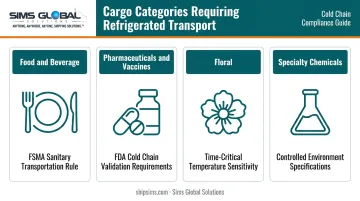
Industries that depend on reefer transport include:
- Food and beverage — fresh produce, meat, dairy, frozen foods
- Pharmaceuticals and vaccines — cold chain compliance is federally regulated
- Floral — temperature-sensitive and time-critical
- Specialty chemicals — certain formulations require controlled environments
Each category carries distinct regulatory requirements. Pharmaceutical cold chain, for example, is governed by FDA guidelines requiring validated temperature lanes, while food transport falls under FSMA's Sanitary Transportation Rule.
That regulatory complexity makes carrier selection more than a capacity decision — the right reefer partner needs proven compliance protocols, not just available trailers. The ten companies below represent the carriers shippers most commonly encounter when sourcing temperature-controlled capacity at scale.
Top 10 Refrigerated Trucking Companies in the US
These carriers were selected based on fleet size, technology capabilities, industry reputation, compliance track record, and breadth of reefer specialization. Note that some operate as pure asset carriers, others as hybrid broker/carrier networks — a distinction that matters when vetting capacity.
Prime Inc.
Headquartered in Springfield, MO, Prime Inc. is one of the largest dedicated temperature-controlled carriers in the US. The company focuses on produce, pharmaceuticals, floral, and frozen freight across US and Canadian lanes.
What distinguishes Prime is the scale and sophistication of its monitoring infrastructure. Every trailer in its temperature-controlled fleet is remotely tracked, with satellite positioning on each load.
| Category | Details |
|---|---|
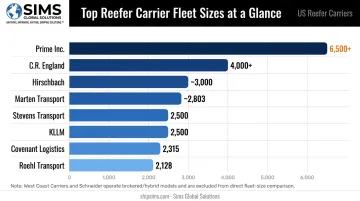
| Fleet Size | 6,500+ refrigerated trucks; 11,700+ temperature-controlled trailers |
| Key Cargo | Produce, pharmaceuticals, frozen foods, floral |
| Technology | Remote temperature monitoring, satellite tracking, dedicated reefer lanes |
C.R. England
Founded in 1920, C.R. England is one of the oldest dedicated refrigerated carriers in North America. Based in Salt Lake City, UT, the company operates nationwide with cross-border service into Mexico via its TempStack intermodal container program.
C.R. England serves food and beverage clients across all shipper sizes, with intermodal reefer options that give shippers flexibility on longer lanes.
| Category | Details |
|---|---|
| Fleet Size | 4,000+ tractors; 6,000+ trailers (total fleet, not reefer-only) |
| Key Cargo | Frozen goods, fresh produce, food and beverage, cross-border reefer |
| Technology | Real-time tracking portal, intermodal reefer (TempStack), FSMA-aligned handling |
Marten Transport
Marten Transport (NASDAQ: MRTN) is a publicly traded carrier based in Mondovi, WI, with a fleet averaging 2,803 tractors as of late 2025. The company is notable for its sustainability program — solar installations across facilities generate approximately 3 million kWh annually, offsetting over 2,100 metric tons of CO₂ per year.
One important note: Marten sold its intermodal business on September 30, 2025, so intermodal reefer is no longer available through this carrier.
| Category | Details |
|---|---|
| Fleet Size | ~2,803 tractors (combined; reefer-specific count not publicly separated) |
| Key Cargo | Frozen and refrigerated food, temperature-sensitive loads |
| Technology | Solar facility power, temperature telematics, satellite tracking |
KLLM Transport Services
KLLM, based in Richland, MS, is a veteran reefer carrier offering both regional and long-haul temperature-controlled solutions across 48 states and into Mexico. Its official OTR page discloses one of the clearer reefer-specific fleet counts among major carriers.
Team driving options make KLLM a strong fit for priority shipments where transit time is critical.
| Category | Details |
|---|---|
| Fleet Size | 2,500 tractors; 3,500 OTR/refrigerated trailers |
| Key Cargo | Chilled and frozen perishables, multi-temperature freight, regional and long-haul |
| Technology | Team driving for expedited reefer, real-time GPS, temperature deviation alerts |
Hirschbach Motor Lines
Hirschbach is a Dubuque, IA-based carrier with a veteran-owned identity and a strong reputation in temperature-controlled TL freight. The company serves food manufacturers, retailers, and pharmaceutical shippers with a focus on driver training and cold chain handling.
| Category | Details |
|---|---|
| Fleet Size | ~3,000 trucks; ~5,000 trailers (total company figures) |
| Key Cargo | Temperature-controlled TL, food manufacturing, pharmaceutical, retail distribution |
| Technology | Driver cold chain training programs, modern fleet, dedicated customer support |
Covenant Logistics
Covenant Logistics (NYSE: CVLG), headquartered in Chattanooga, TN, offers temperature-controlled solutions alongside expedited and dedicated services. Its 2025 10-K filing confirms that 11% of its trailer fleet is refrigerated vans — useful context when assessing actual reefer capacity relative to overall company scale.
| Category | Details |
|---|---|
| Fleet Size | 2,315 tractors; 6,611 trailers — approximately 11% refrigerated |
| Key Cargo | Expedited reefer, dedicated temperature-controlled programs, food and beverage |
| Technology | Dedicated fleet programs, real-time visibility, FSMA-aligned compliance |
Stevens Transport
Stevens Transport is a Dallas, TX-based carrier with a strong emphasis on temperature-controlled freight. The company's 2025 Transport Topics ranking lists 2,500 tractors and 4,425 trailers. Stevens handles both temperature-controlled and dry-expedited freight — not exclusively reefer, contrary to some marketing language.
| Category | Details |
|---|---|
| Fleet Size | 2,500 tractors; 4,425 trailers (2025 Transport Topics) |
| Key Cargo | Temperature-controlled freight, food-grade loads, produce, frozen, dairy |
| Technology | Food-grade tanker service, driver training and career development programs |
Schneider National (Reefer Division)
Schneider (NYSE: SNDR), based in Green Bay, WI, is one of the largest diversified trucking companies in the US. Its reefer division offers temperature-controlled TL freight through both owned assets and brokered capacity, with intermodal reefer connections across 60+ US/Mexico hubs.
The FreightPower platform gives shippers of all sizes access to quoting, booking, 24/7 tracking, and documentation in one place.
| Category | Details |
|---|---|
| Fleet Size | Reefer-specific asset count not publicly disclosed; hybrid owned + brokered model |
| Key Cargo | Temperature-controlled TL and intermodal, food and beverage, retail, pharma |
| Technology | Nationwide lane density, intermodal reefer (60+ hubs), FreightPower TMS |

Roehl Transport
Roehl is a Marshfield, WI-based carrier known for its safety standards and newer fleet. FMCSA records show 2,128 power units. The company operates refrigerated OTR and dedicated lanes with strong Midwest coverage.
| Category | Details |
|---|---|
| Fleet Size | 2,128 power units (FMCSA snapshot; reefer-specific count not disclosed) |
| Key Cargo | Fresh and frozen food, Midwest and national reefer lanes |
| Technology | Newer fleet age, refrigerated OTR and dedicated programs |
West Coast Carriers
West Coast Carriers is a Tacoma, WA-based reefer network founded in 2007, covering 48 states and Canada through a contracted carrier base of 5,000+ carriers. The company operates as a broker/carrier hybrid, not a pure asset operation.
The company offers both FTL and LTL reefer options — one of the few on this list with accessible reefer LTL — and its team self-reports FSMA certification.
| Category | Details |
|---|---|
| Fleet Size | 5,000+ contracted carriers (not an owned fleet) |
| Key Cargo | Fresh produce, dairy, pharmaceuticals, frozen goods, reefer LTL |
| Technology | Real-time condition monitoring, FSMA-certified staff, reefer LTL availability |
How to Choose the Right Reefer Trucking Company
The most common mistake shippers make is letting price lead the decision. A carrier with outdated equipment or a weak FMCSA safety rating can produce spoilage events, regulatory fines, and lost retailer relationships that dwarf any per-mile savings.
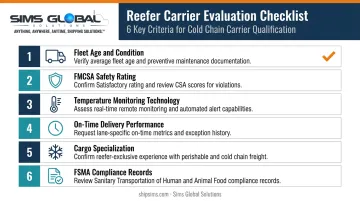
Core evaluation criteria to apply:
- Fleet age and condition — newer equipment means fewer breakdowns and more reliable cooling unit performance
- FMCSA safety rating — Satisfactory, Conditional, and Unsatisfactory ratings reflect the adequacy of safety-management controls
- Temperature monitoring technology — look for IoT sensors, remote monitoring, and automatic deviation alerts
- On-time delivery performance — ask for documented OTD rates, not just assurances
- Cargo specialization — a carrier built around frozen food may not have the pharma-grade protocols a biotech shipper needs
- FSMA compliance records — FDA's sanitary transportation rule covers vehicles, operations, training, and records — request carrier-specific documentation rather than taking a compliance claim at face value
Shippers with complex or high-volume reefer needs don't have to manage carrier vetting alone. Sims Global Solutions maintains a network of over 150,000 vetted carriers and a dedicated Carrier Procurement Team, giving shippers access to qualified reefer capacity without evaluating each carrier individually.
Conclusion
No single carrier is the right fit for every shipper. The best reefer trucking company for your operation depends on cargo type, delivery geography, load size (TL vs. LTL), and compliance requirements. Brand name alone doesn't guarantee performance.
Before committing to a carrier relationship, verify these four things:
- Request their FMCSA safety score
- Ask about average fleet age
- Confirm temperature monitoring protocols
- Check for relevant food safety certifications (FSMA, SQF, or similar)
Each takes minutes to verify and can prevent a cold chain failure that costs far more than the shipment itself.
Shippers who need reefer capacity without managing multiple carrier relationships can reach out to Sims Global Solutions. Sims connects shippers to a vetted network of reefer carriers, coordinates real-time GPS tracking, and backs shipments with supplemental cargo insurance — handling the logistics coordination so you don't have to.
Frequently Asked Questions
What are the best refrigerated van brands?
Common platforms for smaller refrigerated delivery include the Mercedes-Benz Sprinter, Ford Transit, and Ram ProMaster, typically fitted with Thermo King or Carrier Transicold units. These differ from the large reefer trailer market in this article, which covers 48- and 53-foot trailers with integrated diesel-powered cooling systems.
Who is the largest refrigerated trucking company in the US?
Prime Inc. and C.R. England rank among the largest dedicated reefer carriers by fleet size, while Schneider National runs one of the largest combined reefer and dry van operations. Largest doesn't always mean best fit — lane coverage, cargo specialization, and compliance history matter more for most shippers.
What is the average rate for reefer loads?
According to DAT's October 2025 reefer market report, the national seven-day reefer average was $2.05/mile. Rates typically run 15–25% higher than dry van, with seasonal spikes of $0.30–$0.50/mile during peak produce periods.
What temperature should a reefer truck be set at?
Common ranges by cargo type: fresh produce (32–55°F depending on commodity), dairy (40–45°F), frozen goods (0°F or below), and pharmaceuticals (35.6–46.4°F for cold-chain products). The shipper or product manufacturer always specifies the required range — these are general guidelines, not universal setpoints.
Do reefer loads pay more than dry van freight?
Yes. Reefer loads generally pay more per mile due to fuel costs for running cooling units, specialized equipment depreciation, and more demanding handling requirements. The premium is especially pronounced during peak produce seasons, when spot rates can swing significantly above baseline.
What is the difference between a reefer truck and a dry van?
A dry van is an unrefrigerated enclosed trailer used for non-perishable freight. A reefer trailer includes an integrated refrigeration unit that actively maintains a set temperature range throughout transit. Reefer trailers cost more to operate and must meet food safety standards — and pharmaceutical transport regulations where applicable.