Importers, exporters, supply chain managers, and any business moving goods internationally need to understand drayage. Most don't — until a container sits past its free time, fees start accumulating, and downstream operations stall. The top 25 U.S. container ports handled 39 million loaded TEUs in 2023, and every single one of those boxes required at least one drayage move to reach its destination.
This guide covers what drayage is, how it works, what drives costs, and what separates shippers who manage it well from those who don't.
TL;DR — Key Takeaways
- Container drayage moves freight between transportation hubs — it's not long-haul trucking or a full intermodal service
- Six recognized drayage types serve different supply chain needs
- Chassis availability, port congestion, documentation gaps, and detention fees are the four biggest risk factors
- An experienced logistics provider cuts coordination complexity, limits fee exposure, and handles chassis and documentation gaps
What Is Container Drayage?
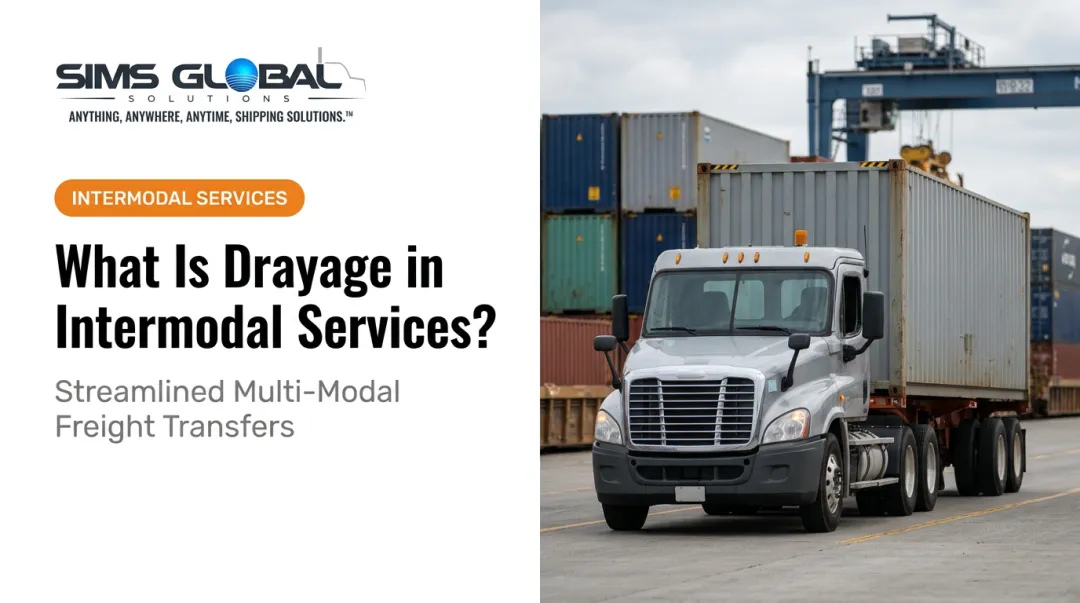
The Intermodal Association of North America (IANA) defines drayage as the transportation of freight between a cargo-facility terminal and a customer's facility. That definition is worth anchoring to: drayage is defined by the terminal connection, not by how many miles the truck travels.
In practice, drayage describes the truck movement that bridges transportation modes: seaport to warehouse, port to rail ramp, rail ramp to distribution center. Think of it as the connector leg — the piece that hands freight off from one mode to the next.
How Drayage Differs from Standard Trucking and Intermodal
| Drayage | Standard Trucking | Full Intermodal | |
|---|---|---|---|
| Scope | Terminal-to-facility connector | Origin to destination | Complete multi-mode journey |
| Equipment | Requires specialized chassis | Standard trailer | Container + multiple modes |
| Distance | Short, terminal-adjacent | Any distance | Long-haul, multi-leg |
| Handoffs | Multiple parties, tight timing | Typically direct | Rail + truck coordination |
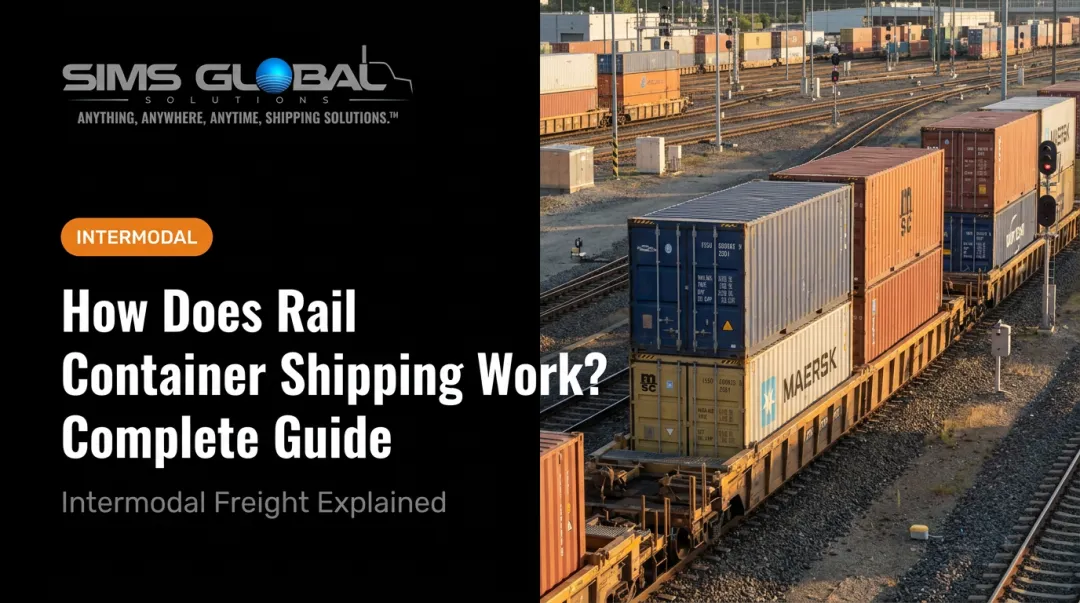
Intermodal shipping describes the complete multi-mode movement of freight without removing it from its container. Drayage is one component within that system — the truck leg that connects rail or ocean to the next point. Treating them as the same thing is where shippers run into trouble: booking the wrong carrier type, missing demurrage windows, or losing visibility at the handoff point.
Why Container Drayage Matters in the Supply Chain
IANA recorded 18,083,970 North American intermodal originations in 2024, up 8.5% year over year — with over 9 million international container movements alone. Each one required drayage coordination. That scale explains why drayage capacity directly shapes port efficiency and overall supply chain flow.
The Bottleneck Effect
At the ports of Los Angeles and Long Beach during 2021, local-drayage container dwell peaked at 11 days — and rail container dwell hit 13.4 days. The bottleneck wasn't road distance. It was synchronized access to terminals, chassis, and appointment slots.
When drayage breaks down, the effects cascade:
- Manufacturing lines wait on components held at port
- Retail restocking falls behind, creating out-of-stock situations
- Demurrage and detention fees accumulate daily
- Carriers get stuck, reducing available capacity for other shippers
Those operational disruptions translate directly into financial exposure — often far exceeding the cost of the drayage move itself.
The Hidden Cost of Poor Drayage Management
Drayage covers a small portion of total transit distance, but its cost impact is outsized. Nine ocean carriers collected approximately $15.4 billion in detention and demurrage fees from April 2020 through March 2025, according to the Federal Maritime Commission. That figure reflects what happens when containers sit and equipment isn't returned on time — costs that better coordination can prevent.
Businesses across retail, manufacturing, aerospace, and medical devices all depend on drayage moving efficiently. Sims Global Solutions integrates drayage into its multi-modal service model — alongside warehousing, intermodal, and fulfillment — with real-time shipment visibility through its SimsTrak TMS, so shippers have full oversight of every handoff.

How the Container Drayage Process Works
The End-to-End Flow
Container drayage follows a predictable sequence, though each step has variables that can stall the move:
- Container arrives at port or rail ramp
- Customs clearance and steamship line release obtained
- Chassis assigned and matched to container
- Dray carrier picks up container from terminal
- Transport to warehouse, distribution center, or next intermodal point
- Empty container returned to designated depot within free time
Types of Container Drayage Services
Six distinct drayage categories cover the full range of container moves:
| Type | What It Covers |
|---|---|
| Pier | Over-the-road movement from a rail hub to a port dock or pier |
| Inter-Carrier (Cross-town) | Transfer between two different railroads for continuation |
| Intra-Carrier (IMX) | Movement between hubs of the same carrier's network |
| Expedited | Over-the-road move to meet a deadline for time-sensitive freight |
| Shuttle | Loaded or empty unit moved from a congested hub to overflow parking |
| Door-to-Door | Retail drayage moving a unit over the road directly to a customer location |

Expedited drayage works for tight delivery windows; pier and inter-carrier moves apply when containers transfer between rail and port networks.
Step 1 — Container Release and Documentation
Before pickup happens, the receiver must complete customs clearance, pay applicable duties, and obtain a release from the steamship line or rail carrier. Missing or incorrect documentation is one of the most common causes of container holds and free-time overruns. A delayed customs entry on day one can burn through most of the available free time before the container moves at all.
Step 2 — Chassis and Equipment Assignment
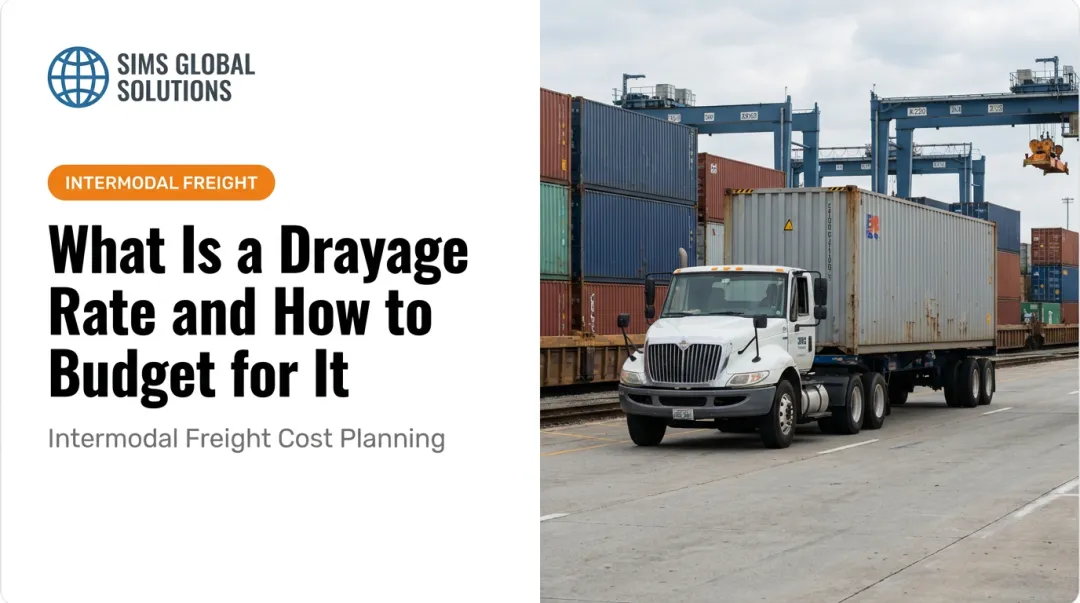
A chassis is the wheeled trailer frame — with twist-lock fittings — that holds a container for road transport. Chassis configuration must match the container length — a 40-foot box needs a 40-foot chassis, not a 20-foot one.
Two chassis models exist in the market:
- Pool chassis programs — shared fleets available at terminals, managed by providers like DCLI, TRAC, or Flexi-Van
- Private chassis fleets — owned by carriers or shippers, offering more control but less flexibility
At congested ports, chassis shortages can delay pickups even when containers are released and ready. In 2021, FreightWaves documented that chassis had been unavailable in-port for months without long waits at LA/LB, contributing directly to the record dwell times seen that year.
Step 3 — Pickup and Dray Movement
A licensed dray carrier retrieves the container from the terminal and transports it to the designated facility. Most major port terminals require appointment scheduling — showing up without one means turning away and losing time. Timing matters because every hour of delay moves the free-time clock closer to fee territory.
The dray move itself is typically within the same metro area or to a nearby inland rail point. Five things have to align: the truck, the driver, the appointment, the gate pass, and the receiving facility.
Step 4 — Container Return or Repositioning
Once cargo is unloaded, the empty container must be returned to the designated depot or container yard within the allotted free time. Late returns trigger per-diem charges that compound daily. Per-diem fees typically start at $75–$150 per day and escalate after the first week, making return coordination one of the most overlooked line items in total drayage cost.
Key Factors That Affect Container Drayage
Port and Terminal Conditions
Terminal operating hours, appointment availability, congestion levels, and free-time windows all affect both speed and cost. A terminal running at peak congestion with limited appointment slots can add days to what should be a same-day pickup. Shippers need to know the specific terminal's rules, not just general port conditions.
Chassis and Equipment Availability
Chassis shortages at major ports — particularly LA/LB, but also Savannah and New York/New Jersey during import surges — are a recurring operational risk. When street-turn chassis aren't available, drayage waits. Understanding whether a port uses a pool chassis program or relies on private fleets helps set realistic scheduling expectations.
Documentation and Compliance
Required documentation for a drayage move typically includes:
- Customs entry and clearance confirmation
- Delivery order from the steamship line
- Hazmat certifications (if applicable)
- Overweight permits for heavy loads
Incomplete paperwork doesn't slow down a container — it stops it entirely. Working with a logistics provider that coordinates documentation alongside transportation reduces this risk.
Carrier Capacity and Market Conditions
Drayage carriers are a specialized subset of the trucking market, often operating locally or regionally around specific ports. Tight capacity in port markets can spike spot rates quickly. A 2022 Journal of Commerce report documented a structural shift in drayage, with drivers moving from larger carriers toward smaller firms and owner-operators — complicating importers' ability to secure reliable capacity on demand.
Pre-vetted carrier relationships at target ports are one of the most direct ways to protect against capacity gaps when they emerge.
Detention and Demurrage Exposure
These two fees are frequently confused:
- Demurrage — charged by the terminal when a container sits past the allotted free time inside the port
- Detention — charged by the carrier when a container is held at a shipper's facility beyond the allowed time

The FMC's 2024 final rule tightened billing requirements: invoices can only go to the contracting party or consignee, must be issued within 30 calendar days, and must include sufficient information for dispute. Critically, invoices missing required fields eliminate the billed party's payment obligation.
Proactive scheduling and real-time tracking are the most effective tools for staying ahead of these clocks. Sims Global Solutions' SimsTrak platform provides both, giving importers visibility into container status before detention or demurrage timers become a problem.
Common Challenges and Misconceptions in Container Drayage
Misconception #1: Drayage is a simple truck move.
It isn't. A single drayage move involves steamship lines, terminal operators, chassis pools, customs brokers, licensed dray carriers, and receiving facilities — all of whose handoffs must be precisely timed. One missed appointment or documentation gap can affect every party downstream.
Misconception #2: Drayage is only relevant for ocean freight.
Drayage applies equally to domestic intermodal rail movements. Any rail-to-truck transfer at an inland ramp requires drayage — making it relevant for businesses that never touch ocean freight. Domestic drayage using 53-foot containers is common across retail and manufacturing supply chains moving entirely within North America.
The real challenge: self-managed drayage without carrier relationships.
Shippers who attempt to coordinate drayage independently — without established carrier relationships, terminal knowledge, or visibility tools — frequently encounter preventable delays and accumulating fees.
An experienced 3PL closes that gap with pre-vetted drayage carriers, port-specific terminal knowledge, and real-time visibility tools like SimsTrak. Sims Global Solutions brings a network of 150,000+ carriers and multi-modal coordination across major U.S. ports — so timing and documentation don't fall through the cracks.
Frequently Asked Questions
What is container drayage?
Container drayage is the short-haul truck transport of shipping containers between ports, rail yards, and distribution centers. It's the critical connecting segment in intermodal freight, bridging ocean or rail movements to the next facility in the supply chain.
What is the difference between container drayage and intermodal service?
Drayage is one component within intermodal shipping — it handles the short truck leg connecting a port or rail ramp to a nearby facility. Intermodal service refers to the full multi-mode journey, which may include ocean, rail, and multiple drayage segments.
Is container drayage only for ocean freight?
No. Drayage applies to both marine port movements and domestic rail ramp transfers. Any business using intermodal transportation — even entirely within North America — relies on drayage at some point in the move.
What container sizes are used for container drayage?
The most common sizes are 20-foot TEUs and 40-foot FEUs for marine containers, and 53-foot domestic containers for rail-to-truck moves. IANA also recognizes 45-foot marine and 48-foot domestic containers. Chassis must match the container length; mismatches between equipment and container size are a common source of delays.
What are the main types of container drayage services?
IANA recognizes six types: Pier, Inter-Carrier (Cross-town), Intra-Carrier (IMX), Expedited, Shuttle, and Door-to-Door. The right type depends on cargo urgency, origin point, and whether the move connects two carrier networks or delivers directly to a customer location.
What fees should I expect with container drayage?
Core cost components include the base drayage rate, fuel surcharge, chassis fees, and port congestion surcharges. Beyond those, demurrage (terminal storage past free time) and detention (carrier waiting time at a facility) can add significant unexpected charges if free-time windows aren't tracked closely.