Introduction
Moving a wind turbine blade or a 40-ton excavator isn't like booking a standard truckload. Oversized cargo transport is the movement of freight that exceeds standard legal limits on width, height, length, or weight, using specialized trailers, permits, and carefully planned routes.
If you're coordinating shipments in construction, energy, manufacturing, aerospace, defense, or material handling, you already know the stakes. A single missed permit or misjudged bridge clearance can shut down a route, trigger fines, or damage six-figure equipment.
This guide breaks down what qualifies as oversized cargo, the five-step process for organizing a compliant shipment, the factors that swing cost and timing, and the mistakes that trip up even experienced shippers.
Key Takeaways
- Federal baselines cap width at 8.5 ft and weight at 80,000 lbs; state rules set height, length, and permits
- Five steps govern every shipment: classify the load, secure permits, select equipment, arrange escorts, monitor transit
- Trailer type (RGN, lowboy, step-deck, extendable, multi-axle) must match cargo shape and weight distribution
- Jurisdictional permit and escort differences make experienced carriers essential for multi-state moves
- Asset-based providers with real-time tracking reduce compliance risk and cut coordination time
What Is Oversized Cargo Transport?
Oversized cargo transport, sometimes called heavy-haul or out-of-gauge freight movement, covers loads that exceed standard legal dimension or weight thresholds. It requires specialized trailers, state-issued permits, and pre-planned routes to reach a destination legally and intact.
The goal is simple: get freight that can't travel through normal shipping lanes to its endpoint without violating road law or damaging infrastructure along the way. That objective hinges on precise terminology, since a few terms get used interchangeably even though they mean different things:
- Wide load refers specifically to width violations
- Heavy haul typically emphasizes weight over dimension
- Oversized cargo transport is the umbrella term covering both, plus length and height
On the regulatory side, the Federal Highway Administration sets a national baseline width of 102 inches (8.5 ft) on the National Network, along with an 80,000-lb gross weight limit on interstates. States control height limits and issue their own oversize/overweight permits, so a load that's legal in one state can require a permit in the next.
This isn't a niche corner of freight. The Business Research Company projects the global oversized cargo transportation market will grow from $211.6 billion in 2025 to $274.23 billion by 2030. That's a 5.3% annual growth rate across road, rail, sea, and air modes combined.
Types of Oversized Cargo Commonly Shipped
Most oversized freight falls into a few recognizable categories:
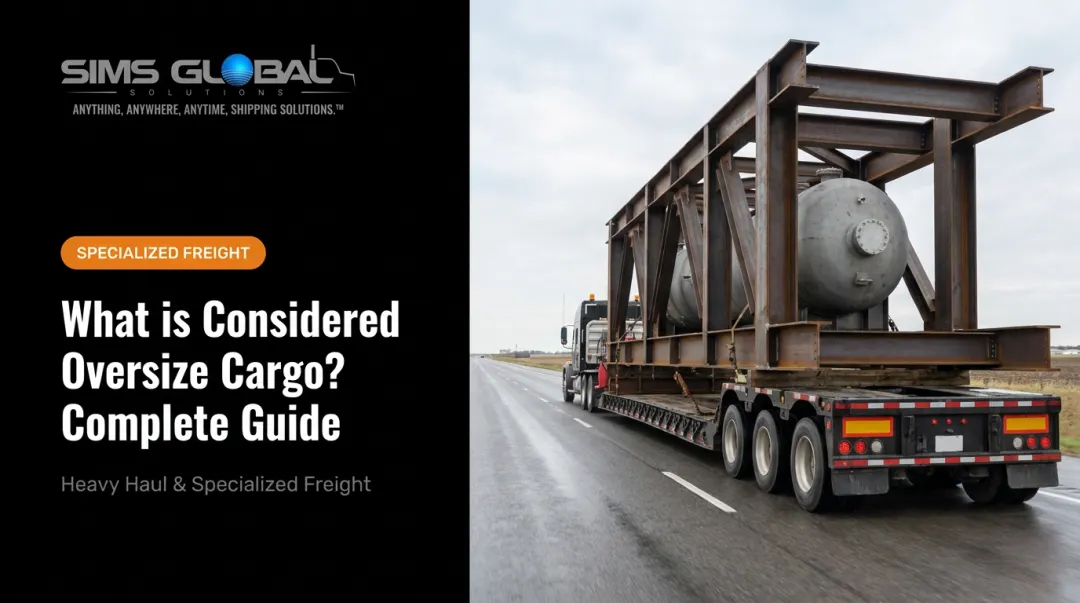
- Construction and mining equipment – excavators, cranes, bulldozers, haul trucks
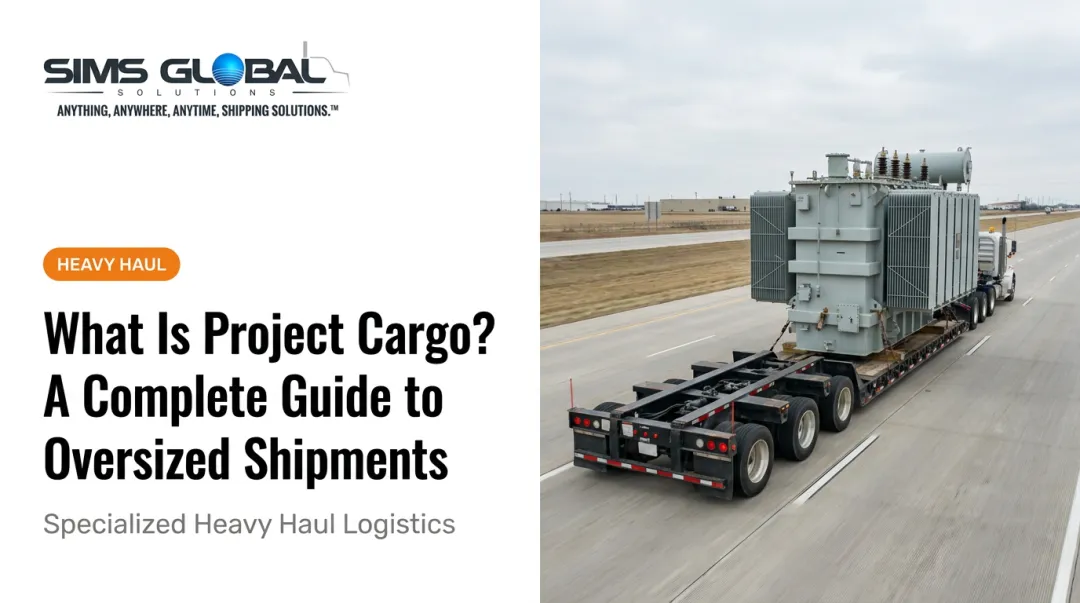
- Industrial and energy components – transformers, generators, wind turbine blades, and nacelles
- Prefabricated structures and specialty cargo – modular buildings, bridge sections, aerospace and defense components, boats and yachts
Wind components deserve a special mention. Turbine blades can stretch hundreds of feet and can't be bent or sectioned, which creates unique routing headaches for shippers moving energy infrastructure.
How to Organize Oversized Cargo Transport: A Step-by-Step Process
Organizing an oversized shipment follows a repeatable sequence, not ad hoc guesswork, regardless of what's on the trailer. Skip a step, such as booking equipment before permits are confirmed, and you're the most likely candidate for delays and fines.
Step 1: Measure and Classify the Load
Before booking anything, document the exact length, width, height, weight, and center of gravity. Compare these figures against federal and state thresholds to confirm the load actually qualifies as oversized.
Weight distribution carries as much risk as total weight. A load under 80,000 lbs gross can still violate a single-axle or tandem-axle limit under the Federal Bridge Formula, which ties allowable weight to axle count and spacing.
Step 2: Secure Permits and Complete a Route Survey
Each state or jurisdiction along the route requires its own permit application, whether that's single-trip, annual, or superload. There's no such thing as one permit covering a multi-state trip.
Alongside permitting, a route survey flags:
- Low bridges and tunnel clearances
- Weight-restricted roads and pavement
- Overhead utility lines
Finalize travel dates only after the survey confirms physical clearance, not just permit approval.
Step 3: Select the Right Equipment and Carrier
Match trailer type to cargo shape and weight distribution:
- RGN (removable gooseneck) for machinery that needs to drive onto the deck
- Lowboy for tall equipment needing a lower deck height
- Step-deck for freight too tall for a standard flatbed
- Extendable trailers for cargo too long for a fixed deck
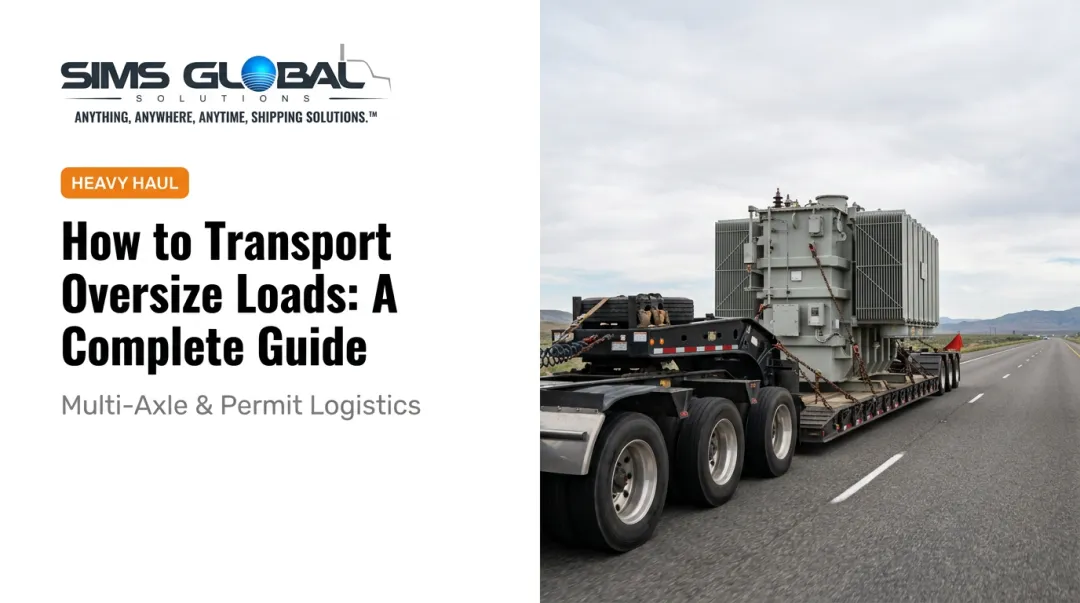
- Multi-axle configurations for spreading heavy weight across more axle groups
Vet carriers for experience with similar loads, proper licensing, and adequate insurance before scheduling anything.
Step 4: Arrange Escorts, Safety Markings, and Insurance
Coordinate pilot cars, warning flags, banners, and amber lights based on state rules, which vary widely. Georgia, Washington, and South Carolina, for example, each set different width and length thresholds for when escorts are required.
For very wide or heavy loads, police escorts may also be mandatory. This step should also include securing supplemental cargo insurance suited to high-value freight, since standard carrier liability rarely covers the full replacement cost of specialized equipment. Sims Global Solutions, for example, offers A+ rated supplemental cargo insurance built specifically to close that gap.
Step 5: Monitor Transit and Confirm Delivery
GPS tracking and continuous communication between driver, escorts, and dispatch allow real-time adjustments for weather, road closures, or mechanical issues. This is where a transportation management system like Sims Global's SimsTrak earns its keep, flagging problems before they become missed delivery windows.
Delivery isn't confirmed until documentation, from bills of lading to condition reports, is complete.

Key Factors That Affect Oversized Cargo Transport
Beyond the five core steps, several variables determine how smoothly and cost-effectively a shipment actually moves.
Equipment and Trailer Selection
| Trailer Type | Best For |
|---|---|
| Step-deck | Tall loads too high for a standard flatbed |
| Lowboy | Machinery needing the lowest possible deck height |
| RGN | Equipment that needs to drive on and off the trailer |
| Extendable | Long freight exceeding standard deck length |
| Multi-axle | Heavy loads needing wider weight distribution |
Matching trailer geometry to cargo specs isn't optional. Carrier equipment availability and maintenance condition also directly affect lead times and safety. Asset-based carriers with in-house fleets typically cut scheduling bottlenecks compared to broker-only models, since they're not waiting on a third party to confirm equipment availability. Sims Global Solutions, for example, pairs its own fleet of RGN, lowboy, and multi-axle trailers with access to 150,000+ carriers for added flexibility.
Permits and Regulatory Compliance
Equipment is only half the equation. Dimension limits, per-axle weight caps, and travel-time windows shift from state to state. A load that's fully compliant in one jurisdiction can be non-compliant the moment it crosses a border.
Permit applications generally require:
- Exact dimensions and certified weights
- Axle configuration and spacing
- Proposed route and travel dates
Processing times vary widely, too. Some states clear routine permits within 2-3 business days; superloads requiring engineering review can take up to two weeks. Budget accordingly, especially on tight project timelines.
Route Planning and Infrastructure Constraints
Once permits clear, the route itself introduces new constraints. Bridge clearances, tunnel height limits, overhead utility lines, and weight-restricted pavement all get surveyed before a route is finalized. A permit doesn't guarantee vertical clearance; only a physical survey does.
Weather, seasonal load restrictions, and local traffic ordinances can force last-minute rerouting. That's why dispatch coordination through a transportation management system like SimsTrak matters. A truck stuck at a closed bridge with no rerouting plan is a costly problem to solve on the fly.
Common Challenges and Misconceptions in Oversized Cargo Transport
A few persistent myths cause real problems for shippers new to this space:
- "Any large truck can haul an oversized load." Trailer geometry, axle weight distribution, and permit compliance are mandatory, not optional. The wrong trailer can violate axle limits even on a truck rated for heavy freight.
- "One permit covers the whole route." Each state or jurisdiction along the route requires its own approval. A permit from the origin state means nothing three states down the line.
- "The initial quote is the final price." Permit fees, escort costs, and route detours can change pricing after booking. Treat early quotes as a starting point, not a fixed number.
Partnering with a full-service provider that manages permitting and routing in-house, like Sims Global Solutions, helps shippers avoid these costly assumptions from the start.
When to Partner With a Specialized Oversized Freight Provider
Some simple, single-state oversized moves can be managed in-house without much trouble. Multi-state, high-value, or time-sensitive shipments are a different story. The compliance risk and coordination burden usually outweigh what an internal team can handle alone.
When evaluating a provider, look for:
- Owned equipment access, not just brokered capacity
- Permit expertise across multiple jurisdictions
- Cargo insurance appropriate for high-value freight
- Real-time shipment visibility from pickup to delivery
Sims Global Solutions' heavy haul division was built around these exact requirements. The company runs its own trucking assets, including RGN, lowboy, and multi-axle trailers, rather than relying solely on brokered capacity.

Its SimsTrak transportation management system adds another layer of visibility, providing real-time tracking so shippers aren't left guessing where a load stands mid-route.
Sims also carries A+ rated supplemental cargo insurance for high-value freight. The company has worked with shippers in aerospace, defense, and material handling, industries where a delayed or damaged shipment can halt production or delay a critical deployment.
Whether you manage a shipment in-house or bring in a partner, following the five-step process outlined above keeps permits current, cargo secure, and delivery dates on target.
Frequently Asked Questions
What is considered oversized cargo?
Cargo exceeding roughly 8.5 ft wide, 13.5 ft tall, or 80,000 lbs is classified as oversized, though exact height and length thresholds vary by state. Always check the specific limits for every state on your route.
How do you transport oversized cargo?
It requires classifying the load, securing permits and a route survey, selecting matched trailer equipment, arranging escorts and insurance, and monitoring the shipment through delivery. Skipping any step raises the risk of fines or delays.
What permits are required for oversized cargo transport?
Each state or jurisdiction along the route requires its own permit. The permit type (single-trip, annual, or superload) depends on load size and how often the shipment or similar loads will move.
What equipment is used to haul oversized loads?
Lowboy, RGN, step-deck, extendable, and multi-axle trailers each solve a different dimension or weight challenge. The right choice depends on cargo height, length, loading method, and weight distribution.
How much does it cost to ship an oversized load?
Cost depends on dimensions, weight, distance, permit fees, and escort requirements. Oversized freight typically runs higher per mile than standard truckload shipping due to these added compliance and safety costs.
Are pilot cars or escorts always required for oversized loads?
Not always. Escort requirements depend on state regulations and the load's width, length, or height, with wider or longer loads often requiring one or more pilot cars or police escorts.