Many shippers don't realize when their freight crosses into "heavy haul" territory until permit fees and lead times catch them off guard. That classification changes everything: the trailer you need, the permits you file, and the timeline you plan around.
This article breaks down exactly what qualifies as heavy haul, the weight and size thresholds that trigger it, the equipment and permits involved, and whether the extra cost is actually worth it for your shipment.
Key Takeaways
- Freight exceeding standard weight or dimension limits qualifies as heavy haul, requiring specialized trailers and permits
- Classification typically kicks in around 80,000 lbs gross weight or beyond standard width/height/length limits, though exact thresholds vary by state
- RGN trailers, lowboys, DOT permits, and pilot car escorts form the core requirements for legal transport
- Upfront costs run higher, but heavy haul often beats the price of disassembly, multiple trips, or delays
- An experienced, asset-based carrier reduces permitting headaches and protects high-value freight in transit
What Is Highway Heavy Haul?
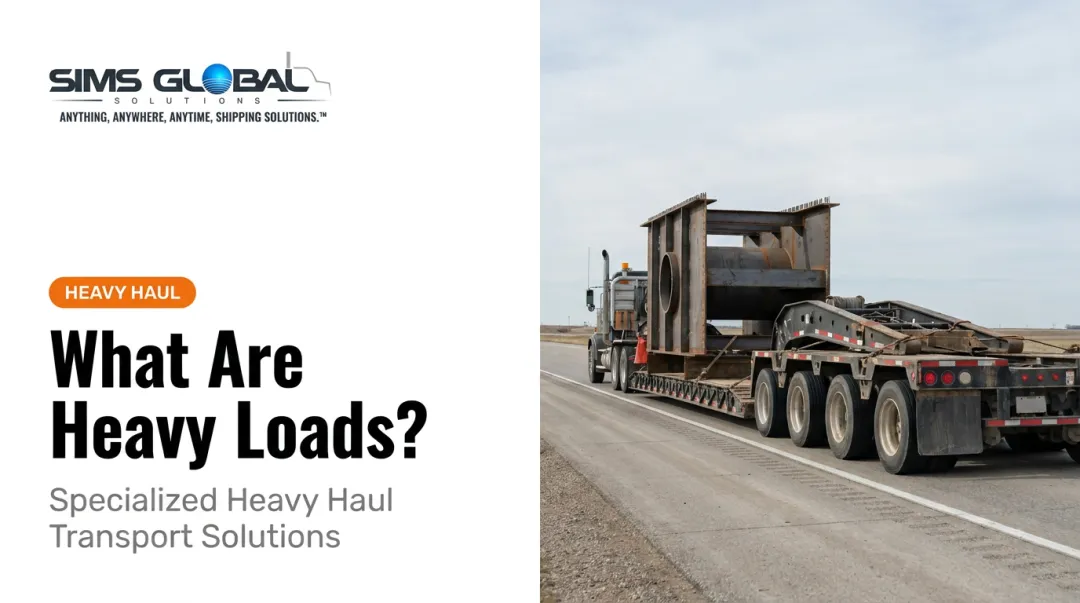
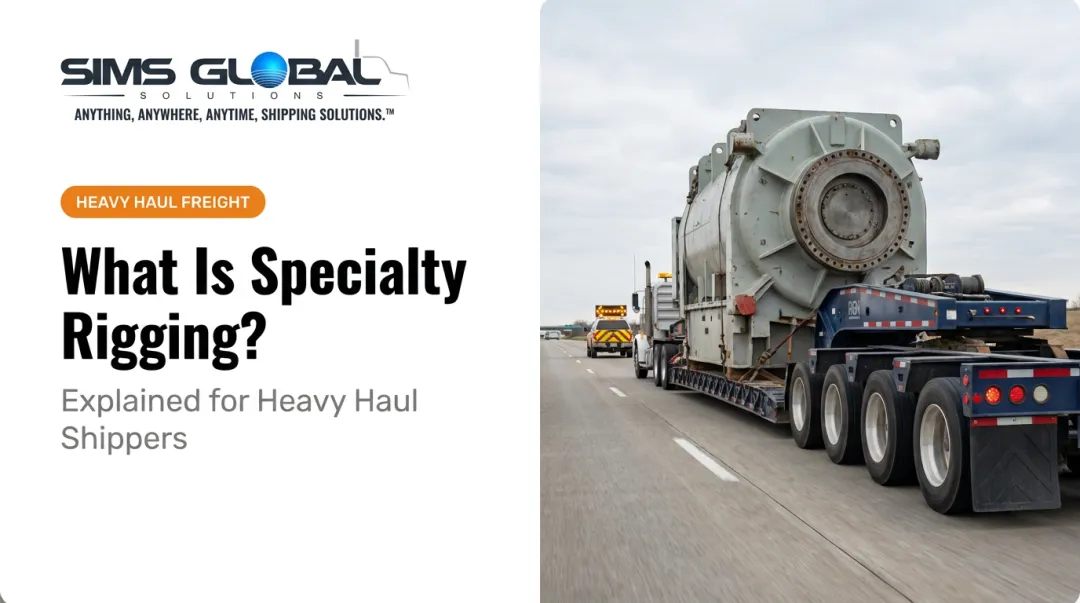
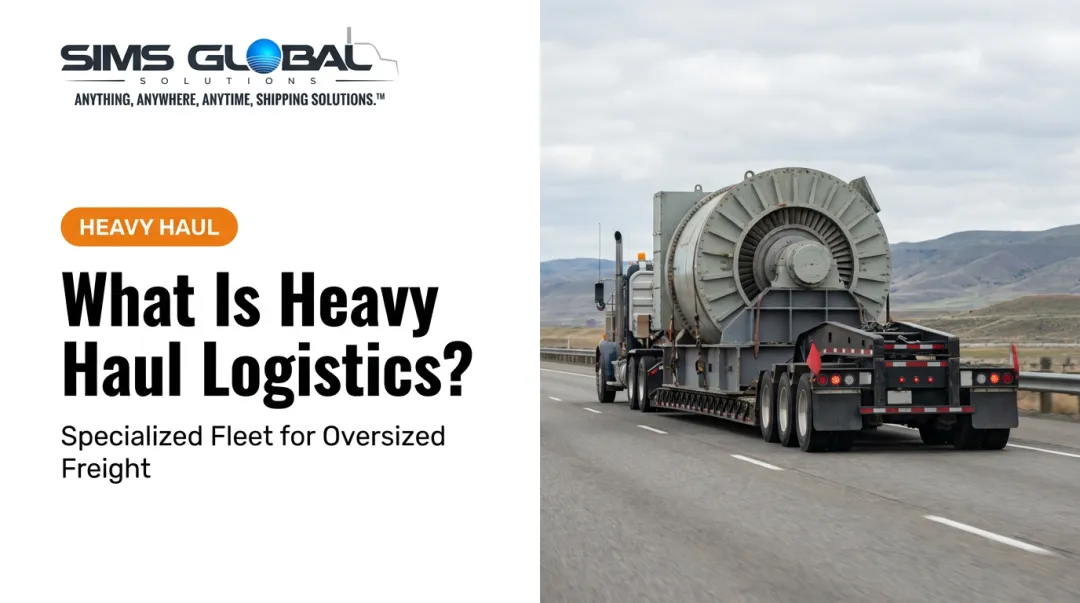
Highway heavy haul trucking moves cargo that exceeds standard legal limits for weight, width, height, or length. Once freight crosses those thresholds, it needs specialized trailers, state-issued permits, and often a completely different transportation plan than a typical shipment.
Standard flatbed or full truckload freight fits within federal legal limits and moves without special clearance. Heavy haul is different in almost every way:
- Equipment: Requires purpose-built trailers instead of standard flatbeds or dry vans
- Planning: Demands route surveys weeks in advance, not same-day dispatch
- Regulatory oversight: Involves state DOT permits and, in many cases, law enforcement coordination
Specialized Trailers Built for the Job
Moving oversized freight legally means matching the right trailer to the cargo's weight and geometry:
- Removable gooseneck (RGN) trailers detach at the front, letting equipment drive or roll directly onto the deck
- Lowboy trailers sit low to the ground, giving extra vertical clearance for tall machinery
- Multi-axle configurations spread weight across more axles to meet bridge and road weight restrictions
At Sims Global Solutions, owning an asset-based fleet means faster access to these specialized trailers instead of waiting on outside carriers. As Billy, Corporate Sales Manager for Heavy Haul Trucking, puts it: "The company trucking assets have opened up countless opportunities that a traditional freight brokerage would have a difficult time tapping into."

Route Surveys and Escort Vehicles
Before a heavy haul load ever moves, someone has to confirm it can physically fit the route. Route surveys typically check:
- Bridge and overpass clearances along the planned path
- Turn radiuses at intersections and highway on/off-ramps
- Weight limits on bridges and secondary roads
Pilot cars and escort vehicles then travel with the load, managing traffic, flagging tight turns, and helping the driver navigate safely.
Common Cargo Types Moved via Heavy Haul
Not all oversized freight looks alike, but most heavy haul shipments fall into a handful of categories:
- Construction machinery, including excavators, bulldozers, and cranes
- Wind turbine components, such as blades, nacelles, and tower sections
- Industrial tanks and pressure vessels for manufacturing plants
- Aerospace and defense assemblies requiring precision handling
- Large manufacturing or material handling equipment too big to disassemble
Energy infrastructure is a major driver of this demand. The U.S. added 6,474 MW of land-based wind capacity in 2023 alone, pushing cumulative capacity past 150,000 MW, according to the Lawrence Berkeley National Laboratory's Land-Based Wind Market Report.
Every one of those turbines needs blades, towers, and nacelles moved by heavy haul carriers.
That growth trajectory isn't slowing. Analysts project more than 15 GW of new wind capacity annually between 2026 and 2028, meaning the demand for specialized freight capacity in this sector is only accelerating.
What's Considered a Heavy Haul Load?
Federal rules set the baseline. Interstate trucking limits generally cap out at 80,000 lbs gross vehicle weight, 20,000 lbs on a single axle, and 34,000 lbs on a tandem axle, per 23 CFR Part 658. Standard width tops out at 102 inches (8.5 ft) on the National Network.
Height isn't federally regulated the same way. There's no federal ceiling, but most states cap height between 13 ft 6 in. and 14 ft.
Here's the part shippers often miss: a load only needs to exceed weight OR dimension limits to be classified heavy haul. It doesn't need to break both rules.
General Weight and Dimension Tiers
Heavy haul isn't one-size-fits-all, so loads range widely:
| Category | Typical Range |
|---|---|
| Just over legal limit | 80,001-120,000 lbs |
| Mid-range heavy haul | 120,001-200,000 lbs |
| Superheavy/superload | 200,000+ lbs |
Dimensional triggers work similarly: width beyond 8.5 ft, height beyond 13.5-14 ft, or length beyond roughly 53-75 ft (depending on trailer type and state) can all independently trigger heavy haul rules.
The catch: thresholds vary significantly by state. Texas, for example, uses permit-fee brackets running from just over 80,000 lbs up to 254,300 lbs, with a separate "superheavy" category above that. Always confirm specific limits with a carrier or the relevant state DOT before shipping.
Equipment, Permits & Regulations Involved
Getting an oversized load from point A to point B legally involves three moving pieces: the right trailer, the right paperwork, and the right safety measures.
Trailers Matched to the Load
- RGN (removable gooseneck) trailers for equipment that needs to roll on and off
- Lowboy trailers for tall machinery needing extra clearance
- Extendable flatbeds for long, narrow cargo like beams or turbine blades
- Multi-axle modular trailers for extremely heavy, non-divisible loads
Permitting Isn't One-Size-Fits-All
Every state has its own oversize/overweight (OS/OW) permit process, and the differences add up fast:
- Texas requires certified route inspections for loads above 20 ft wide, 18 ft 11 in. high, or 125 ft long
- Superheavy permit processing in Texas can take 3-4 weeks for bridge and pavement review
- Other states, like Ohio and Kansas, set different escort thresholds entirely
Permitting expertise separates smooth deliveries from costly delays. Carriers who've navigated Texas's superheavy process and Ohio's escort rules in the same month won't get caught off guard by a state-specific quirk.

Safety and Compliance on the Road
Clearing permits doesn't end the job — the load still has to travel safely alongside everyday traffic. Wide or tall loads need visible warning systems and, often, human traffic management:
- "Oversize Load" signage and flags on projecting cargo
- Required lighting for nighttime visibility
- Pilot car or escort vehicles once width or height crosses state-specific thresholds (often around 14 ft wide)
Is Heavy Haul Worth It?
Heavy haul costs more than standard freight. That's not up for debate. The real question is whether the alternative costs even more.
Why Heavy Haul Costs More
Several factors stack up on every heavy haul invoice:
- Specialized trailer and tractor equipment
- State permit and highway-maintenance fees
- Engineering review for superheavy loads
- Pilot car or police escort costs
- Route planning and slower transit speeds
FreightWaves identifies permits, pilot cars, route planning, specialized rigs, and reduced operating speed as the primary cost drivers behind oversized freight pricing, and that lines up with what shippers see on real quotes.
Here's where heavy haul earns its price tag: it moves equipment that would otherwise require costly disassembly, multiple trips, or custom fabrication just to fit standard freight dimensions.
Consider the alternative. Disassembling a piece of industrial equipment, shipping it in parts, then reassembling on-site adds labor costs, introduces reassembly risk, and can stall a project by weeks. For a single piece of non-divisible cargo, heavy haul is often the only realistic option.
When Heavy Haul Might NOT Be Necessary
Not every oversized-looking load actually needs heavy haul treatment. If equipment can be safely broken down, palletized, or reconfigured to meet standard dimensions, standard freight is almost always cheaper and faster to schedule.
Working with a carrier that offers real-time tracking, like Sims Global Solutions' SimsTrak platform, adds a layer of cost predictability many shippers don't get with smaller brokers. Knowing exactly where a high-value shipment sits, and having a dedicated support contact if something changes, turns an unpredictable process into a manageable one.
Choosing the Right Heavy Haul Partner
Not every carrier can handle heavy haul well. Before signing a contract, evaluate a provider on:
- Permitting expertise: Can they navigate state-specific rules without delays?
- Escort coordination: Do they manage pilot cars directly or scramble to find them last minute?
- Route planning experience: Have they handled bridges, overpasses, and tight turns in your shipping corridor before?
- Equipment availability: Do they own the trailers needed, or are they hoping to find them on short notice?
Sims Global Solutions operates as an asset-based heavy haul carrier, meaning the equipment isn't borrowed or subcontracted at the last minute. That ownership model, paired with the SimsTrak transportation management system for real-time GPS tracking and 24/7 support, gives shippers visibility that pure brokerages often can't match.

That same reliability carries over into the specialized industries the company serves, including aerospace, defense, and material handling, sectors where a missed delivery window carries real financial consequences.
One more detail worth checking before you book: A+ rated supplemental cargo insurance. High-value heavy haul freight, whether it's a turbine component or aerospace assembly, needs coverage that matches the risk. Confirm your carrier offers this before the load ever leaves the yard.
Frequently Asked Questions
What's considered a heavy haul?
A load is considered heavy haul when it exceeds standard legal weight limits (typically around 80,000 lbs) or standard width, height, or length limits. Exact thresholds vary by state, so confirm specifics with your carrier before shipping.
Is a heavy haul worth it?
Heavy haul is worth it when equipment can't be disassembled or shipped through standard freight without added risk or delay. The higher upfront cost usually beats the labor, time, and risk of breaking equipment down.
What size truck is used for heavy haul?
There's no single "truck size" for heavy haul. Instead, carriers use specialized trailers like RGN or lowboy models, often paired with multi-axle configurations to legally distribute weight across the road.
How much does heavy haul shipping cost?
Costs vary based on weight, dimensions, distance, required permits, and escort needs. Because every shipment is different, requesting a custom quote is the most accurate way to get real pricing.
What permits are required for heavy haul trucking?
Permits depend on the state DOT, the load's weight and dimensions, and the planned route. Larger or taller loads often require advance route surveys to confirm bridge and overpass clearance.
How do pilot cars work in heavy haul trucking?
Pilot cars, or escort vehicles, travel ahead of or alongside oversized loads to warn other drivers, help manage tight turns, and confirm safe clearance through bridges and intersections along the route.