Introduction
Nearly every product you buy, from patio furniture to office supplies, spent part of its journey sealed inside a steel box. That box moved between ship, rail, and truck without ever being opened. That's intermodal freight in action. In 2024, containerized cargo topped 170 million TEUs worldwide, according to UNCTAD's Review of Maritime Transport 2024, underpinning global trade worth trillions of dollars a year.
Shippers are feeling real pressure right now, too. U.S. truck operating costs hit $2.336 per mile in 2025, up 3.4% year over year, according to the American Transportation Research Institute. Add persistent driver shortages and mounting sustainability targets, and it's easy to see why more shippers are exploring rail-based alternatives.
Understanding these trade-offs is the first step toward smarter shipping decisions. This guide covers what intermodal containers are, how the shipping process actually works, container types and costs, the real benefits and trade-offs, and how to choose a logistics partner who can manage it all.
Key Takeaways
- Containers move via ship, rail, and truck without unloading, cutting damage and theft risk.
- Rail-based intermodal is roughly four times more fuel-efficient than long-haul trucking alone.
- 53-ft domestic containers hold more cube than 40-ft international boxes for inland moves.
- Intermodal works best on 500+ mile lanes with some flexibility in delivery timing.
- Sims Global Solutions simplifies rail scheduling, drayage, and equipment coordination.
What Is an Intermodal Freight Container?
An intermodal freight container is a standardized, reusable steel box engineered to move between ocean vessels, railcars, and trucks without the cargo inside ever being unloaded. Load it once at the origin, seal it, and it travels through multiple modes untouched until delivery.
You might hear this same box called a:
- Shipping container
- ISO container
- Freight container
- Conex box
- Sea can
Whatever the name, construction basics stay consistent:
- Walls: Corrugated COR-TEN weathering steel resists corrosion during years of ocean exposure
- Flooring: Wood or composite panels laid over steel cross-members
- Corner castings: Positioned at each of the eight corners, they let cranes lift the box
- Twistlocks: Secure the container to a chassis, railcar, or another stacked container
Why ISO Standards Matter
Two standards make global container interchange possible:
- ISO 668 governs classification, external dimensions, and weight ratings
- ISO 1496-1 governs construction specifications and testing requirements
Because every compliant container follows the same corner-casting geometry and size classes, no adapters are needed anywhere in the journey. A box built overseas can be lifted by a crane at a coastal port, loaded onto a railcar inland, and hauled by a local truck chassis without modification. This interoperability cuts transload costs across the supply chain.
International vs. Domestic Containers
Not all containers are built the same. International (ocean) containers, the 20-ft and 40-ft boxes stacked on cargo ships, are built to survive saltwater exposure and heavy stacking loads at sea.
Domestic containers, primarily the 53-ft boxes used within North America, are built wider and taller for road and rail use only, with lighter frames suited to U.S. highway weight limits. We'll break down the size and cost differences in more detail below.
How Intermodal Container Shipping Works
Intermodal shipping follows a "sealed once, handled many times" principle. The container is loaded and sealed at the shipper's dock, then travels through several transportation legs without ever being opened until it reaches the consignee.
A typical door-to-door journey involves four key steps:
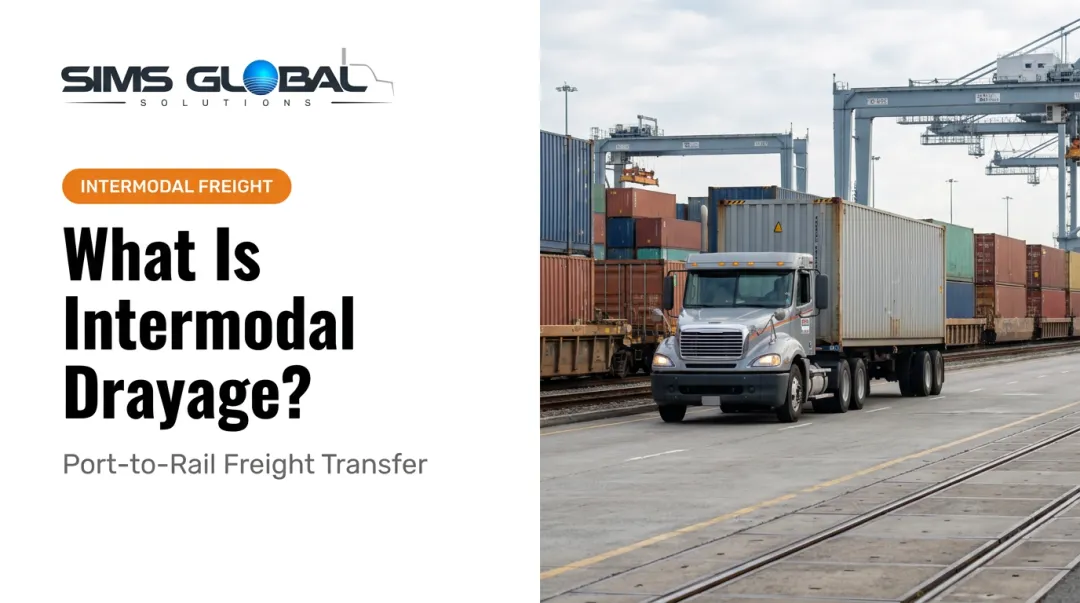
- Origin drayage. A truck hauls the loaded container from the shipper's facility to the nearest rail ramp or port terminal.
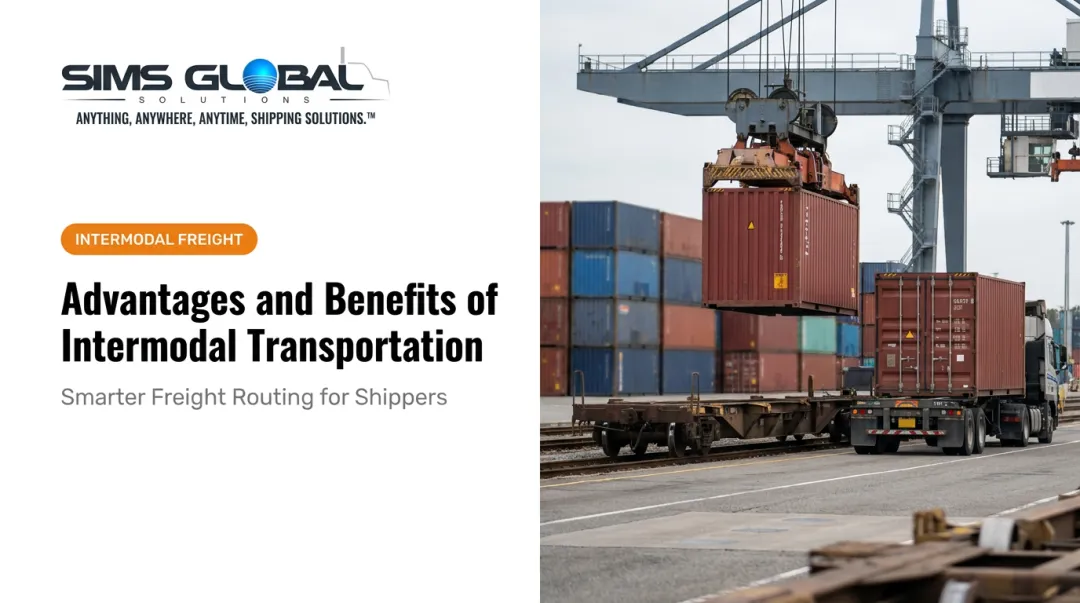
- Crane transfer. A crane lifts the container onto a railcar or vessel.
- Long-haul linehaul. The container travels by rail (or ocean, for international moves) to a terminal near the final destination.
- Destination drayage. A local trucker picks up the container and delivers it to the receiver's dock.

Well Cars and Double-Stacking
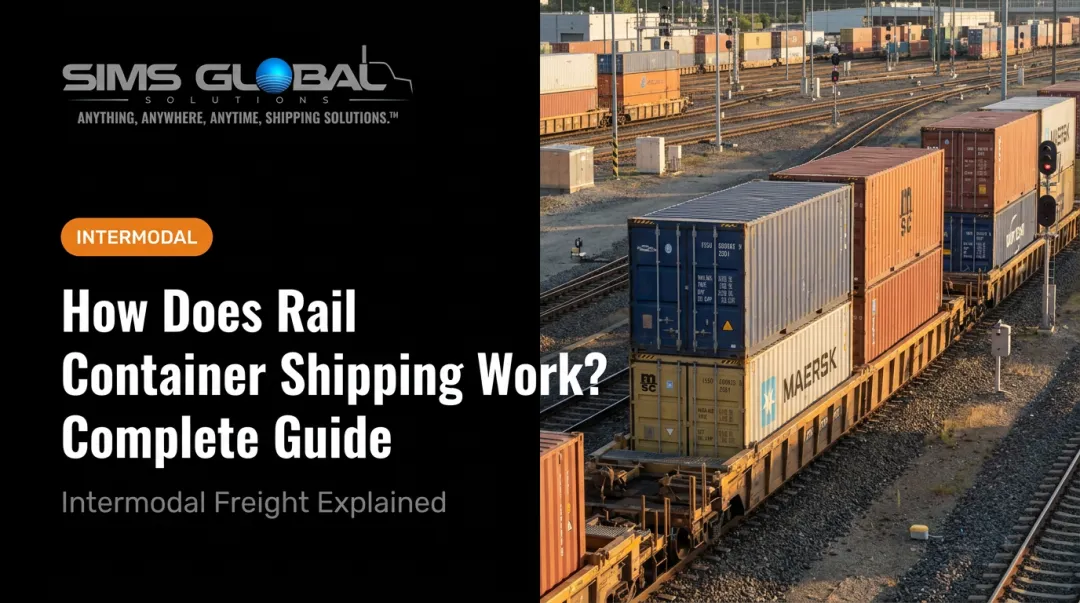
On the rail leg, most containers ride in well cars—depressed-center railcars that allow one container to sit lower than a standard flatcar, with a second container stacked on top.
This double-stack setup lets a single train move twice the freight in the same length of track. It's a major reason rail intermodal is more cost-effective than trucking for long hauls.
The Players Involved
Coordinating an intermodal move typically involves several parties working together:
- Intermodal marketing companies (IMCs) that buy rail and truck capacity and resell it under one freight bill
- Class I railroads that operate the linehaul and terminal network
- Ocean carriers for international legs
- Drayage providers that handle the short-haul truck legs connecting terminals to docks
Transloading: Switching Boxes Mid-Route
Sometimes, freight from an ocean container is repacked into a larger 53-foot domestic container for the inland journey. This process is called transloading.
Because a 53-foot domestic box holds significantly more than a 40-foot international container, shippers can reduce the number of inland loads needed. This consolidation often offsets the extra handling step and facility costs.
Container Types, Sizes, Weight & Cost
International vs. Domestic Containers
| Container | External Length | Approx. Internal Volume | Built For |
|---|---|---|---|
| 20-ft ISO | 20 ft | ~1,170 ft³ | Ocean, rail, and truck |
| 40-ft ISO | 40 ft | ~2,390 ft³ | Ocean, rail, and truck |
| 53-ft domestic | 53 ft | ~3,900 ft³ | Rail and truck (North America only) |
The 45-ft container, once common in North American intermodal fleets, has largely been phased out in favor of the 53-ft standard. Domestic containers are built wider and taller, often to high-cube specifications, because they never have to survive an ocean crossing or heavy vessel stacking.
International boxes carry reinforced corner castings and stronger frames instead, built to handle saltwater exposure and multi-tier stacking aboard a containership.
Specialized Container Types
Beyond the standard dry box, several specialty containers handle cargo that doesn't fit a typical steel box:
- Refrigerated (reefer): Powered temperature control, with some units rated as low as -35°F, for perishables and pharmaceuticals
- Open-top: Removable roof or tarpaulin for crane-loaded or over-height cargo
- Flat rack: No fixed sides or roof, built for oversized or heavy equipment
- Tank container: Stainless-steel pressure vessel inside an ISO frame, typically holding around 25,000 liters of liquid, gas, or powder cargo

How Much Does a 40-Foot Intermodal Container Weigh?
A standard 40-ft dry container typically weighs around 8,270 lbs empty (tare weight), with a maximum gross weight rating near 71,650 lbs when fully loaded, per Hapag-Lloyd equipment specifications. That leaves roughly 63,000 lbs of legal cargo capacity under the container's own rating.
That ISO rating isn't the same as what's legal on U.S. highways, though. Federal interstate weight limits generally cap combination vehicles (tractor, chassis, container, and cargo combined) at 80,000 lbs gross, subject to axle spacing rules under the Federal Bridge Formula.
The real-world payload a trucker can legally haul on a drayage leg is often lower than the container's maximum ISO rating once tractor and chassis weight are factored in.
How Much Does an Intermodal Container Cost?
Buying a container outright is one cost. Shipping cargo inside one is another. As of early 2025, typical North American container purchase prices ranged:
- Used 20-ft: $1,500 to $3,000
- New 20-ft: $2,500 to $5,000
- Used 40-ft: $2,000 to $4,500
- New 40-ft: $3,500 to $6,500
Most shippers, though, aren't buying containers. They're paying a per-shipment intermodal rate that bundles rail linehaul, drayage, and terminal handling. Working with a 3PL like Sims Global Solutions gives shippers access to negotiated intermodal and drayage rates instead of guessing at spot pricing. That rate depends on:
- Distance and lane: Longer hauls generally favor intermodal pricing over truckload
- Container type: Reefers and specialty equipment carry premiums over standard dry boxes
- Fuel surcharges: Adjusted periodically based on diesel and rail fuel indexes
- Seasonal demand: Peak shipping season (typically August through October) tightens capacity and pushes rates higher
Benefits of Intermodal Freight Shipping
Fuel Efficiency Drives Real Savings
Rail is the backbone of intermodal's cost advantage. Freight rail moves a ton of cargo nearly 500 miles per gallon of fuel on average, making it roughly four times more fuel-efficient than long-haul trucking, according to the Association of American Railroads.
That efficiency gap widens the farther freight travels, which is why intermodal pricing tends to beat pure truckload on lanes of 500 miles or more.
A Lighter Carbon Footprint
Sustainability pressure isn't going away. The EPA's SmartWay program found that Class I rail operations average about 22 grams of CO2 per ton-mile, compared to roughly 65 grams for truck-only moves.
That means shifting a load to rail-based intermodal can cut emissions by roughly 75%, according to EPA SmartWay program data. Kimberly-Clark's own EPA-documented shift to intermodal removed 560,000 truck trips from U.S. highways over several years.

Fewer Hands on Your Freight
Because a sealed container isn't opened or re-handled between origin and destination, intermodal reduces the touchpoints where cargo can be damaged or stolen compared to loose-freight handling. That's a meaningful consideration given that cargo theft losses topped $725 million in 2025.
In short, intermodal delivers:
- Lower per-mile cost on long-haul lanes
- A smaller carbon footprint than truck-only moves
- Fewer touchpoints, meaning less risk of damage or theft
- Predictable, scheduled capacity even during driver shortages
Challenges to Consider With Intermodal Shipping
Intermodal isn't the right fit for every shipment. Before switching modes, weigh these trade-offs.
Terminal access and coordination risk. Intermodal requires shipments to reach a rail ramp or port terminal, and the move depends on coordination between drayage carriers, railroads, and terminal operators. If one leg misses a cutoff or gets delayed, the entire shipment can slip a day or more.
Slightly longer transit times. Domestic intermodal typically takes a bit longer than a dedicated truckload move covering the same distance, since freight waits for scheduled rail departures rather than moving continuously. That makes it a better fit for shipments with flexible delivery windows, rather than urgent, next-day freight.
Equipment availability swings by lane and season. Chassis and container shortages aren't a fixed nationwide problem. Early 2025 industry reporting found the national 40-ft chassis market was actually oversupplied, with roughly 100,000 units added during the pandemic.
Still, peak-season dwell and localized shortages can appear on specific lanes. Confirm equipment availability before locking in a schedule.
An experienced 3PL that already manages drayage, rail, and terminal coordination, such as Sims Global Solutions, can help reduce this risk for shippers new to the mode.
Shippers new to the mode should:
- Build in buffer days around peak season (August through October)
- Confirm chassis and container availability at both origin and destination ramps
- Track cutoff times closely, since a missed rail cutoff can add a full day to transit
Choosing the Right Intermodal Logistics Partner
Coordinating drayage, rail scheduling, transloading, and terminal cutoffs across multiple carriers is a lot to manage in-house, especially for shippers who move freight occasionally rather than daily. That's where an experienced logistics partner earns its keep.
Sims Global Solutions offers intermodal and drayage as part of its broader multi-modal capabilities, alongside truckload, LTL, expedited, warehousing, and fulfillment services. Instead of managing separate relationships with a railroad, a drayage carrier, and a terminal operator, shippers work with one point of contact who coordinates the full move.
A few things worth looking for in any intermodal partner:
- Broad carrier access: Sims Global Solutions taps a network of more than 150,000 vetted carriers, helping fill capacity gaps when a specific lane tightens.
- Technology that shows the full picture: SimsTrak, the company's proprietary TMS, delivers quoting, scheduling, and real-time updates on one platform.
- Support when something goes sideways: Rail delays happen. Sims Global Solutions backs clients with 24/7 agent support and a dedicated operations team ready to troubleshoot and keep shipments moving.

Choosing a partner isn't just about day-to-day execution, though. It also means having someone who can answer a bigger question: does intermodal make sense for this lane at all?
For shippers weighing intermodal against straight truckload, the right partner should be able to model both options against their actual lanes and volumes, not just quote a generic rate. That comparison is often the difference between adopting a mode that saves money and one that just adds complexity.
Frequently Asked Questions
What is an intermodal freight container?
It's a standardized, reusable steel box built to ISO specifications that moves between ship, rail, and truck without unloading the cargo inside. The same box travels the entire journey, sealed from origin to destination.
How much does an intermodal container cost?
Purchase prices typically range from $1,500 to $6,500 depending on size and condition (new vs. used). Per-shipment freight rates depend on distance, container type, fuel surcharges, and seasonal demand rather than that upfront cost.
How much does a 40-ft intermodal container weigh?
A standard 40-ft container weighs around 8,270 lbs empty, with a maximum gross weight near 71,650 lbs when loaded. Actual legal payload on U.S. highways is often lower once tractor and chassis weight count against the 80,000-lb federal limit.
What is the difference between intermodal shipping and drayage?
Intermodal shipping is the full multi-modal journey combining ship, rail, and truck. Drayage is just one piece of it: the short-haul trucking leg connecting a port or rail ramp to the final pickup or delivery point.
Is intermodal shipping cheaper than truckload?
Often, yes, especially on lanes of 500 miles or more, where rail's fuel efficiency lowers the linehaul cost. Transit time may run slightly longer, so it suits freight with some flexibility in delivery timing.
How long does intermodal shipping typically take?
Domestic intermodal usually adds about a day compared to standard truckload on the same lane, since freight waits for scheduled rail departures. Build that extra day into your schedule for shipments without a hard delivery deadline.