Introduction
Picture this: you have a 60-ton excavator sitting at a job site and need it transported 400 miles. You call a carrier, book what looks like the right trailer, and the load gets turned back at the state line — the combined height violates a clearance restriction you didn't account for. Now you're facing permit violations, a delayed project, and an unplanned rebooking cost.
That scenario plays out more often than shippers expect. The low bed vs. flatbed decision directly determines compliance, cost, and on-time delivery. It's not a minor equipment preference — it's a routing decision with real consequences.
This guide covers the core differences between trailer types, weight and height specs grounded in manufacturer data, permit requirements, cost factors, and a practical decision framework.
Key Takeaways
- Low bed (lowboy) trailers sit 18–24 inches off the ground, built for tall or heavy equipment that exceeds standard road height limits
- Flatbed trailers ride 47–54 inches high and handle cargo within standard US height restrictions
- Total loaded height (cargo height + deck height) is the single most important factor when choosing between them
- Low bed shipments almost always require state-issued oversize/overweight permits and pilot vehicles; most flatbed loads do not
- Flatbed freight costs less and books faster; low bed hauls add cost for permits, specialized equipment, and route planning
Low Bed vs. Flatbed Trailers: Quick Comparison
| Factor | Low Bed (Lowboy) | Flatbed |
|---|---|---|
| Deck Height | ~18–24 inches (loaded) | ~47–54 inches |
| Weight Capacity | 40–100+ tons (config-dependent) | Typically 48,000–60,000 lbs |
| Typical Cargo | Excavators, cranes, turbine components, military vehicles | Steel, lumber, machinery parts, construction materials |
| Permit Required? | Almost always — state OS/OW permits, often pilot cars | Usually not, unless cargo exceeds dimensional limits |
| Relative Cost | Higher — permits, specialized equipment, slower transit | Lower — widely available, standard DOT compliance |
A note on deck heights: Talbert Manufacturing publishes loaded deck heights of 18, 22, and 24 inches across their double-drop model line. Fontaine's Renegade model goes as low as 12 inches. On the flatbed side, Hyundai Translead specifies a 54-5/16-inch maximum rear deck height on their Latitude flatbed. These are model-specific figures: treat published ranges as representative, not universal.

What Is a Low Bed Trailer?
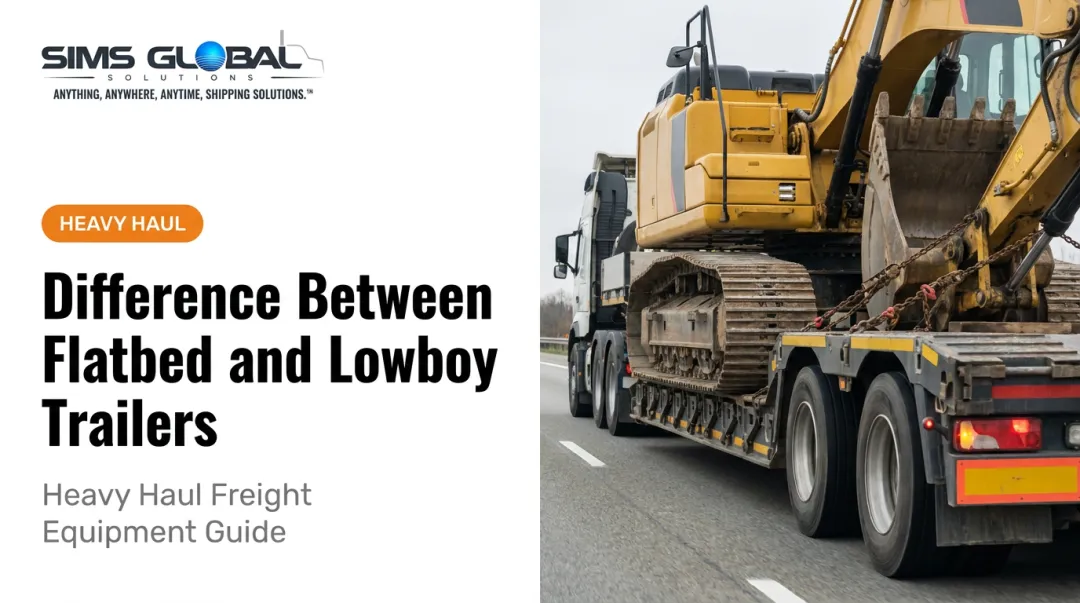
A low bed trailer — also called a lowboy — is a specialized semi-trailer with a dropped deck sitting just 18–24 inches off the ground (depending on model and axle configuration). That dramatically lower profile exists for one reason: to keep tall, heavy loads within road height clearances that a standard trailer would blow right past.
How the Deck Works
The deck "drops" twice — behind the gooseneck at the front, and again just before the rear wheels. This double-drop design places the cargo well below what's possible on a flatbed, and keeps the center of gravity low enough to haul high-value equipment without the load becoming a stability hazard.
The Three Main Variants
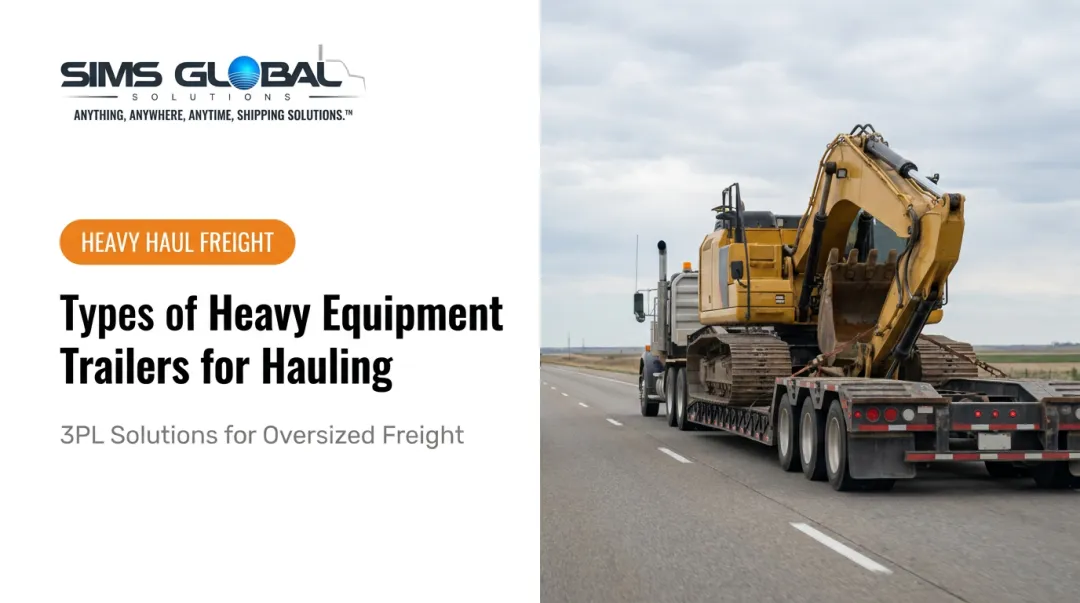
Fixed Gooseneck (FGN): The neck doesn't detach. Loading happens via ramps at the rear. Talbert's 30-55 FG is a common example, rated at 60,000–110,000 lbs.
Removable/Detachable Gooseneck (RGN): The front section disconnects, creating a ramp that lets equipment drive directly onto the trailer. Faster loading, less equipment-handling risk. Sims Global Solutions runs RGN trailers in their owned heavy haul fleet, rated to 60,000 lbs with a 144-inch maximum load height.
Double Drop: The lowest deck configuration in the lowboy family — intended for ultra-tall loads where even a standard lowboy would exceed clearance limits. Front and rear decks on a double drop add loading versatility for cargo that would otherwise be unmanageable on any other trailer type.
The Regulatory Reality
Most low bed loads require oversize/overweight (OS/OW) permits issued at the state level — the federal government does not issue these permits, according to FHWA. Requirements vary by state, route, and load dimensions. Plan for:
- State permit fees: Texas single-trip fees run $210–$470 depending on load weight
- Pilot/escort vehicles: Required above certain width or length thresholds in many states
- Route surveys and law enforcement coordination: Often mandatory for super-heavy moves
Factor all of this into your timeline before the truck rolls.
When Low Beds Are the Only Option
That permit complexity reflects the weight and scale of what lowboys actually carry. Industries that depend on them do so because no other trailer can legally handle their freight:
- Construction: Excavators, bulldozers, graders, tower cranes
- Energy: Wind turbine tower sections and generators — the DOE reports average rotor diameters exceeded 133.8 meters in 2023, putting components well outside standard transport parameters
- Mining: Haul trucks, drilling rigs, processing equipment
- Aerospace & Defense: Military vehicles, oversized government equipment
- Infrastructure: Bridge components, large-diameter pipe sections

For cargo that is both extremely heavy and tall, a flatbed would place the load too high to pass legally under bridges and overpasses. Understanding where lowboys are required makes the flatbed comparison much clearer — which is where the tradeoffs between the two trailer types start to matter.
What Is a Flatbed Trailer?
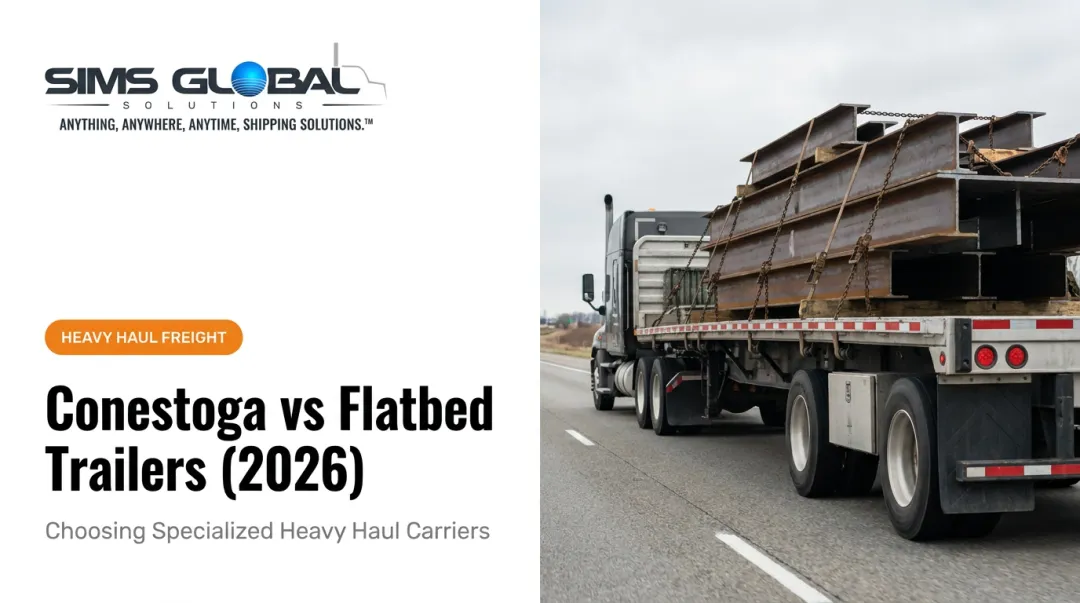
A flatbed trailer is an open, flat-deck semi-trailer without sides or a roof. The deck sits roughly 47–54 inches off the ground, and the open design lets you load from the side, top, or rear using a forklift or crane — a flexibility that makes flatbeds the default choice for open-deck freight.
The key constraint is height. FHWA confirms there is no federal vehicle height limit — states set their own, with most falling between 13 feet 6 inches and 14 feet for total loaded height. Texas and California permit 14 feet; Florida caps at 13 feet 6 inches inclusive of load.
Cargo that fits within those state limits — combined with the trailer deck height — stays out of oversize territory and avoids the permit process entirely.
According to Great Dane, standard flatbeds typically carry 48,000–60,000 lbs, making them suitable for most commercial freight that doesn't involve complete heavy machinery. That weight range covers a wide variety of loads, from structural steel to prefab panels.
What Flatbeds Carry Best
- Steel beams, coils, and structural components
- Lumber and dimensional wood products
- Large machinery components (not complete machines)
- Prefab building materials and panels
- Agricultural equipment within height limits
- HVAC units and industrial equipment packages
- Construction materials — concrete forms, rebar bundles, precast sections
The Practical Rule for Shippers
If your cargo is within 8.5 feet wide, fits under a 13.5–14 foot total loaded height (cargo + deck), and comes in under 48,000 lbs, a flatbed is the faster, more cost-effective choice. No permit process. Broader carrier availability. Simpler booking.
Low Bed vs. Flatbed: Which Should You Choose?
Most shippers overthink this decision. Two measurements determine the answer 90% of the time.
Step 1: Calculate Total Loaded Height
Measure your cargo's height and add the trailer deck height:
- Flatbed deck: ~47–54 inches (roughly 4 feet)
- Low bed deck: ~18–24 inches (roughly 1.5–2 feet)
If the total exceeds your state's legal height limit (typically 13.5–14 feet), you need a low bed — full stop. There's no permit exception for exceeding height on a flatbed; you simply can't move the load legally.
If total loaded height fits within limits, a flatbed is almost certainly the better call.
Step 2: Check Weight Against Flatbed Capacity
Flatbeds are typically rated for 48,000–60,000 lbs payload. Federal Interstate baselines cap gross weight at 80,000 lbs, with single axle at 20,000 lbs and tandem axle at 34,000 lbs. If your cargo pushes past those thresholds, a multi-axle low bed becomes necessary to distribute weight legally across axles.
Step 3: Factor in Permit Cost and Transit Time
Low bed shipments with OS/OW permits add real cost and time:
- State permit fees range from $40 (New York single-trip) to $470+ (Texas super-heavy)
- Pilot/escort vehicle arrangements add coordination time and fees
- Route surveys may be required for bridge clearance verification
- Multi-state moves require permits from each state individually

Specialized freight rates can exceed $4/mile on some lanes, compared to $2.50–$3.50/mile for standard flatbed freight, according to a 2024 FreightWaves benchmark. That difference adds up fast on longer hauls. Always calculate total shipping cost — base rate plus permits, escorts, and planning time — not just the line-haul rate.
Decision Summary
Choose a low bed when:
- Total loaded height exceeds 13.5–14 feet for your route
- Payload exceeds flatbed weight capacity or axle limits
- Cargo is a complete machine (excavator, crane, large generator)
- Load dimensions require axle spreading for legal weight distribution
If none of those conditions apply, a flatbed is the more practical choice.
Choose a flatbed when:
- Cargo height + deck height stays under state height limits
- Payload is within 48,000–60,000 lbs
- You want faster carrier procurement and lower total cost
- Cargo is components or materials, not complete heavy equipment
If you're managing complex or recurring heavy haul moves, the permit coordination and carrier vetting alone can consume significant time. Sims Global Solutions' heavy haul team handles carrier procurement, permit logistics, and route planning through an owned fleet of RGN, double drop, and lowboy trailers — plus a vetted carrier network — so you're not sourcing equipment across multiple vendors for every shipment.
Conclusion
Neither trailer type is inherently better — they solve different problems. Low beds exist because certain cargo physically cannot move any other way. Flatbeds handle the enormous volume of open-deck freight that stays within standard regulatory limits, and they do it faster and at lower cost.
Get the two measurements right — total loaded height and payload weight — and the choice usually makes itself. For loads that fall into the low bed category, permits, escorts, and route planning add real complexity — and that's where the right freight partner makes the difference.
Sims Global Solutions runs its own fleet of RGN, lowboy, and multi-axle trailers alongside a network of 150,000+ vetted carriers, with in-house permit coordination handled end to end. Contact the Sims Global Solutions heavy haul team to get equipment, permits, and routing sorted for your next shipment.
Frequently Asked Questions
What is the difference between a lowbed and a flatbed?
The primary difference is deck height. A lowbed sits approximately 18–24 inches off the ground (model-dependent) to keep tall, heavy loads within road height clearances. A standard flatbed deck sits roughly 47–54 inches high and is used for cargo that fits within standard US height restrictions.
What is the weight capacity of a lowbed truck?
Low bed trailers typically handle between 40 and 100+ tons depending on axle configuration and deck length — Talbert's 65SA model, for example, is rated at 130,000–140,000 lbs with specific axle setups. Standard flatbeds typically carry 48,000–60,000 lbs.
What does it cost to ship freight on a lowbed trailer?
Lowbed freight rates run higher than flatbed due to specialized equipment, permit requirements, and escort vehicle costs. Specialized oversized freight can exceed $4/mile on some lanes per FreightWaves, compared to $2.50–$3.50/mile for standard flatbed. Actual rates vary significantly by lane, load dimensions, and state permit requirements.
Do low bed trailer shipments require special permits?
Yes. Most lowboy shipments require oversize and/or overweight permits issued at the state level, since the federal government does not issue OS/OW permits. Requirements vary by state, route, and load dimensions. Pilot/escort vehicles are also commonly required above certain width or length thresholds.
Can a flatbed trailer be used instead of a low bed for heavy equipment?
A flatbed works if the total loaded height (cargo + deck) stays within your state's height limit (typically 13.5–14 feet) and payload doesn't exceed flatbed capacity. If either threshold is exceeded, a low bed is the legal and safe requirement — not an upgrade option.
What industries most commonly use low bed trailers?
Construction, mining, energy (wind power and utilities), aerospace and defense, and heavy manufacturing are the primary users. These sectors routinely move equipment that is too tall, too heavy, or both for standard flatbed transport to handle within legal limits.