For shippers weighing their options, understanding Full Truckload shipping — what it actually means, when it makes financial sense, and how pricing works — is the difference between an optimized freight program and one that bleeds margin quietly every quarter.
This guide covers everything: FTL's definition, key benefits, a direct comparison with LTL, current rate benchmarks, equipment options, and what to look for in a provider.
Key Takeaways
- FTL means one shipper books exclusive use of an entire trailer — the truck goes directly from pickup to delivery, no stops
- The trailer doesn't need to be physically full; you're paying for dedicated capacity, not cubic footage
- For loads of roughly 12+ pallets, FTL often beats LTL on cost, speed, and damage risk
- DAT's June 2026 dry-van spot rate hit $3.00/mile, so knowing what drives rates helps you budget accurately
- Vetting a provider's carrier network, tracking tools, and licensing credentials matters as much as the rate
What Is FTL Trucking?
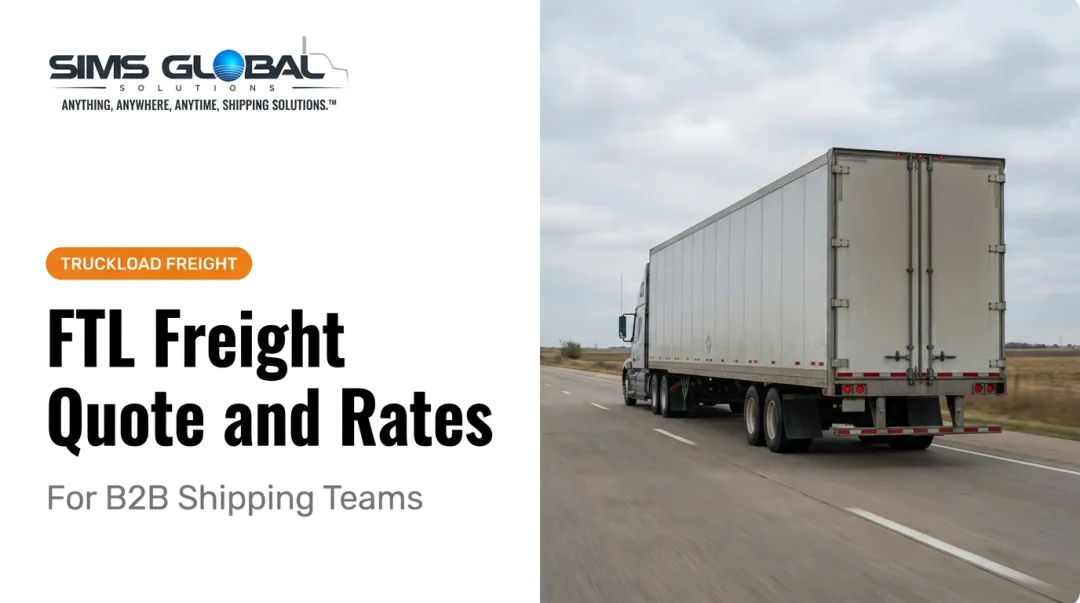
Full Truckload (FTL) shipping means one shipper's cargo occupies an entire trailer. No other shippers' freight shares the space. The truck is dedicated exclusively to that single shipment from origin to destination.
The operational difference from other modes is straightforward: cargo is picked up, the trailer is sealed, and the driver heads directly to the delivery point without stopping at intermediate terminals, transferring freight between trailers, or picking up other shippers' goods along the route.
"Full" Doesn't Mean Physically Packed
A shipper can book FTL even if the load doesn't physically fill the trailer — what matters is that you're paying for exclusive use of the truck. As FreightWaves describes it, truckload is fundamentally about exclusive use, not about maximizing every cubic foot.
Where FTL Sits on the Freight Spectrum
| Mode | What It Means |
|---|---|
| FTL | One shipper books the entire trailer exclusively |
| PTL (Partial Truckload) | Mid-size freight occupying part of a trailer; DAT notes this commonly starts around 5,000 lb or 6+ pallets |
| LTL | Multiple shippers share one truck; priced per pallet or per hundredweight |
| STL (Shared Truckload) | Multiple compatible shipments share a truck; shippers pay for space used, not exclusive capacity |

Once you know which mode fits your load, the next question is whether FTL's speed and control advantages justify the cost — which depends on shipment size, urgency, and cargo sensitivity.
Key Benefits of FTL Shipping
Faster, More Predictable Transit
Because the truck makes no intermediate stops, FTL offers a direct point-to-point route. Carriers can commit to firm pickup and delivery appointments — something LTL networks, with their terminal-to-terminal relay structure, generally can't promise. For time-sensitive or just-in-time deliveries, that predictability has real operational value.
Lower Damage Risk
FTL freight is loaded once at origin and unloaded once at destination. LTL freight, by contrast, passes through multiple terminals where it's transferred between trailers, handled by dock workers, and reloaded alongside other shippers' cargo. Each transfer point is an opportunity for damage. FTL eliminates all of them — making it the preferred choice for fragile, high-value, or irregularly shaped freight.
Cost Efficiency at Scale
FTL is priced as a flat rate for the full truck. For large shipments, that flat rate typically yields a lower cost per pallet than routing the same volume through multiple LTL shipments. The math works most clearly at 12+ pallets, though the crossover point varies by lane, accessorial fees, and LTL carrier pricing.
The key to maximizing FTL value: fill the trailer as close to capacity as possible. Paying for 53 feet of trailer space with 20 pallets in it costs the same as paying for it with 26 pallets in it.
Greater Security and Control
With no other shippers' cargo in the trailer, you control the load from seal to delivery. That means no mix-ups, no contamination risk from adjacent freight, and far lower theft exposure than multi-stop LTL moves. Shippers can also dictate special handling conditions — temperature parameters, orientation requirements, driver protocols — for the entire truck.
Simpler Shipment Management
FTL collapses shipment management to a single bill of lading, one carrier contact, and one tracking system. For logistics teams managing high shipment volumes, that simplicity isn't trivial. Compare it to coordinating multiple concurrent LTL shipments across different carriers, each with its own BOL, tracking portal, and claims process. Working with a 3PL like Sims Global Solutions takes this a step further — one coordinator manages every load across their entire carrier network, from pickup through delivery.
FTL vs. LTL: Choosing the Right Freight Mode
Side-by-Side Comparison
| Dimension | FTL | LTL |
|---|---|---|
| Shipment size | 12+ pallets (general guideline) | 1–6 pallets typically |
| Cost structure | Flat rate per truck/mile | Per pallet or per hundredweight |
| Transit time | Direct, predictable | Multi-terminal relay; less predictable |
| Handling risk | Loaded/unloaded once | Multiple transfer points |
| Scheduling | Firm pickup/delivery appointments | Estimated windows |
| Best use case | Large, time-sensitive, or high-value loads | Smaller, flexible shipments |

When FTL Is the Right Choice
FTL makes sense when:
- Your shipment is roughly 12 or more standard pallets
- You have firm delivery deadlines or just-in-time requirements
- You're shipping fragile, high-value, or temperature-sensitive freight
- The load requires specialized equipment (flatbed, reefer, lowboy)
- Multiple LTL quotes — including accessorials — would cost more than a single truck rate
When LTL Makes More Sense
LTL is the better option when:
- You're shipping 1–6 pallets with no urgent deadline
- You don't need dedicated trailer space
- Your freight is standard, non-fragile, and tolerates normal handling
- You'd be paying for a half-empty truck under FTL pricing
The Gray Zone: 6–12 Pallets
Loads in this range sit in genuinely ambiguous territory. LTL accessorial charges — fuel surcharges, re-delivery fees, extended area fees — can add up quickly and close the gap with FTL pricing. Get quotes for both modes on loads in this range and compare total landed cost, not just the base rate. Sometimes FTL wins even at lower volumes once you factor in the transit time difference.
What Does FTL Shipping Cost?
FTL is priced as a flat rate for the full truck, typically structured on a per-mile basis. You're not paying per pallet or per pound — you're paying for the truck regardless of how full it is.
According to DAT's July 2026 data release, the national dry-van spot rate reached $3.00/mile in June 2026, up $0.11 from May. That's a national benchmark for loads of 250+ miles — not a quote for any specific lane.
That flat-rate structure doesn't mean pricing is predictable. Several variables can shift what you'll pay on any given lane significantly.
What Drives Rate Fluctuations
- Lane distance and corridor demand — high-volume lanes (Chicago to LA, for example) behave differently than backhaul routes where capacity is loose
- Backhaul imbalances — trucks returning empty from low-freight regions accept lower rates; lanes with freight in both directions cost more
- Fuel surcharges — calculated separately and negotiated between parties, often benchmarked to EIA's weekly diesel price
- Spot vs. contracted rates — contracted lanes provide rate stability; spot-only shippers pay more over time
- Accessorial charges — detention, layover fees, lumper fees for unloading, and additional stop charges all add to total cost

How to Reduce FTL Costs
- Maximize trailer utilization — the more freight you load, the lower your effective cost per unit
- Build contracted lane relationships — carriers offer stability for predictable volume; spot-only shippers pay more over time
- Book with adequate lead time — last-minute loads almost always carry a spot rate premium
- Choose a provider with deep carrier network access — Sims Global Solutions, for example, connects shippers to 35,000+ truckload carriers with real-time TMS rate forecasting across all U.S. lanes, which matters most when capacity tightens and spot rates spike
FTL Trailer Types and Equipment Options
Choosing the wrong trailer type for your freight creates safety risks, compliance problems, or unnecessary cost — sometimes all three.
Dry Van (48' and 53')
The standard for general FTL freight. Enclosed trailers protect cargo from weather without temperature control — suited for palletized goods, packaged consumer products, retail merchandise, and most manufactured goods. A standard 53' dry van offers roughly 3,950 cubic feet of interior space.
Federal law caps interstate combination vehicle gross weight at 80,000 lbs (with per-axle limits of 20,000 lbs single axle and 34,000 lbs tandem). The actual payload available for cargo depends on the tractor, trailer weight, and axle configuration — commonly landing in the 44,000–45,000 lb range for a loaded dry van.
Specialized Equipment
| Type | Best For |
|---|---|
| Reefer | Temperature-sensitive freight: food, pharmaceuticals, chemicals requiring climate control |
| Flatbed | Oversized, heavy, or construction freight that can't fit in an enclosed trailer; allows top/side loading |
| Step-deck | Taller freight that exceeds dry van height limits but doesn't require a lowboy's ground clearance |
| Lowboy | Heavy construction or industrial equipment with significant height; provides the lowest deck height |
| RGN (Removable Gooseneck) | Very heavy machinery that must be driven or rolled onto the trailer |
| Tanker | Liquid or bulk cargo |

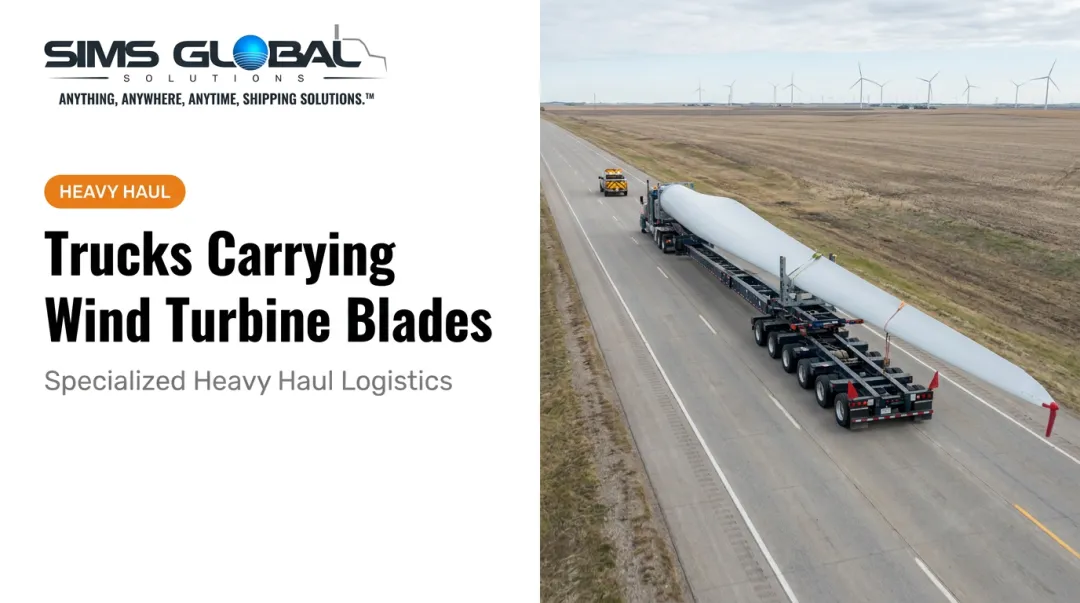
Loads exceeding standard federal dimensions or weight limits require state-issued oversize/overweight permits, and requirements vary by state — adding coordination complexity that catches many shippers off guard. This is especially common in aerospace, defense, and construction equipment shipments. Sims Global Solutions' heavy haul division operates its own RGN, lowboy, and multi-axle trailers and manages the permitting process for over-dimensional freight, which reduces that coordination burden for shippers in those industries.
How to Choose an FTL Trucking Provider
Carrier Network and Coverage
Whether you're working with a direct carrier, a freight broker, or an asset-based 3PL, the depth of the provider's carrier network determines capacity access when markets get tight. A provider with thin carrier relationships will struggle to find competitive capacity on your lanes when demand spikes.
Sims Global Solutions, for example, maintains a network of 35,000+ vetted truckload carriers covering all 50 states — with deep regional presence in the Southeast through partnerships with Southeastern Freight Lines and AAA Cooper, and dedicated capacity on high-volume national lanes.
Technology, Tracking, and Transparency
Real-time GPS visibility is a baseline expectation for FTL shipments, not a premium feature. Look for providers offering:
- Live shipment tracking (Sims provides 15-minute automated GPS pings for time-sensitive loads)
- A single TMS platform for quoting, booking, and tracking
- Proactive communication from dedicated operations staff — not just a tracking link
47% of shippers identified truckload as the mode most needing improved real-time visibility, according to Descartes' 2024 Transportation Management Benchmark Survey. Choosing a provider that already solves this problem matters.
Licensing, Insurance, and Carrier Vetting
Before tendering a load, verify:
- Valid DOT and MC numbers — confirm through FMCSA's SAFER database
- Broker authority — property brokers are required to carry $75,000 in BMC-84 surety bond or equivalent trust-fund security
- Cargo insurance — no federal minimum applies to general freight carriers, so ask specifically what coverage applies to your shipment
- Carrier vetting process — reputable providers screen for safety ratings, operating authority, and insurance status before tendering loads

FMCSA warns that carrier fraud, including unauthorized use of another company's DOT number, is an active risk. A provider with in-house carrier procurement and vetting — not just a public load board — keeps fraudulent carriers off your loads entirely.
Frequently Asked Questions
What does FTL mean in trucking?
FTL stands for Full Truckload. It means a single shipper's cargo occupies the entire trailer — the truck is dedicated exclusively to that shipment and travels directly from pickup to delivery without sharing space with other shippers or stopping at intermediate terminals.
How much does FTL trucking cost?
FTL rates are typically quoted as a per-mile flat rate for the full truck. The national dry-van spot benchmark reached $3.00/mile in June 2026 per DAT data, though actual lane quotes vary significantly based on distance, corridor demand, fuel surcharges, and accessorial charges.
Which is cheaper, LTL or FTL?
LTL is generally cheaper for small shipments (1–6 pallets) since you only pay for the space used. FTL becomes more cost-effective for larger loads (typically 12+ pallets) where the per-unit cost of multiple LTL shipments, plus accessorial fees, exceeds the flat truck rate. The 6–12 pallet range is genuinely close, so get quotes for both modes before deciding.
When should I use FTL instead of LTL?
Choose FTL when you have large volume (12+ pallets), firm delivery deadlines, fragile or high-value freight, specialized equipment requirements, or when a single FTL rate would be cheaper than the combined total of multiple LTL moves including accessorials.
What are the most common FTL trailer types?
The right trailer depends on your freight's dimensions, weight, and handling requirements. Common types include:
- Dry van: Standard enclosed trailer for general freight
- Reefer: Temperature-controlled loads requiring refrigeration
- Flatbed: Oversized or heavy freight that can't be enclosed
- Step-deck / lowboy: Tall or extremely heavy equipment
What should I look for in an FTL trucking provider?
Prioritize carrier network breadth, real-time GPS tracking, licensing and insurance verification, responsive dedicated support, and competitive pricing. Asset-based providers with their own specialized fleet (like Sims Global Solutions for heavy haul and over-dimensional freight) offer equipment access and reliability that pure brokerages typically can't.