
Yet most shippers treat it as a black box. They know rail is cheaper for long hauls, but don't understand how a container actually gets from their dock to its destination, what paperwork is involved, or how trucks and trains connect. That gap leads to poor freight decisions — paying more for OTR trucking when rail would work, or attempting intermodal without understanding the coordination it requires.
This guide breaks down exactly how rail container shipping works in practice, from booking to final delivery.
Key Takeaways
- Rail container shipping moves standardized containers by train between intermodal terminals, with truck legs at both ends
- The process has four distinct stages: booking, origin drayage, rail transit, and destination drayage
- Rail moves one ton of freight nearly 500 miles per gallon of fuel, roughly 3–4x more efficient than trucks
- Rail can cut greenhouse gas emissions by up to 75% compared to trucking
- The main trade-offs are longer transit times and fixed terminal locations that limit market reach
What Is Rail Container Shipping?
Rail container shipping is the transport of standardized shipping containers on dedicated railcars across the national network. It's distinct from bulk rail freight, which moves commodities like coal or grain in open hoppers or tank cars.
The containers themselves come in a few standard sizes:
- 20-foot and 40-foot ISO containers — the international standard for port-to-inland moves
- 53-foot domestic containers — larger units built for US domestic intermodal, not an ISO standard size
- All three sizes ride on well cars, the railcar type purpose-built for intermodal container stacking
Why Containers Changed Rail Freight
The historic challenge with rail was handling freight at transfer points. Every time cargo changed modes, it had to be unloaded, sorted, and reloaded — slow, expensive, and prone to damage.
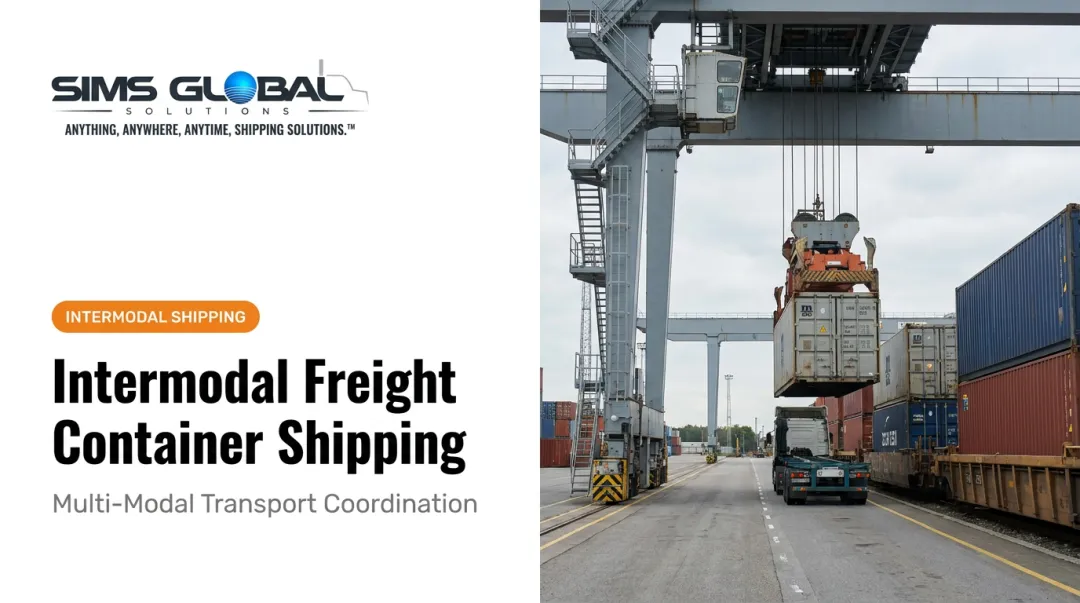
Containerization solved this. A sealed container transfers between truck and train without anyone touching the cargo inside. The same box that left a shipper's warehouse can ride a drayage truck to a rail terminal, stack onto a train, cross the country, and transfer to another truck — all without opening.
What Rail Container Shipping Is Not
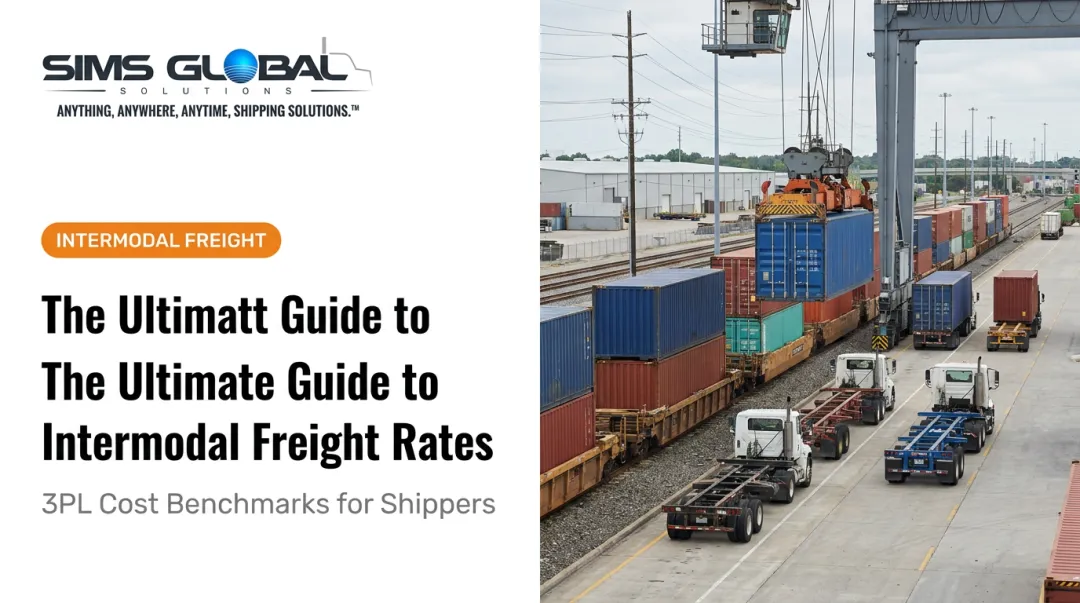
Rail container shipping is not a door-to-door service. It requires truck transportation at both ends — called drayage — to move containers between the shipper or receiver and the nearest rail terminal (also called a ramp or intermodal facility).
Those drayage legs add 1-2 days on each end and affect your total cost calculation — something worth factoring in before comparing intermodal quotes to straight truckload rates.
How Does Rail Container Shipping Work?
Understanding where delays and costs originate starts with knowing who does what. The process follows four coordinated stages, each involving different parties: the shipper, a logistics provider or intermodal marketing company (IMC), the rail carrier, and local drayage truckers.

Stage 1: Booking and Documentation
A shipment starts when the shipper or their logistics partner contacts a rail carrier — BNSF, Union Pacific, CSX, or Norfolk Southern — or an IMC to secure container space. The booking requires:
- Origin and destination terminal codes
- Container size and type
- Commodity description and weight
- Desired transit window
- Hazmat details (if applicable), including proper shipping name, hazard class, and emergency contact
On the documentation side: the process is often misunderstood. Rail carriers use a Bill of Lading (transmitted via EDI 404) to create a transportation waybill — it's not a separate document that replaces the bill of lading. BNSF's own shipping instructions describe this clearly: the accepted EDI transmission creates a waybill number tied to the original bill of lading data.
Terminal capacity, equipment availability (particularly 53-foot domestic containers), and lead time requirements can all create booking friction during peak seasons.
Stage 2: Container Loading and Origin Drayage
The first physical step is getting the container to the rail terminal. A drayage truck picks up the container — either from the shipper's facility or a container depot — and delivers it to the origin intermodal ramp. Before drop-off, cargo must be loaded, sealed, and placarded if the shipment contains hazardous materials.
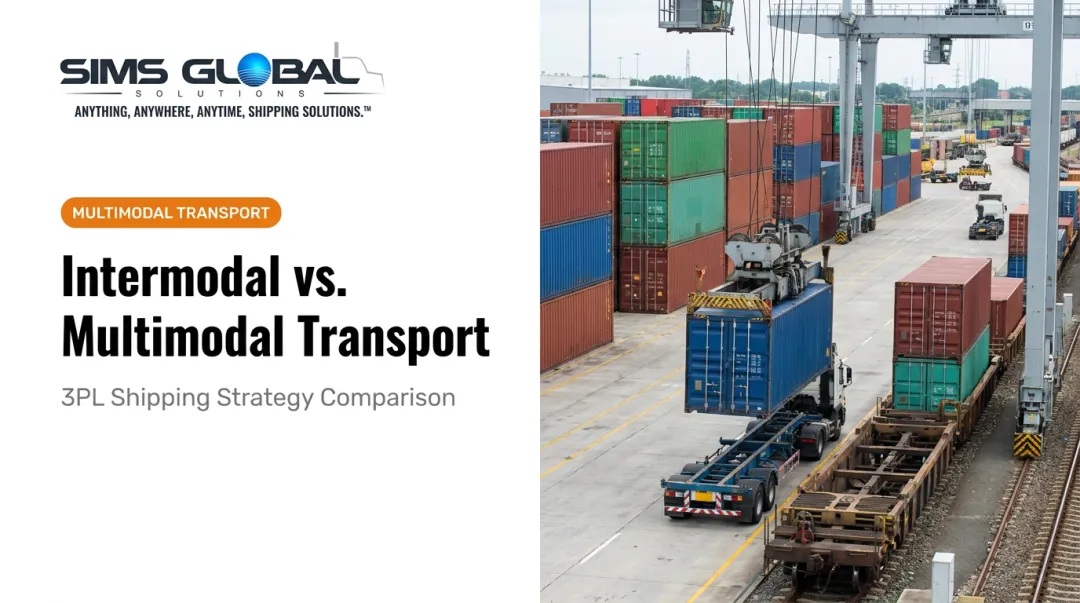
At the terminal, cranes or reach stackers lift the container onto a railcar. Two railcar types are used:
- Flatcars — carry a single row of containers or trailers
- Well cars — designed with a lowered well between wheel assemblies, allowing containers to be stacked two high
Double-stacking is widespread in US intermodal operations. A five-unit articulated well car can carry up to 10 containers when fully double-stacked, reducing cost per container by maximizing the payload per train.
Stage 3: In-Transit Rail Movement and Monitoring
Once loaded, the train departs on a scheduled intermodal service. Class I railroads run fixed-schedule trains across major corridors. On the Southern California–Chicago lane alone, BNSF publishes a 78-hour ramp-to-ramp time on its expedited service, while Union Pacific has advertised a 3-day transit on its premium City of Industry–Chicago Global 2 service.
Tracking during transit works through:
- EDI milestone updates — departure, intermediate yard events, arrival notifications
- Carrier portals — BNSF's API Center provides real-time tracking data, intermodal hub information, and waybill-management functions directly to customer applications
- CSX's Intermodal Tracking Suite — provides en-route and availability reports via EDI 322 transactions
Tracking is less granular than GPS-enabled trucking but has improved considerably over time. Shippers and brokers receive milestone updates at key events rather than continuous location pings — which matters most when coordinating the destination drayage leg.
Stage 4: Destination Drayage and Final Delivery
When the train arrives at the destination terminal, a drayage truck is dispatched to pick up the container and deliver it to the consignee. This stage mirrors the origin leg and requires advance coordination:
- Scheduling a pickup appointment at the rail terminal
- Confirming the consignee's receiving hours
- Arranging container return or repositioning after unloading
Demurrage and per diem fees are one of the most common sources of unexpected cost in intermodal moves. Rail terminals allow a defined "free time" window for container pickup — if the drayage truck doesn't arrive within that window, fees accrue quickly. Getting this leg wrong erases a significant portion of the cost savings that made rail attractive in the first place.
That's where single-source coordination makes a practical difference. Sims Global Solutions handles both intermodal coordination and drayage services, managing each leg of the move through one point of contact instead of separate vendor relationships.
Benefits and Limitations of Rail Container Shipping
Rail container shipping offers real operational advantages, but also structural constraints. Both matter before committing freight to rail.
Key Benefits
The core advantages of intermodal rail come down to three factors:
- Cost per mile: According to the AAR's 2025 economic impact report, rail moves one ton of freight nearly 500 miles per gallon of fuel — 3–4 times more fuel-efficient than trucks — which translates to lower line-haul rates on long-haul lanes.
- Emissions reduction: Shifting freight from truck to rail cuts greenhouse gas emissions by up to 75% on average, per AAR data. For shippers managing Scope 3 targets, rail is one of the most practical tools available — the EPA's SmartWay program tracks emissions calculations across modes.
- Volume capacity: A single intermodal train carries the equivalent of hundreds of truckloads. For high-volume shippers with consistent freight on established lanes, rail absorbs volume that would otherwise require dozens of OTR trucks.

Key Limitations
Transit time is the most common tradeoff. Even on premium services like BNSF's 78-hour LA–Chicago lane, the total door-to-door time including both drayage legs typically exceeds what a truck would take. For time-sensitive freight, rail requires buffer built into the supply chain — or it becomes a dealbreaker.
Terminal dependency compounds this for shippers outside major markets. Rail terminals are fixed locations, concentrated in metro and port hubs. The AAR reports over 180 intermodal terminals across the US, but shippers located far from a ramp face long drayage distances that can offset the line-haul savings entirely.
Cargo and shipment type restrictions
- Fragile goods face higher risk from train dynamics (coupling impacts, sudden stops)
- LTL shipments don't consolidate easily for rail without an intermediary
- Hazmat commodities require additional documentation specific to rail regulations
When Rail Container Shipping Makes Sense vs. Trucking
The right call depends on three factors evaluated together, not in isolation.
Distance
Rail intermodal generally becomes cost-competitive with OTR trucking on longer hauls. FreightWaves data from 2025–2026 cites a strong intermodal cost advantage on transcontinental lanes, with 10–20% average contract savings on long-haul moves. Shorter lanes narrow or eliminate that advantage once drayage costs at both ends are factored in.
Freight Profile
Rail works best for:
- High-volume, consistent shipments (retail inventory replenishment, raw materials, automotive components)
- Non-time-sensitive loads with flexible delivery windows
- Full container loads moving between markets with established intermodal service
- Electronics, clothing, furniture, and appliances — commodity types the AAR specifically identifies as common intermodal freight

Rail is typically the wrong choice for:
- Expedited or time-definite shipments
- Fragile or high-damage-risk cargo
- LTL freight without consolidation services
- Origins or destinations far from an intermodal ramp
Total Landed Cost — Not Just Line-Haul Rate
The most common mistake in evaluating intermodal is comparing only the rail line-haul rate against a truck rate. The accurate comparison is:
Rail total cost = line-haul rate + origin drayage + destination drayage + terminal fees
Running this comparison across every active lane is where Sims Global Solutions' TMS platform, SimsTrak, adds direct value — it supports multi-modal rate comparison across all US shipping lanes so you can see exactly where rail substitution saves money before committing to a mode shift.
Conclusion
Rail container shipping works as an intermodal process: containers move by truck to the origin terminal, by train across the long-haul portion, and by truck again for final delivery. Each stage has specific documentation requirements, timing windows, and coordination dependencies that affect both cost and reliability.
Shippers who understand the full picture — drayage coordination, terminal free time rules, realistic transit expectations, and how to calculate total landed cost — can put rail to work as a real cost and sustainability advantage. For companies moving high volumes on long-haul lanes, intermodal rail with the right logistics partner can reduce freight spend and emissions without compromising supply chain reliability. Sims Global Solutions offers intermodal and drayage services as part of a full multi-modal network — giving shippers the coordination and carrier access to make rail work consistently.
Frequently Asked Questions
What is a rail container?
A rail container is a standardized shipping container — commonly 20-foot or 40-foot ISO units, or 53-foot domestic containers — transported on railcars. The same physical container can move by truck, train, or ship, which is what makes intermodal freight possible.
How much does rail container shipping cost?
Rail container shipping costs depend on lane distance, container size, drayage distance at both ends, and current market conditions. Shippers should request quotes from an intermodal provider for accurate lane-specific pricing — no published rate list applies across all lanes.
Is rail container shipping cheaper than trucking?
Rail is generally cheaper than OTR trucking on long-haul lanes for full container loads, but the total cost comparison must include both drayage legs. On shorter distances or where drayage is expensive, the cost advantage narrows or disappears entirely.
How much does a rail container cost to buy or lease?
Most shippers don't own rail containers — they're supplied by the railroad or intermodal provider as part of the booking. Union Pacific, for example, maintains over 40,000 53-foot domestic containers through its EMP program. Shippers needing more equipment control can work with container leasing companies for shipper-owned containers (SOCs).
What types of goods are best suited for rail container shipping?
Rail works best for bulk commodities, retail and consumer goods, automotive parts, raw materials, and non-fragile manufactured products. It's most cost-effective on high-volume, consistent lanes where some transit time flexibility exists.
What is the difference between intermodal and rail container shipping?
Rail container shipping is one component of intermodal shipping. Intermodal refers to the broader system of moving freight using multiple transport modes — rail, truck, and ship — in sequence using the same container. Rail container shipping specifically refers to the rail leg of that journey.