Super loads are the most heavily regulated freight moving on U.S. highways today. They exceed routine oversize limits by such a wide margin that state departments of transportation treat every shipment as its own engineering project.
The problem? Many shippers use "oversize load," "superload," and "mega load" interchangeably. That confusion leads to rejected permits, missed delivery windows, and fines that could have been avoided. This guide breaks down exactly what qualifies as a super load, how it differs from other oversize categories, and what the rules look like in four states with notably different thresholds: Oregon, Ohio, Pennsylvania, and Tennessee.
Key Takeaways
- Super loads typically exceed 16 ft in width or height, or weigh 200,000+ lbs.
- Permits demand engineering surveys, bridge analysis, and DOT review, extending approval timelines.
- State thresholds vary widely: Washington triggers at 200,000 lbs, Tennessee at just 165,000 lbs.
- Partnering with an experienced heavy haul provider reduces permit rejection, fines, and delay risks.
What Is a Super Load?
A super load is freight that blows past routine oversize permit limits, not by a few inches or a few thousand pounds, but by a wide enough margin that state DOTs subject it to extra scrutiny.
Commonly cited thresholds include:
- Over 16 ft wide
- Over 16 ft tall
- Over 150-160 ft long
- 200,000+ lbs gross weight
Here's the catch: these numbers aren't a federal standard. They shift depending on which state's roads the load will travel. Some states classify a shipment as a super load at 165,000 lbs. Others wait until 201,000 lbs. We'll walk through those specifics in the state-by-state section below.
Common Super Load Cargo
Certain freight types show up again and again in super load conversations:
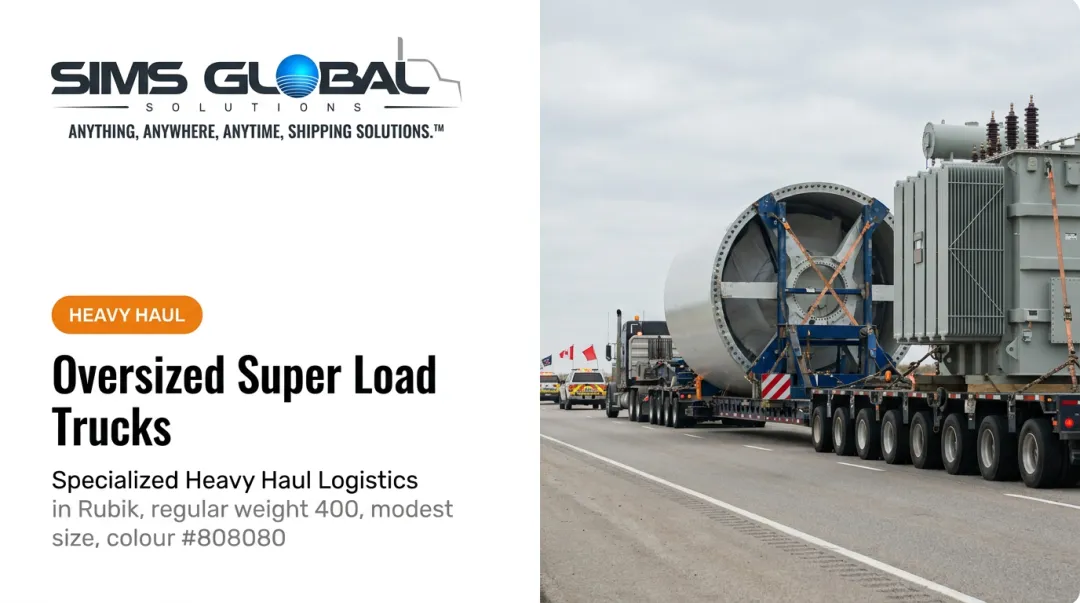
- Wind turbine blades and tower sections
- Large power transformers (often 150-400 tons)
- Bridge beams and girders
- Mining and heavy manufacturing equipment
- Aerospace components and fuselage sections
- Military and defense equipment
Each of these items shares one trait: they're too large, delicate, or structurally critical to divide into smaller shipments without destroying their function. That's what pushes them into nondivisible freight territory.
Why Most Super Loads Can't Be Split Up
Most super loads qualify as nondivisible freight under federal rules. Under 23 CFR 658.5, a load is nondivisible if breaking it apart would destroy its value, make it unusable, or take more than eight work hours to disassemble with the right equipment.
A wind blade can't be cut in half and reassembled at the job site. A transformer core can't be split into smaller pieces without ruining its function. That's exactly why these shipments get classified as super loads instead of being broken into multiple standard truckloads.
This classification determines the permit type required, the number of escort vehicles needed, and how much lead time route planning requires.
Industries That Frequently Ship Super Loads
Four sectors generate the bulk of super load activity:
- Aerospace & defense – oversized fuselage sections, wing components, and military equipment
- Energy/wind – turbine blades, nacelles, and transformers headed to grid or wind farm sites
- Construction – bridge beams, cranes, and heavy structural steel
- Munitions & outdoor products – specialized manufacturing equipment and defense-related freight

These are the same specialized sectors that lean on heavy haul carriers rather than standard freight brokers, largely because standard equipment simply can't handle the dimensions or weight involved.
Super Load vs. Oversize Load vs. Mega Load: Key Differences
Before comparing categories, it helps to establish a baseline. Federal law sets a maximum width of 102 inches (8.5 ft) on the National Network and caps Interstate gross weight at 80,000 lbs. There's no federal height or overall length maximum — most states independently set height limits between 13.5 and 14 ft.
A standard oversize load exceeds those baseline limits but stays within a state's routine permit process. A super load blows past oversize thresholds by a wide margin, requiring:
- Manual review instead of automatic approval
- Engineering surveys and bridge analysis
- Longer processing windows (often weeks, not days)
Where "Mega Load" Fits In
"Mega load" isn't a national classification. It's used inconsistently:
- Georgia formally defines a mega load as 300,000 lbs or more, requiring a prequalified engineering consultant's bridge ratings
- Idaho uses "mega-load" descriptively for extreme shipments, such as one permitted load measuring 208 ft long and weighing over 508,000 lbs, without an official statewide definition
Treat "mega load" as a jurisdiction-specific term, not a synonym you can apply everywhere. If you're planning a multi-state move, confirm each state's definition before assuming your load qualifies as "super" or "mega." A wrong assumption can add weeks to your permit timeline.
Comparison at a Glance
| Category | Typical Dimensions/Weight | Permit Complexity | Escort Requirements |
|---|---|---|---|
| Oversize Load | Over 8.5 ft wide / 80,000 lbs | Routine, often same-day | Sometimes one pilot car |
| Super Load | Over 16 ft wide/tall, 150+ ft long, 165,000-200,000+ lbs | Manual review, engineering survey | Multiple pilot cars, often police escort |
| Mega Load | 300,000+ lbs (Georgia definition) | Extensive, consultant-reviewed bridge analysis | Full escort convoy, traffic control plan |
There is no single national standard. Every state sets its own thresholds, its own permit process, and its own escort rules for these categories.
Super Load Regulations by State: Oregon, Ohio, Pennsylvania & Tennessee
Four states, four very different rulebooks. Here's how each one handles super load classification.
Oregon
Oregon triggers superload status at:
- Over 16 ft wide on Interstates or multilane highways (over 14 ft on two-lane roads)
- Over 17 ft tall
- Over 150 ft overall length
- Axle configurations at Weight Table 3 or heavier
ODOT typically advises allowing up to 10 days for permit issuance, and applicants may need a width diagram, traffic control plan, and route survey for low clearances.
Escort requirements scale with width. Loads between 16 ft 1 in and 18 ft need one or two pilot cars, while anything over 18 ft requires district approval and additional escorts.
Ohio
ODOT manages oversize and overweight movement through its Special Hauling Permit process and the Ohio Hauling Permit System. Unlike Oregon, Pennsylvania, and Tennessee, Ohio doesn't publish a single, defined statewide superload dimension or weight cutoff in its public materials.
That gap makes Ohio one of the trickier states to navigate independently. Shippers moving through Ohio should verify current thresholds directly with ODOT rather than relying on secondhand figures.
Pennsylvania
PennDOT classifies a Load Type 64 Super Load as any shipment exceeding:
- 201,000 lbs gross weight
- 160 ft in length
- 16 ft in width
Every superload application goes through manual review via PennDOT's APRAS system, and preliminary filing is recommended at least three weeks ahead of the move. Pennsylvania State Police escort is mandatory for superloads, with a minimum of 24 hours' scheduling notice required.
Tennessee
Tennessee sets its superload trigger at:
- 165,000 lbs GVW
- Over 16 ft wide
- Over 15 ft 6 in tall
Loads over 165,000 lbs require Structures Division approval, and route surveys are mandatory once a shipment exceeds the height or width thresholds. Tennessee's escort tiers are notably specific: pilot escort starts at 10 ft 1 in wide, and Tennessee Highway Patrol escort kicks in above 18 ft wide or tall.

Crossing State Lines Complicates Everything
Because every state sets its own numbers, a load that qualifies as a super load in Tennessee might not trigger the same classification the moment it crosses into a neighboring state. Multi-state moves require a separate permit application in every state along the route — there's no blanket federal permit that covers the whole trip.
Thresholds and permit fees also change periodically. Verify current requirements with each state DOT, or work with a heavy haul partner like Sims Global Solutions, which tracks these state-by-state updates for you, before locking in a transport date.
Permits, Escorts & Route Planning for Super Loads
Getting a super load permit approved isn't a quick form submission, and depending on the state, it can involve:
- Engineering surveys confirming bridge and road capacity along the route
- Bridge analysis for any structure the load will cross
- Shipper's letters certifying the load is nondivisible
- Surety bonds in some states for extremely heavy shipments (Georgia, for example, requires a $500,000 bond for loads over 500,000 lbs)
Route Planning Before the Truck Ever Moves
Route planning for super loads happens weeks in advance, with planners identifying:
- Low bridges and overpasses that could clip the load
- Narrow roads or tight turns that a multi-axle trailer can't navigate
- Weight-restricted bridges that can't bear the load's tonnage
Permit timelines reflect this complexity. A standard oversize permit might process in a day or two, but super load permits in states like Pennsylvania and Oregon can take days to weeks. The exact timeline depends on how many bridges and jurisdictions the route touches.
Safety Requirements on the Road
Once the permit clears, safety requirements kick in:
- Pilot or escort vehicles positioned front and rear (sometimes multiple, depending on width)
- Warning signage and flags marking the oversized dimensions
- Insurance coverage sized appropriately for high-value, high-risk freight
Skipping any of these steps carries real risk, from fines to shipments pulled off the road mid-route. Heavy haul providers like Sims Global Solutions manage this permitting and escort coordination directly, helping shippers avoid those costly delays.
Why Ship Your Super Load With an Experienced Heavy Haul Partner
Managing four different state rulebooks is hard enough. Add engineering surveys, bridge analysis, and escort coordination, and it's easy to see why so many shippers turn to a specialized partner instead of handling it alone.
Sims Global Solutions runs a dedicated Heavy Haul Trucking division, backed by its own trucking assets, the proprietary SimsTrak Transportation Management System, and a vetted carrier network. Here's why that combination matters for super loads specifically:
- Owning trucking assets means Sims Global can move on opportunities a traditional broker-only model would struggle to access
- SimsTrak gives shippers real-time visibility into a shipment that might be on the road for days, crossing multiple state permit zones
- A network of 150,000+ carriers, including 35,000+ truckload carriers, extends capacity beyond the in-house fleet
- The in-house Carrier Procurement Team vets each carrier for state licensing, approved routing, and escort coordination

That vetting process supports the industries most likely to ship super loads, including aerospace, defense, and material handling. Shippers get 24/7 agent support and a dedicated operations team managing the shipment from permit application through final delivery.
Frequently Asked Questions
What is a superload in Oregon?
Oregon classifies a superload as any load over 16 ft wide on Interstates (14 ft on two-lane roads), over 17 ft tall, over 150 ft long, or meeting Weight Table 3 axle criteria. ODOT typically needs up to 10 days to process the permit.
What is considered a superload in Ohio?
Ohio manages oversize/overweight freight through Special Hauling Permits and the Ohio Hauling Permit System, but doesn't publish one clear statewide superload cutoff. Always confirm current thresholds directly with ODOT before scheduling a move.
What is a super load in PA?
Pennsylvania's Load Type 64 Super Load applies to shipments over 201,000 lbs, over 160 ft long, or over 16 ft wide. These require manual APRAS review and mandatory Pennsylvania State Police escort.
What is a superload in Tennessee?
Tennessee sets its threshold at 165,000 lbs GVW, over 16 ft wide, or over 15 ft 6 in tall. Loads over 165,000 lbs also require Structures Division approval before permit issuance.
How long does it take to get a super load permit approved?
Timelines vary by state and load complexity, but super load permits almost always take longer than standard oversize permits. Engineering review and bridge analysis can stretch the process from days to several weeks.
Do super loads always require police escorts?
Not always; it depends on the state and the load's size. Pennsylvania mandates state police escort for every Load Type 64 superload, while other states only require it once a load exceeds a specific width or height, such as Tennessee's 18-ft trigger.