It sounds like a small logistics detail. It isn't. This decision affects your landed cost, how fast your goods move, how much handling your cargo survives, and how smoothly everything flows once that container hits U.S. soil.
Get it wrong and you're either overpaying for empty container space or watching your inventory sit at a consolidation warehouse while delivery windows slip. This guide breaks down FCL vs LCL shipping, when each makes sense, and what to plan for after your container clears customs.
Key Takeaways
- FCL reserves a full container for one shipper; LCL shares space and cost among shippers
- FCL moves faster for large, time-sensitive freight; LCL wins on cost for smaller loads
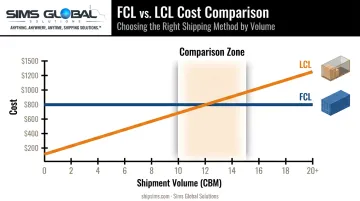
- Most carriers recommend comparing FCL once you hit roughly 10-15 CBM per shipment
- The right call depends on volume, urgency, cargo sensitivity, and what happens after port clearance
FCL vs LCL: Quick Comparison
Before diving into definitions, here's how the two modes stack up side by side:
| Factor | FCL | LCL |
|---|---|---|
| Cost Structure | Flat rate per container, regardless of fill level | Priced per cubic meter (CBM), scales with volume |
| Container Usage | Exclusive to one shipper, sealed door-to-door | Shared and split among multiple shippers |
| Transit Speed | Faster, fewer touchpoints, direct routing | Slower due to consolidation and deconsolidation |
| Cargo Handling | Lower risk since goods stay untouched in transit | More handling exposure, though tight packing helps |
| Ideal Volume | Roughly 15+ CBM, or high-value/urgent cargo | Roughly 2-13 CBM, or lean-inventory strategies |
FCL's flat-rate pricing means your cost per unit drops as you fill the container. LCL flips that logic: you pay for exactly what you ship, which keeps upfront costs low but means the per-CBM rate climbs faster as your volume grows.
Maersk's own guidance backs this up: shipments under 15 CBM or roughly 2-3 pallets generally do better with LCL, while anything above that starts favoring FCL. Some forwarders suggest running the comparison even earlier, closer to 10 CBM, since LCL costs escalate quickly once you're filling a meaningful chunk of container space.
What Is FCL?
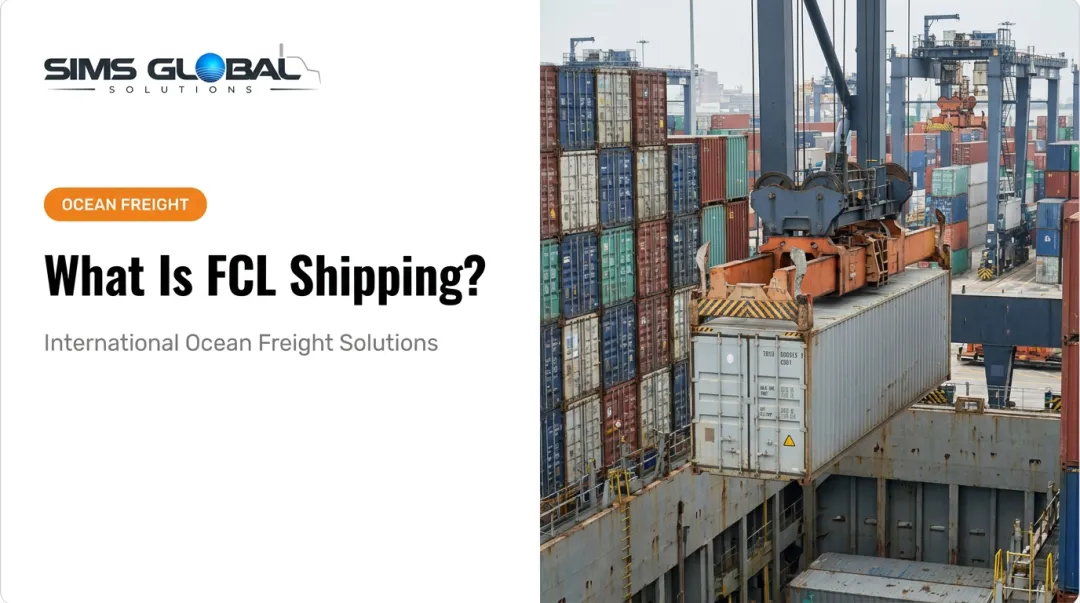
Full Container Load (FCL) means one shipper books, seals, and controls an entire container, whether or not it's packed to capacity. Nobody else's cargo touches yours.
That exclusivity delivers two operational wins: fewer handling touchpoints, since goods are loaded once at origin and unloaded once at destination, cutting the damage risk that comes with repeated handling, and tighter delivery windows, since a sealed container moves as a single unit through the supply chain, making transit times far more predictable.
There's a catch, though. FCL rates aren't stable, swinging hard based on available ship space, and 2025 proved just how volatile things can get.
Xeneta reported that average China-to-U.S. West Coast spot rates fell 59% between June and July 2025, dropping to $2,268 per FEU. East Coast rates fell 43% over the same stretch — a container market whipping in both directions within weeks, not a gradual trend line.
For shippers, this means FCL costs need active monitoring, not a "set it and forget it" contract rate you check once a quarter.
Use Cases of FCL
FCL tends to dominate in industries where damage risk and speed carry real financial weight:
- Furniture and home goods — bulky, damage-prone items that benefit from minimal handling
- Automotive parts — precision components where even minor jostling causes costly defects
- Machinery and industrial equipment — high-value freight where delays ripple into production schedules
- Bulk retail goods — high-volume replenishment where cost-per-unit matters more than flexibility
Businesses often start with LCL and graduate to FCL once their order volumes become consistent and predictable enough to justify a full container. It's less about hitting a magic number and more about reaching a point where paying for unused space still beats paying per CBM.
What Is LCL?
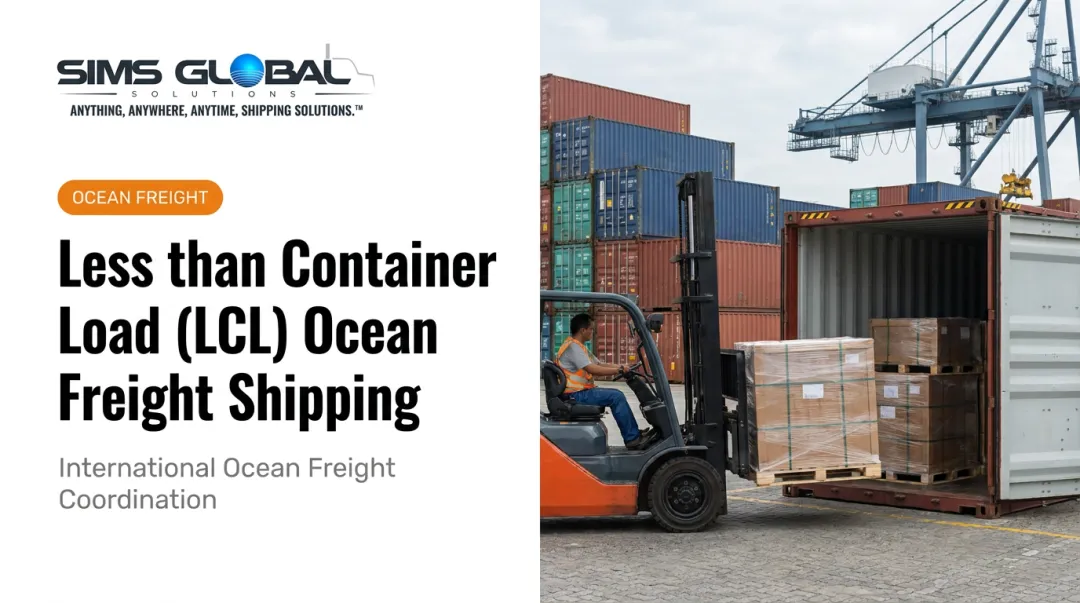
Less than Container Load (LCL) consolidates cargo from multiple shippers into a single container, then separates it again at destination. You're renting a slice of space, not the whole box.
The appeal is straightforward:
- Lean inventory: order smaller, more frequent shipments instead of tying up capital in bulk freight sitting in a warehouse
- Lower upfront cost: you pay for the CBM you use, not empty container space
- Market testing flexibility: smaller commitments make it easier to test new products or regions without overcommitting
The tradeoff is handling. LCL cargo gets loaded and unloaded at consolidation points on both ends of the journey, and each touchpoint adds time.
Maersk notes that this extra handling makes LCL more susceptible to delays than a sealed FCL container that never gets opened until it reaches its final destination.
That said, forwarders have gotten creative about closing the gap.
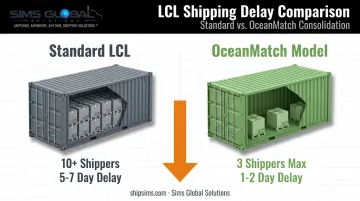
Flexport's OceanMatch program, for example, pooled compatible cargo into shared containers capped at three shippers instead of the usual ten or more, cutting the typical LCL delay from 5-7 days down to just 1-2 days versus standard FCL.
Use Cases of LCL
LCL is usually the practical starting point for businesses before they scale into full containers:
- E-commerce sellers shipping smaller, frequent restocks rather than bulk seasonal orders
- Specialty retail businesses testing new SKUs without committing to a full container's worth
- Multi-destination shippers splitting one origin shipment across several distribution points
Flexport's OceanMatch shipments were marketed as saving up to 35% compared to standard FCL for qualifying loads, illustrating how much room there is to save when your volume doesn't justify a whole container yet.
FCL vs LCL: Which One Is Right for You?
There's no universal answer here, but there are clear factors to weigh:
- Shipment volume — are you consistently moving 15+ CBM, or is your cargo closer to a few pallets?
- Urgency — does a delay cost you a sale, a production slowdown, or a compliance deadline?
- Cargo sensitivity — is this fragile, high-value, or hard to replace if damaged?
- Budget — can you absorb the flat cost of a container, or do you need to scale cost with volume?
- Destination flexibility — are you shipping to one warehouse or splitting across multiple points?
Choose FCL if speed, security, and consistent high volume matter most. Choose LCL if you need flexibility, lower upfront cost, or you're shipping to multiple destinations from one origin.
Why the Ocean Leg Is Only Half the Story
Here's the part shippers underestimate: booking the right container type is only half the equation. What happens after your cargo clears a U.S. port often determines whether the whole supply chain actually pencils out.
Drayage delays, deconsolidation bottlenecks, and warehousing gaps can erase whatever savings you locked in on the ocean leg. This is where domestic execution becomes the difference between a smooth landed cost and a logistics headache.
Sims Global Solutions handles that domestic layer with 33 million square feet of warehousing across 96 locations in 48 markets. Its drayage capabilities move containers from port to warehouse or final destination without the coordination gaps that slow down FCL and LCL shipments alike.
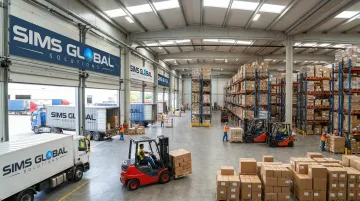
Whether you're pulling a sealed FCL container or waiting on an LCL shipment to clear deconsolidation, post-port execution matters just as much as the mode you booked.
Real-World Example: Making the Right Call
Flexport's OceanMatch initiative is a useful industry example of how the FCL-versus-LCL calculation actually plays out. During a Q4 2018 pilot on the Transpacific Eastbound trade, Flexport matched compatible cargo into underused container space instead of running it through traditional LCL consolidation.
The result: shipments that would normally sit in a crowded LCL container with ten or more shippers moved through in groups of three or fewer. That shift cut five days off transit time compared to standard LCL service.
The lesson generalizes well beyond one program. When shippers hit a volume or urgency threshold that makes standard LCL feel slow, the fix isn't always "book a full container and eat the cost." It might mean finding a smarter middle ground, or pairing your ocean booking with a domestic partner who can move fast once the container hits port.
If you're weighing that decision for your own shipments, talking through the specifics with a logistics team that handles both the mode selection and the post-port execution tends to save more time than guessing. Sims Global Solutions' team can walk through your volume, timeline, and destination needs to structure a plan that works on both ends of the journey.
Conclusion
There's no universal winner between FCL and LCL. Each mode solves a different problem, and the right pick depends on your shipment's volume, timeline, and how much risk you can tolerate.
What's consistent across both is this: choosing correctly, and pairing that choice with reliable domestic drayage and warehousing, reduces total landed cost and keeps inventory moving instead of stalling at the port. Sims Global Solutions coordinates both sides of that equation, managing international ocean freight alongside domestic drayage and warehousing across our 96-location network.
Frequently Asked Questions
Should I choose LCL or FCL shipping?
It depends on shipment volume, urgency, and budget. Loads below roughly 13-15 CBM typically favor LCL, while larger volumes make more sense with FCL. Talk to a Sims Global freight expert about your specific lane, since rates shift often.
How do I know if my shipment is LCL or FCL?
If your cargo alone doesn't fill a container's typical 13-15 CBM threshold, it will likely ship LCL. If it fills or exceeds that volume, FCL becomes the more cost-effective option.
Is FCL more expensive than LCL?
Not necessarily. FCL charges a flat rate regardless of fill level, so it's often cheaper per unit for larger loads. LCL bills per CBM, making it more economical for smaller shipments.
What do FCL and LCL stand for?
FCL means Full Container Load, where one shipper uses an entire container. LCL means Less than Container Load, where multiple shippers share space in the same container.
Can I switch between FCL and LCL as my business grows?
Yes. Many businesses start with LCL for flexibility and lower upfront costs, then move to FCL once shipment volumes become consistent enough to justify a full container.
What happens to my cargo after FCL or LCL customs clearance?
After clearance, containers need drayage to a warehouse or final destination, and LCL shipments require deconsolidation. A logistics partner like Sims Global Solutions can coordinate that entire post-port process.