This is one of the most specialized corners of heavy haul logistics. A single miscalculated route, a missed permit, or the wrong trailer choice can delay a project by weeks and cost thousands of dollars, especially when the cargo is as fragile as it is massive.
This guide covers what actually moves, the equipment built to move it, the permits and safety rules that govern every mile, and how to pick a transport partner who won't leave you stranded at a low bridge.
Key Takeaways
- Blades, nacelles, and tower sections each need trailers built for their exact size and fragility
- Permits, escort vehicles, and route surveys are required before any component leaves the yard
- Weather, vibration, or poor securement can crack a costly composite blade in transit
- One turbine often needs eight or more truckloads, requiring tight coordination across carriers
- Asset-based carriers reduce capacity risk that non-asset brokers can't match
Understanding Wind Turbine Components and Why Their Transport Is So Complex
Turbines don't travel as one piece. They arrive at the site in dozens of separate loads, each with its own handling requirements.
The Major Components That Need to Move
Blades are the most delicate cargo in the shipment. Vestas has documented a 115.5-meter (roughly 379-foot) blade for its offshore V236 model, tested at its Osterild facility as the company prepares for commercial deployment.
Even shorter commercial blades, built from fiberglass, resin, and wood or balsa cores, can be rendered scrap by a single structural crack.
Nacelles house the generator, gearbox, and control systems, making them the heaviest single component on the truck. Weight varies widely by manufacturer and turbine class, so a certified transport mass and center-of-gravity report from the OEM matters more than any generic industry figure.
Tower sections ship in multiple cylindrical pieces rather than as one tube. This isn't a design choice made for convenience:
- Modern towers often exceed the diameter that can safely clear highway bridges and overpasses
- Sectioning keeps each piece within legal transport width and height limits
- Allows cranes to stack sections progressively during on-site assembly
Why This Differs from Standard Freight
Standard freight trailers and drivers simply aren't built for this combination of extreme size, weight, and fragility. A pallet of goods can shift a few inches without consequence. A 200-foot blade cannot.
Highway infrastructure compounds the problem. Bridges, tight rural turns, and urban congestion were never designed with turbine-sized cargo in mind, which routinely forces carriers into longer or completely rerouted paths.
The load count adds another layer of coordination. A Union Pacific rail-to-truck example shows one turbine moving as three blades, four tower sections, and a nacelle. That's eight separate hauls that all need to reach the site in the right sequence.

Specialized Equipment and Transport Methods Used for Wind Turbines
No single trailer handles every component. The right equipment depends on the specific dimensions and weight profile of what's being moved.
Trailers Built for Oversized Loads
Different components call for entirely different rigs:
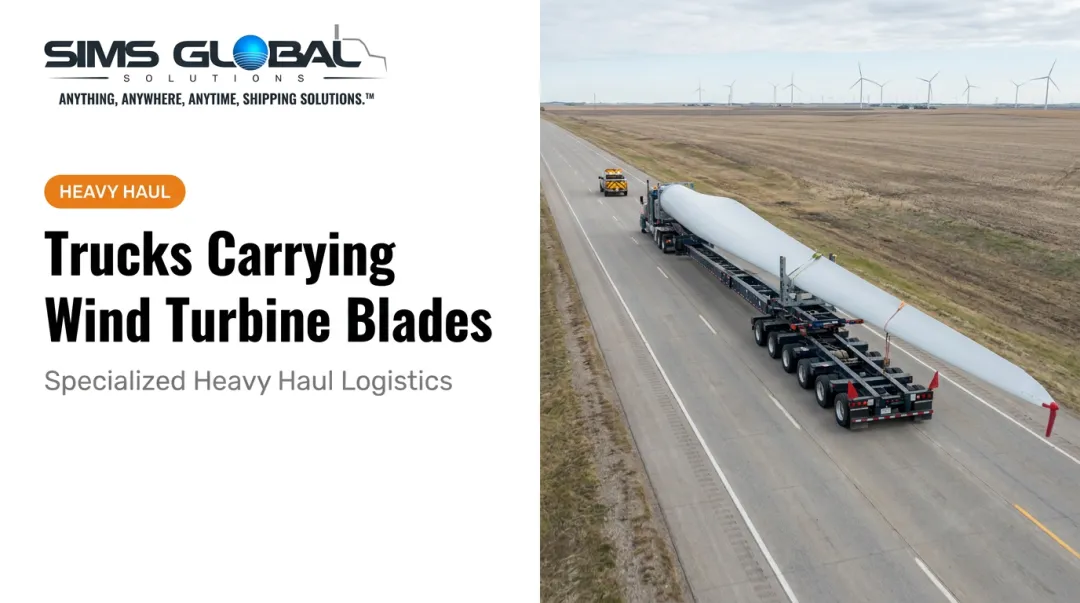
- Extendable flatbed trailers stretch to accommodate blade length while preventing the bending or shifting that a fixed-length deck can't control
- Schnabel trailers cradle tower sections directly, removing the need for a separate deck and reducing structural stress on the cylindrical shell
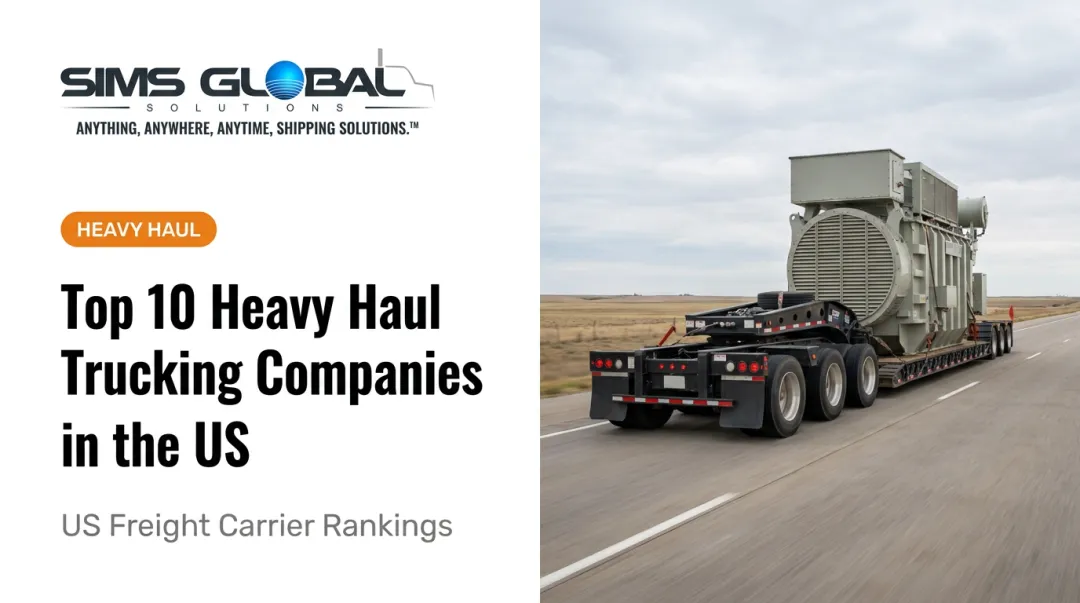
- Multi-axle lowboy combinations distribute nacelle weight across more wheels, lowering the center of gravity for better stability on grades and turns
Sims Global Solutions runs its own fleet of RGN, lowboy, and multi-axle trailers for jobs like these, backing that owned equipment with a network of more than 150,000 vetted carriers when a project needs added capacity.
A common question: are blades ever hauled vertically? Generally, no. Blades travel horizontally on extendable or Schnabel-style trailers. Some specialized rotating or self-steering trailers can angle a blade closer to vertical when navigating tight turns or narrow rural roads, but full vertical transport remains rare on public highways.
Transport Modes Beyond the Road
Trucking handles the vast majority of final-mile delivery, but it isn't the only mode in play:
- Rail moves blades over long inland distances on specialized flatcars, with road trucks completing the final leg to the site
- Marine transport supports offshore projects, where barges and tugs deliver preassembled tower sections, nacelles, and blades to the installation zone
- Jack-up vessels stabilize the water for offshore assembly once components arrive, a distinct step from the barge delivery itself
Each mode solves a different geographic problem. Rail works for long inland corridors near transload points; marine transport only applies to offshore builds.
Permits, Regulations, and Safety Protocols for Turbine Transport
Getting a turbine component from factory to field means clearing a maze of state-by-state rules before the wheels even start turning.
Navigating Oversize/Overweight Permitting
Permit requirements vary widely by state, and multi-state hauls multiply that complexity. Common requirements include:
- Route surveys documenting clearance restrictions, weight-limited bridges, and sharp turns along the entire path
- Load diagrams showing exact dimensions and weight distribution for state review
- Escort vehicles (pilot cars) required through urban intersections, high-traffic zones, or wherever dimensions exceed state thresholds
- Police escorts in some jurisdictions for the largest or most disruptive moves
Escort requirements and travel-time restrictions differ from state to state. That's why a route that's fine in one state can trigger a completely different set of rules the moment it crosses a border. Sims Global Solutions' heavy haul team tracks these state-by-state requirements directly, coordinating permits and pilot cars before a turbine component ever leaves the yard.
Safety Measures That Protect Cargo and Communities
Turbine hauls carry risks that don't apply to standard freight:
- Secure fastening and bracing prevent shifting, since even minor vibration can crack a blade's composite structure or destabilize a tower section
- Specially trained drivers are required for long-wheelbase, high-clearance combinations that handle differently than a standard tractor-trailer
- Weather monitoring is non-negotiable, since wind, rain, or ice pose heightened risk for loads that are both top-heavy and extremely long

A gust that wouldn't bother a standard truck can push an 80-foot blade sideways enough to compromise the load or the driver's control.
Route Planning and Cost Considerations
Route surveys start early, often months before a component ships, to catch problems while there's still time to fix them.
Planners identify clearance restrictions, weight-limited bridges, and sharp turns before a single permit application goes in. GPS and AI-based route optimization tools are increasingly used to flag these obstacles automatically and suggest alternatives before a carrier commits to a path.
Once these obstacles are flagged, cost becomes the next challenge, and it adds up fast. Transport pricing depends on:
- Total haul distance and number of states crossed
- Permit and escort fees, which scale with load size and jurisdiction count
- Fuel surcharges tied to current market rates
- Equipment type required (Schnabel systems and multi-axle rigs cost more to deploy than standard trailers)
Short intrastate moves generally involve fewer permits and escorts, while long-haul, multi-state shipments stack up costs at every border crossing. Poor planning, or choosing the wrong equipment for a given component, can multiply both the price tag and the timeline. Partnering with a team that vets permits and equipment selection upfront prevents that multiplier effect before a load ever leaves the yard.
Choosing the Right Heavy Haul Partner for Wind Energy Logistics
Wind turbine transport isn't a job for a generalist broker working entirely off someone else's trucks. It demands a carrier with owned heavy haul equipment and the operational depth to back it up.
Sims Global Solutions operates a dedicated Heavy Haul Trucking division built around this exact gap. Led by Corporate Sales Manager Billy, the team runs its own fleet, including RGN, lowboy, double drop, and multi-axle trailers.
This gives Sims Global direct access to capacity that a traditional brokerage simply can't reach. As Billy puts it, "the company trucking assets have opened up countless opportunities that a traditional freight brokerage would have a difficult time tapping into."
That asset base is paired with SimsTrak, Sims Global's proprietary transportation management system, which supports:
- Delivers real-time shipment visibility across every leg of a multi-load turbine haul
- Streamlines documentation for permits, escorts, and route coordination
- Consolidates tracking so project managers aren't chasing updates from multiple carriers
Beyond owned equipment, Sims Global taps a network of more than 150,000 vetted carriers and multi-modal capabilities, including intermodal, drayage, and warehousing. This gives wind energy shippers flexibility whether components originate at a port, a rail transload yard, or straight from the manufacturer.

Planning a wind energy shipment with multiple oversized loads and tight timelines? Request a heavy haul quote from the Sims Global team and get equipment matched to your project before the first permit application goes out.
Frequently Asked Questions
How do wind turbines get transported?
Turbines ship in separate components, including blades, nacelle, and tower sections, each hauled on specialized trailers matched to its size and shape. Trucking handles most final-mile delivery, while rail and marine transport support long-distance inland or offshore moves.
Do they transport wind turbine blades vertically?
Blades are typically transported horizontally on extendable or Schnabel-style trailers. Some specialized rotating trailers can angle a blade closer to vertical to clear tight turns or narrow rural roads.
What is the biggest challenge in wind turbine transport?
Narrow rural roads, low bridges, and strict multi-state permit requirements create constant routing obstacles. Add in components that are fragile despite their massive size, and small errors become expensive fast.
How much does it cost to transport a wind turbine?
Costs vary widely based on distance, number of states crossed, permit and escort fees, fuel surcharges, and equipment type. Short intrastate hauls generally cost less than long-haul moves requiring multiple permits and escorts.
What type of trailer is used for wind turbine blades?
Extendable flatbed trailers and Schnabel-style trailers are the two most common choices. Both accommodate extreme blade length while preventing the bending or flexing that standard trailers can't control.
How many truckloads does it take to move one wind turbine?
A Union Pacific case study documented one turbine moving as eight separate loads: three blades, four tower sections, and one nacelle. Coordinating that many loads to arrive in sequence takes careful logistics planning.