Introduction
A 40-foot steel beam doesn't care that your dry van has a weight limit. Neither does a 30,000-pound excavator or a curved piece of precast concrete that needs to be lifted in from above.
Standard trailers simply weren't built for freight like this. Trying to force it into one usually ends in delays, damaged cargo, or a rejected load at the job site.
That's where flatbed trucks come in. Choosing the wrong trailer type, however, or hiring a carrier who doesn't understand permits and load securement, can turn a routine shipment into a costly mess.
This guide breaks down what flatbed trucks are, the main trailer types, how much weight they can legally carry, which industries rely on them, and what to look for in a flatbed trucking partner.
Key Takeaways
- Flatbed trucks feature an open deck with no sides or roof, ideal for oversized freight
- Trailer types include step decks, double drops, RGNs, and extendables
- Capacity ranges from 48,000 lbs on standard flatbeds to 80+ tons on heavy-haul rigs
- Carrier equipment, safety records, and technology matter as much as the trailer itself
What Is a Flatbed Truck?
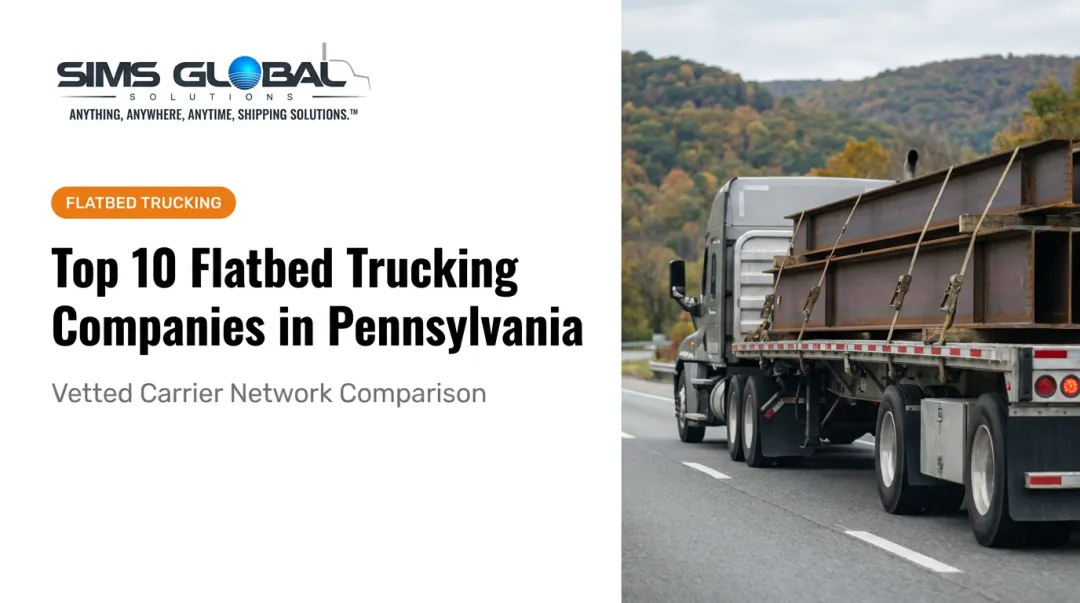
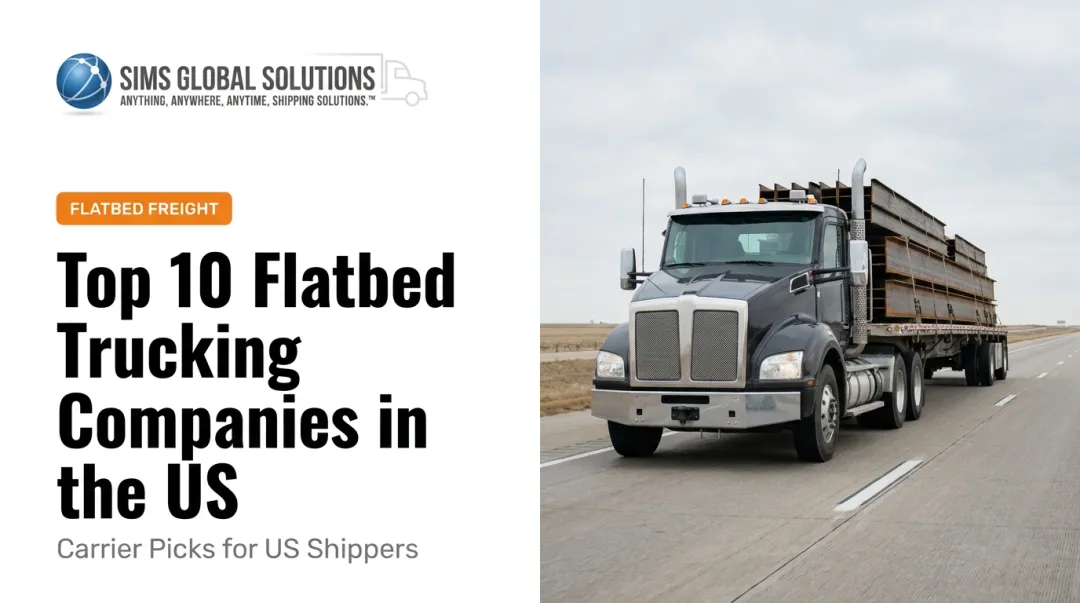
A flatbed truck (or flatbed trailer) has a flat, level bed with no sides, walls, or roof. That open design makes it useful for freight that won't fit through the doors of a box trailer. It also suits loads that need to be lifted in from the top or side with a crane or forklift, rather than backed up to a dock.
Flatbeds come in two basic configurations. An articulated setup pairs a separate tractor with a flatbed semitrailer, the standard choice for long-haul and heavy freight, while a rigid/straight truck has the flatbed built directly onto a single chassis, better suited to local or shorter regional runs.
Flatbeds in Construction
On a job site, a flatbed is often the only equipment that makes sense. Rebar, structural steel, and precast concrete panels need to be lifted in from any angle, not slid out of a trailer's rear doors. Because the deck is completely open, a crane can lower a load straight down onto it, or a forklift can approach from either side.
That loading flexibility depends on size as much as design. Typical US flatbed dimensions run 48 to 53 feet long and about 8.5 feet (102 inches) wide, though exact usable deck length and point-load rating vary by manufacturer and model. Loading happens via ramps, forklifts, or cranes, not a warehouse dock.
Types of Flatbed Trucks and Trailers
Not every flatbed is built the same way. Equipment selection comes down to three variables: how tall the cargo is, how much it weighs, and how much ground clearance it needs. Bridges, overpasses, and axle limits all factor into which trailer makes sense for a given load.
Standard Flatbed
This is the workhorse of the flatbed world: a single, fully open deck with no drops or steps. It's used for general construction materials, machinery, lumber, and containers, and it can be loaded from any side. If your freight isn't unusually tall or heavy, a standard flatbed is usually the default choice.
Step Deck (Drop Deck)
A step deck drops the rear section of the deck lower than the front, right behind the gooseneck. That extra vertical room, sometimes an additional 18 inches or more compared to a standard flatbed, lets taller equipment clear bridges and overpasses that would otherwise be a problem. Step decks are common for tall industrial equipment and machinery.
Double Drop / Lowboy
Double drop trailers add a second step, creating a low well between raised front and rear sections that sits much closer to the ground. This design suits very tall or heavy equipment, such as excavators, large generators, and industrial machinery. These trailers also carry higher tonnage ratings than standard flatbeds or step decks.
Removable Gooseneck (RGN)
An RGN trailer has a front section (the gooseneck) that detaches or lowers hydraulically so the deck can reach the ground. Instead of lifting equipment onto the trailer, operators drive or roll it directly on. That single feature dramatically speeds up loading and unloading for heavy machinery that would otherwise need a crane. Sims Global Solutions operates its own fleet of RGN and lowboy trailers, giving heavy haul shipments direct access to this specialized equipment without waiting on outside carriers.
Extended/Stretch Flatbeds
Some freight isn't heavy or tall. It's just long. Extendable flatbeds telescope to accommodate pipes, structural beams, and industrial components that exceed standard trailer lengths, some stretching well beyond 53 feet.
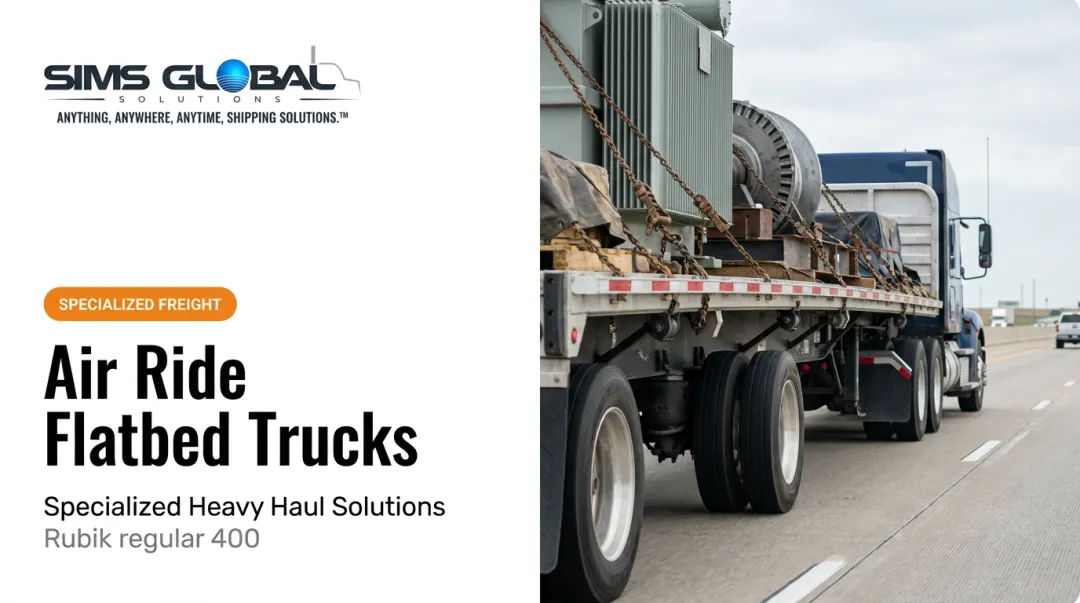
Add-on features like tarped or Conestoga covers and side-kits also matter here. They protect moisture-sensitive freight, such as steel or lumber, from weather damage while keeping the open-deck loading flexibility that makes flatbeds useful in the first place.

Flatbed Truck Weight Capacity and Specifications
How much can a flatbed actually carry? It depends heavily on trailer type and axle configuration.
| Trailer Type | Typical Capacity |
|---|---|
| Standard flatbed | Up to ~48,000 lbs (about 24 tons) |
| Step deck | Similar to standard, varies by axle setup |
| Double drop | 40+ tons |
| RGN / heavy-haul | 40 to 80+ tons depending on axle spread |
On US interstates, federal weight limits apply without a special permit, subject to the Federal Bridge Formula:
- Gross vehicle weight: 80,000 lbs maximum
- Single axle: 20,000 lbs maximum
- Tandem axle: 34,000 lbs maximum
That 80,000-lb figure covers the truck's total weight, tractor and trailer included, not the amount of cargo it carries.
Why this matters: A trailer rated for 40 or 80 tons isn't automatically legal to run at that weight. Axle configuration, load distribution, and bridge-formula compliance all have to line up first, and loads exceeding standard limits need special permits, sometimes escort vehicles, and careful route planning.
This is exactly where heavy-haul specialists add value. Sims Global Solutions' heavy haul division has handled trailer configurations for loads up to 380,000 pounds, working through state-specific height limits and choosing between standard equipment, perimeter trailers, or minidecks to keep permitting costs down.
Top Industries and Uses for Flatbed Trucking
Flatbed shipping fits any freight too large, heavy, or oddly shaped for an enclosed trailer. That versatility shows up across several industries:
- Construction & building materials: Steel beams, rebar, precast concrete panels, and lumber moved straight to job sites
- Manufacturing & industrial equipment: Oversized machinery and components that don't fit standard dry van dimensions
- Aerospace, defense & medical device manufacturing: High-value, sensitive components that require careful handling, tighter security, and adequate cargo insurance
- Events & entertainment: Staging, sound systems, and structural equipment transported and set up on tight production schedules
- Retail & material handling: Palletized goods, racking systems, and bulky consumer products that exceed standard trailer capacity
For high-value freight in categories like aerospace or medical devices, standard carrier liability often isn't enough. Sims Global Solutions offers supplemental cargo insurance with A+ rated coverage, closing that gap when the freight itself is worth more than a typical claim would cover.
How to Choose the Right Flatbed Trucking Partner
Flatbed freight carries more risk than dry van shipping. Open decks mean exposed cargo, specialized securement requirements, and, often, permitting headaches that a standard shipment never touches. Picking the right partner matters just as much as picking the right trailer.
Here's what to look for:
- Carrier network and equipment access: Owned equipment plus a large carrier network means capacity flexes when demand spikes. Sims Global Solutions pairs its RGN, lowboy, and multi-axle trailer fleet with 150,000+ vetted carriers nationwide.
- Safety and compliance: Look for DOT compliance, strong safety records, and proper load securement. Sims Global Solutions is a TIA member, fully licensed and bonded, with an in-house team vetting every carrier.
- Technology and visibility: Real-time GPS tracking and an integrated TMS keep shippers informed without constant calls. SimsTrak gives access to flatbed and heavy-haul capacity across specialized industries like aerospace and defense.
- Support and responsiveness: 24/7 agent support and a dedicated operations team cut down on miscommunication, especially when a missed permit or delayed escort vehicle threatens to stall a shipment.
- Cost transparency: Ask for quotes that clearly separate base rate, permit costs, escort vehicle fees, and fuel surcharges. Surprise line items on a heavy-haul invoice are a red flag, not a rounding error.

Frequently Asked Questions
What is a flatbed in construction?
In construction, a flatbed is an open-deck trailer used to haul materials like steel, rebar, and precast concrete directly to job sites. Because it has no sides or roof, it can be loaded from any angle using a crane or forklift.
What are the different types of flatbed trucks?
The main types are standard flatbed, step deck, double drop, RGN, lowboy, and extended flatbed. Each is suited to different combinations of cargo height, weight, and ground clearance needs.
How many tons is a flatbed truck?
A standard flatbed typically handles around 24 tons (roughly 48,000 lbs). Heavy-haul configurations like double drops and RGNs can carry 40 to 80+ tons depending on axle setup.
What is the difference between a flatbed and a step deck trailer?
A standard flatbed has one consistent deck height throughout. A step deck drops the rear section lower, creating extra vertical clearance for taller cargo without exceeding bridge or overpass limits.
Do flatbed loads require special permits?
Oversized or overweight flatbed loads typically require state-issued permits, since the federal government does not issue permits for oversize or overweight vehicles. Depending on dimensions and route, escort vehicles may also be required.
How is cargo secured on a flatbed truck?
Cargo is secured with chains, straps, edge protectors, and sometimes tarps. Federal rules require the combined working load limit of tiedowns to equal at least half the cargo's weight.