
This scenario plays out daily across the freight industry. Choosing the wrong trailer doesn't just cause delays. It can lead to permit denials, roadside violations, or damaged equipment that costs far more than the shipment itself.
This guide breaks down what qualifies as oversize freight, the trailer types built to haul it, how to select the right equipment, and the compliance rules that determine whether your load moves legally.
Key Takeaways
- Oversize freight exceeds federal dimension or weight limits, and thresholds vary by state
- RGNs, step decks, and extendable trailers solve different height, length, or loading challenges
- Trailer selection depends on dimensions, center of gravity, and route restrictions, not availability
- Permit and escort requirements differ by state, so plan compliance before selecting a trailer
- Working with an asset-based heavy haul provider reduces the risk of mismatched equipment
What Is Considered Oversize Freight?
Oversize freight is any load that exceeds standard federal legal dimensions: 8 feet 6 inches wide, 13 feet 6 inches tall, and 53 feet long for most semitrailer combinations. Overweight freight is a separate classification, based on exceeding the federal gross vehicle weight limit of 80,000 pounds on the Interstate System under FHWA's Commercial Vehicle Size and Weight Program.
A load can be oversize, overweight, or both. A wind turbine blade might be perfectly within weight limits but wildly oversize on length. An industrial press might fit within legal dimensions but blow past weight thresholds once you account for axle spacing and the Bridge Formula.
Here's the catch: federal numbers are baselines, not universal rules. Each state sets its own permit thresholds, escort requirements, and travel restrictions. A load that's legal to move without a permit in Missouri might require a pilot car the moment it crosses into Kansas.
Common examples of oversize freight include:
- Construction and agricultural equipment (excavators, combines, cranes)
- Wind turbine blades, towers, and nacelles
- Prefabricated structures and modular buildings
- Industrial tanks and pressure vessels
- Aerospace components and defense equipment

This is exactly why a search like "what is the oversize regulation in Florida" returns different answers than the same question asked about Texas or Georgia. Always verify current state thresholds before dispatch, not after the truck is loaded.
Types of Trailers for Hauling Oversize Loads
No single trailer handles every oversize load. Carriers match equipment to the freight's height, width, weight distribution, and how it needs to be loaded. Here's a breakdown of the main types.
Removable Gooseneck (RGN) / Lowboy Trailers
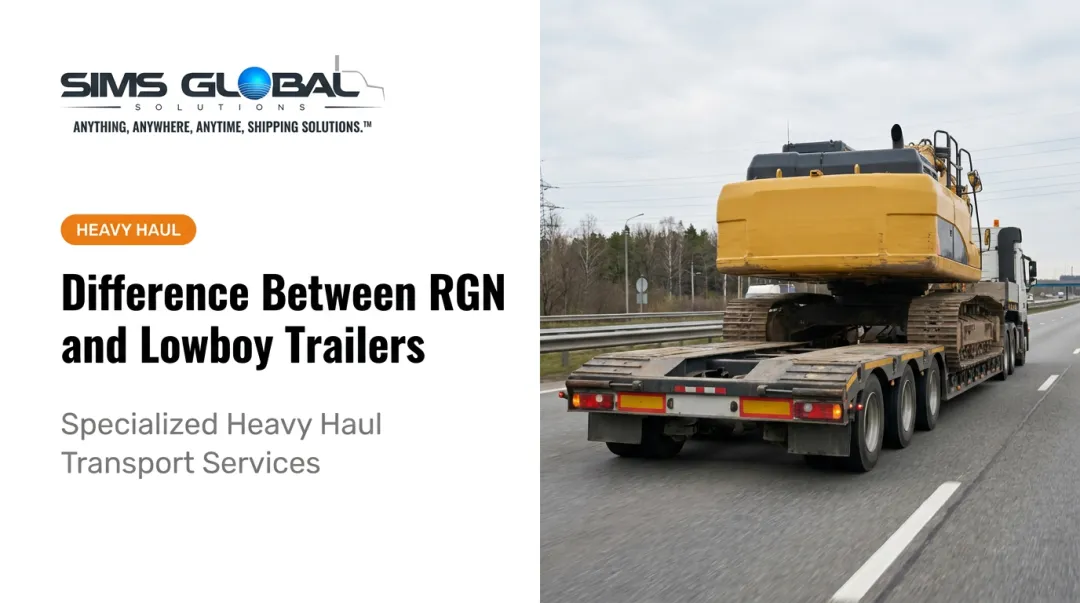
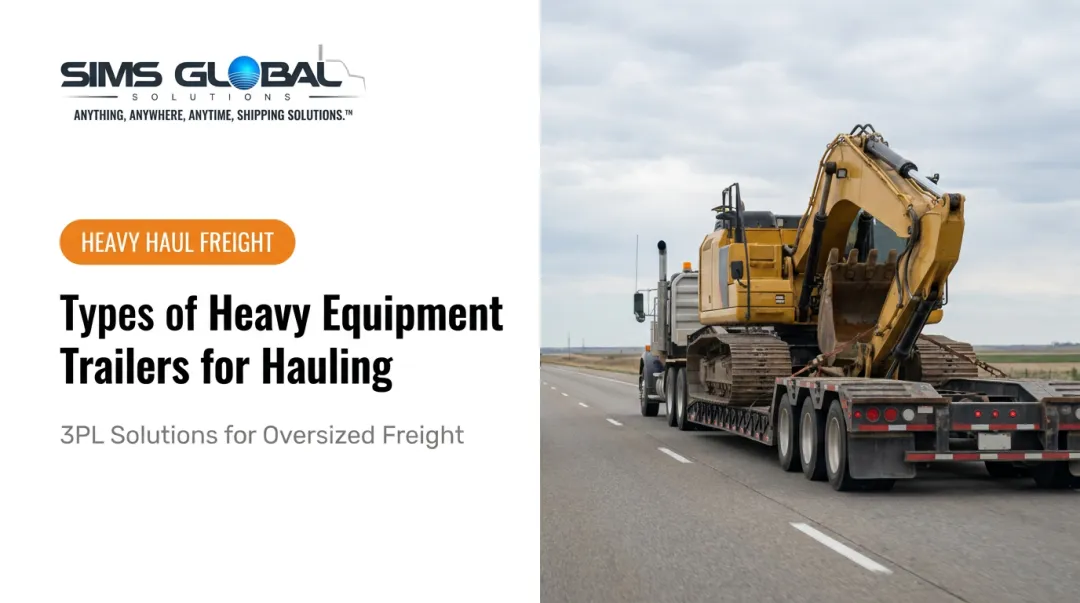
RGN trailers have a detachable front section, which lets equipment drive or winch directly onto the deck instead of requiring a crane. That's a major advantage for tall, heavy machinery like bulldozers or industrial generators.
Their deck sits low to the ground, often around 13 inches once loaded. This design keeps cargo under legal height maximums even when the equipment itself is tall. Some heavy-duty RGN models handle loads up to 80 tons using multi-axle configurations.
Step Deck (Drop Deck) Trailers
Step decks use a two-level design: a raised front section over the gooseneck and a lower main deck. That drop in deck height creates extra vertical clearance compared to a standard flatbed.
Step decks work well for freight that's too tall for a flatbed but doesn't need the drive-on capability of an RGN. Think large machinery crates or oversized vehicles that can be loaded by forklift or crane.
Extendable/Stretch Trailers
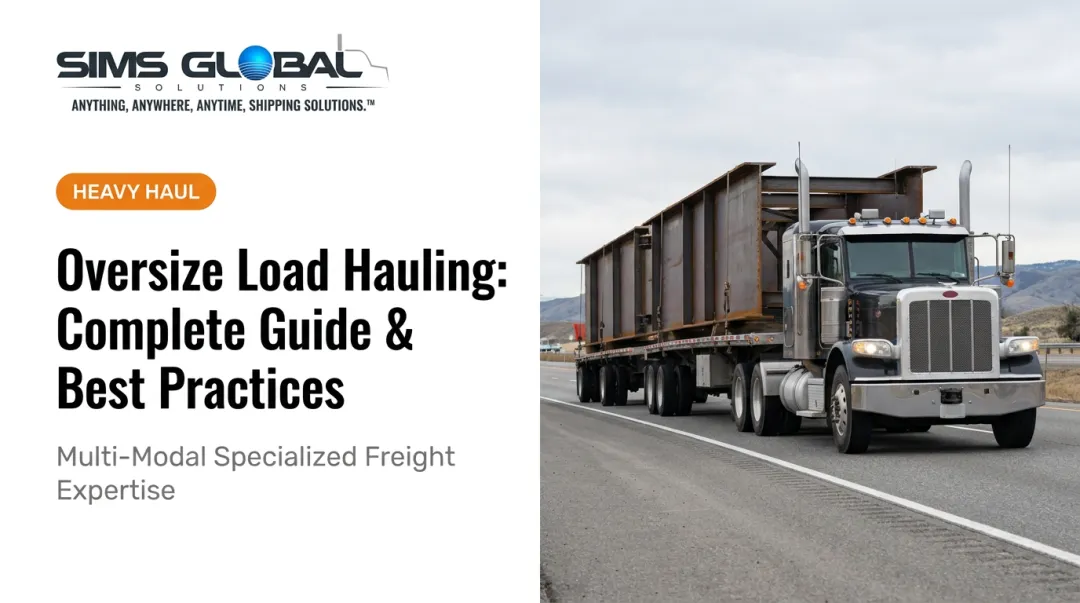
These trailers physically lengthen their deck, some stretching from 53 feet to 90 feet or more, to accommodate excessively long freight. Pipes, structural beams, and wind blades are typical cargo.
Extendable options come in flatbed, step deck, and RGN configurations. The choice depends on whether the load also needs extra height clearance or drive-on loading, not just length.
Multi-Axle and Modular (Schnabel/Perimeter) Trailers
Extreme weight requires spreading the load across more axles. Multi-axle trailers distribute weight over additional points of contact, allowing transport of superloads that would otherwise violate bridge and road weight limits.
Schnabel trailers take a different approach entirely. The load itself gets clamped between two goosenecks, eliminating the need for a traditional deck. This design is common for pipeline sections and wind turbine tower components, where the cargo's shape allows it to function as part of the trailer structure.
Specialized Trailer Options
Two niche configurations round out the toolkit:
- Conestoga trailers — use a retractable tarp system on a rolling frame, protecting irregular loads from weather without sacrificing loading flexibility
- Double-drop trailers — feature a lower main deck (below both the front and rear axles) for maximum height clearance on unusually tall cargo
These aren't everyday choices. They fill gaps when a standard RGN or step deck isn't the right fit for the load's shape or exposure risk.

Sims Global Solutions matches each load to the right configuration, drawing on its own RGN, lowboy, and multi-axle fleet alongside a network of 150,000+ vetted carriers for niche equipment needs.
How to Choose the Right Trailer for an Oversize Load
Trailer selection starts with numbers, not guesswork.
- Measure precisely. Get exact length, width, height, and weight. A miscalculation of even a few inches can trigger permit denials or create safety risks once the load is en route.
- Match loading method to trailer type. Does the equipment drive on, get craned into place, or roll on via ramps? A removable gooseneck (RGN) trailer solves drive-on needs, while a step deck often works better for crane-lifted cargo.
- Factor in center of gravity. A top-heavy load needs a trailer configuration that keeps it stable through turns and grades, not just one that fits the dimensions on paper.
- Consult a heavy haul specialist early. An experienced carrier or broker, such as the heavy haul team at Sims Global Solutions, checks load specs against trailer inventory and routing restrictions simultaneously, catching conflicts before they cause delays.
Skipping any of these steps is how shippers end up with a trailer that technically fits the freight but fails a state's routing or bridge weight rules three states into the trip.
Permits, Pilot Cars, and Safety Compliance for Oversize Trailers
Most states require an oversize permit once a load exceeds standard width, height, or length thresholds. These permits are typically issued per state, per trip, meaning a five-state route requires five separate approvals, each with its own processing time and fee structure.
When Do You Need a Pilot Car?
Escort vehicle requirements vary by state since there's no federal standard. Expect a pilot car once a load exceeds roughly 12 feet wide or 14 feet tall, though exact rules differ.
Florida offers a useful example: it requires one escort for loads over 12 feet wide or 80 feet long, and two escorts once a load exceeds 14 feet wide or 95 feet long. Loads over 15 feet high need a front escort too.
Texas takes a different approach, requiring a front escort at just 14 feet wide on two-lane highways.
Baseline Safety Requirements
Regardless of state, most oversize permits require:
- "Oversize Load" or "Wide Load" signage on the front and rear
- Red or orange flags (commonly 18 inches square) at the load's widest points
- Amber warning lights visible from a set distance, often 500 feet
- Rear lighting for any overhangs
Travel restrictions are common too. Many states, including South Carolina, restrict oversize movement on Sundays and major holidays. Florida applies similar holiday-weekend restrictions.

Compliance planning has to happen before you book the trailer, not after. A load legal to move in one state may need an entirely different equipment and escort setup 50 miles down the road. Sims Global Solutions coordinates permits and escort logistics across these multi-state routes, so heavy haul shippers avoid last-minute compliance gaps.
Why Work With a Heavy Haul Specialist Like Sims Global Solutions
Sourcing the right trailer for a one-off oversize move is hard enough. Doing it while juggling permit deadlines and route restrictions across multiple states is harder.
That's where a heavy haul specialist earns its keep. Sims Global Solutions combines its own heavy haul trucking assets, including RGN, lowboy, and multi-axle trailers, with a nationwide network of vetted carriers. That hybrid model gives shippers access to the right equipment without spending days sourcing it independently.
A few things that set the approach apart:
- SimsTrak, the company's proprietary Transportation Management System, provides real-time tracking and organized documentation, so oversize shipments stay visible from pickup through delivery
- Direct ownership of heavy haul assets means fewer handoffs and faster equipment matching for time-sensitive loads
- Experience serving aerospace, defense, material handling, and event/production industries means the team already understands the trailer and permit complexities specific to high-value, oddly shaped freight
For shippers facing an oversize move with real deadlines, that combination of owned equipment and carrier network depth means faster equipment matches and fewer permit surprises.
Frequently Asked Questions
What is considered oversize freight?
Oversize freight exceeds standard federal legal dimensions, roughly 8'6" wide, 13'6" tall, and 53' long, or the 80,000-pound weight limit. These loads require special permits to move legally.
What is the oversize regulation in Florida?
Florida's legal limits without a permit are 8'6" wide, 13'6" tall, and up to 53' long for semitrailers. Escort requirements start at 12' wide or 80' long, with stricter rules at 14'; verify current thresholds with Florida's statute on vehicle dimensions before dispatch.
What's the difference between an RGN and a lowboy trailer?
"Lowboy" generally describes any trailer with a low deck height, while RGN specifically refers to the removable gooseneck feature that allows equipment to drive or winch directly onto the deck. Many RGNs are technically a type of lowboy.
Do all oversize loads require a pilot car?
No. Pilot car requirements depend on specific dimensions and vary by state. A load that's oversize by only a few inches might not trigger any escort requirement at all, while a wider or taller load will.
How much weight can a heavy haul trailer carry?
Capacity varies by trailer type and axle count. Standard configurations handle up to 80,000 pounds, but multi-axle and modular trailers can legally haul well beyond that limit by spreading weight across more axles.
How far in advance should I book a trailer for an oversize shipment?
Book as early as possible, ideally several weeks out. Permit processing times, trailer availability, and route surveys for complex moves all take time, and last-minute bookings limit your equipment options.