
The problem is that many shippers default to two options when freight turns urgent: pay a premium for air freight, or hope standard LTL makes the window. Both choices often miss the mark. Air freight can cost far more than the shipment justifies, while standard trucking's consolidation and cross-docking add hours — sometimes days — you don't have.
This guide covers what cargo van and Sprinter van expediting actually is, how to pick the right equipment, when it makes sense, and how working with a broker partner takes the guesswork out of booking it.
Key Takeaways
- Van expediting moves 1-3 pallets directly, with zero terminal stops or delays
- It closes the cost gap between air freight and standard LTL/FTL service
- Choosing a van, Sprinter, or straight truck depends on pallets, weight, and deadline
- A vetted broker delivers carrier access, tracking, and support when timing is tight
What Is Cargo Van and Sprinter Van Expediting?
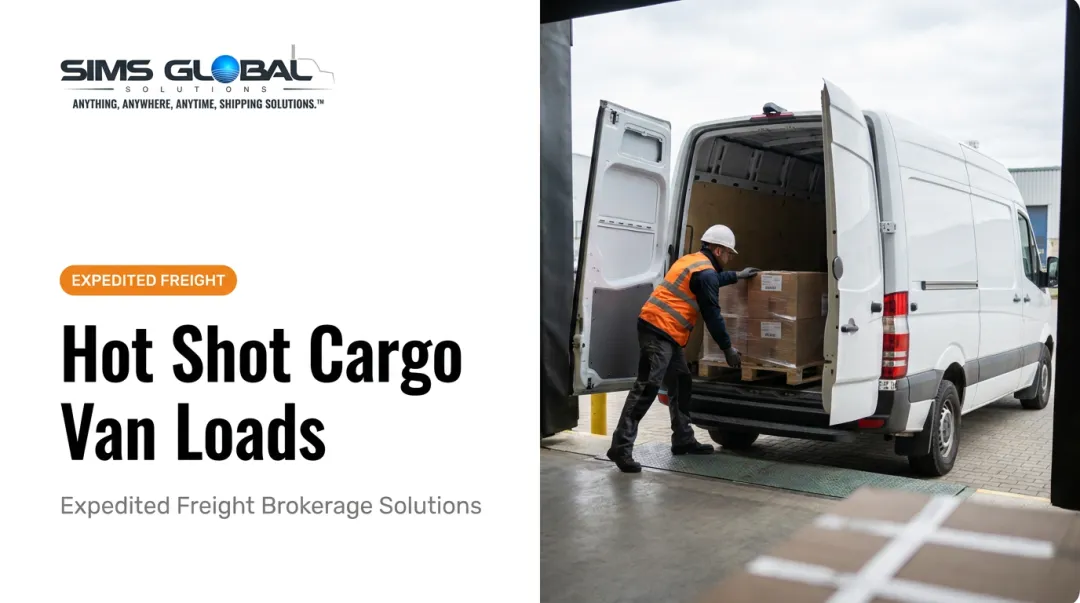
Cargo van and Sprinter van expediting is the direct, non-stop transport of small, time-sensitive freight using a dedicated vehicle. There's no terminal, no cross-docking, and no waiting for a trailer to fill up with other shippers' freight. One van, one shipment, straight from pickup to delivery.
That directness also shapes the regulatory side of the equation. Most cargo and Sprinter vans fall under 10,001 lbs GVWR, the federal threshold that defines a commercial motor vehicle for interstate hours-of-service purposes under 49 CFR 390.5T. That's a different rule than the CDL requirement, which kicks in at 26,001 lbs for a standard Class B license.
Here's the practical distinction:
- Vans under 10,001 lbs GVWR sit outside the interstate HOS framework, so drivers aren't bound by the same duty-status clock as a Class A truck
- ELD requirements are tied to whether a driver must maintain records of duty status, not solely to vehicle weight
- Neither of these rules eliminates the need for safe, professional drivers — it just removes some of the regulatory friction that slows down larger equipment
Compared to standard LTL or FTL, the difference is structural. LTL freight gets consolidated with other shipments, cross-docked at a terminal, and often rerouted through multiple stops before final delivery. Van expediting skips all of that.
Common freight types moved this way:
- Automotive parts and production-line components
- Medical devices and pharmaceutical shipments
- Aerospace components
- Urgent retail or e-commerce replenishment
- Event and production materials
Capacity typically runs 1-3 standard pallets, though exact weight limits vary by van model and configuration.
Cargo Van vs. Sprinter Van vs. Straight Truck: Choosing the Right Equipment
Not every urgent shipment needs the same vehicle. Matching equipment to freight size keeps costs down and avoids the wrong truck showing up at your dock, or worse, not fitting through it.
Cargo Van
The cargo van is the most compact expediting option. It's built for tighter urban routes and last-mile access where a larger vehicle simply can't maneuver.
- Best for single-pallet or lightweight urgent freight
- Ideal for small parts shipments and e-commerce replenishment
- Lower payload capacity than a Sprinter, so it fits smaller loads
Sprinter Van
Sprinter vans (a Mercedes-Benz model, though Ford Transit and RAM ProMaster offer comparable configurations) step up in both height and cargo volume. Manufacturer-rated payloads across these full-size van platforms range from roughly 3,400 to 4,700 lbs, depending on the specific configuration.
- Handles multiple pallets more comfortably than a standard cargo van
- The most common choice for medical, automotive, and aerospace expedited freight
- No loading dock required at pickup or delivery, a real advantage for hospitals, job sites, or retail backdoors
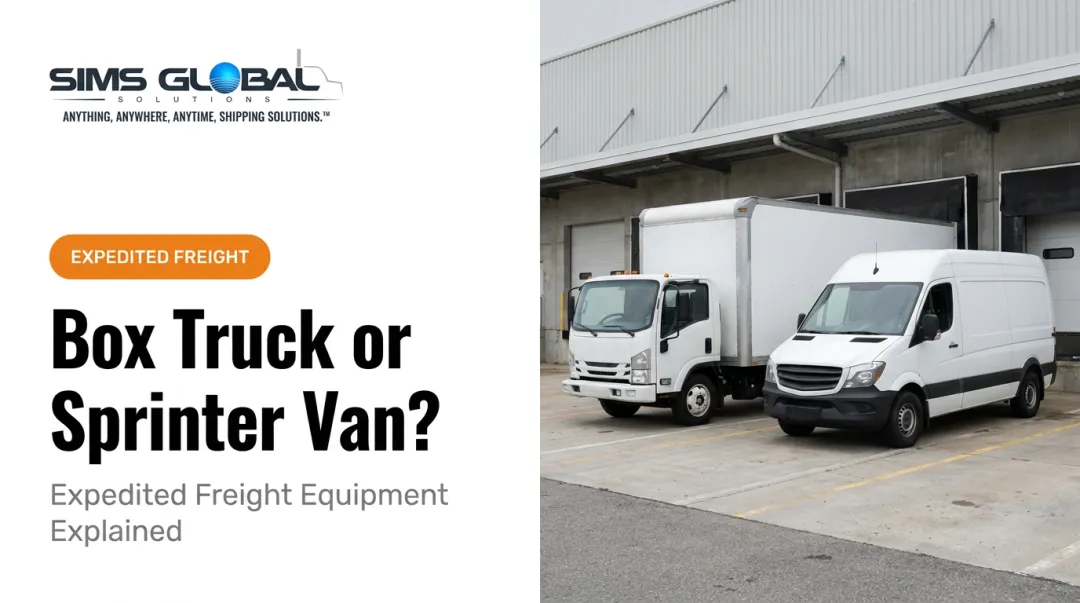
Straight Truck / Box Truck
When freight outgrows van capacity, typically in the range of 4 or more pallets, a straight or box truck becomes the better fit.
- Handles larger urgent shipments without sacrificing direct, dedicated routing
- Still avoids the consolidation delays of standard LTL
- Suited for freight needing liftgate service when no dock is available

Sims Global Solutions matches equipment to your shipment specs before a van shows up too small or a straight truck gets booked for a load that didn't need one.
When to Use Expedited Van Shipping & Its Key Benefits
When It Makes Sense
Van expediting earns its cost when the stakes are high and the timeline is short. Common triggers include:
- A production line at risk of shutdown without a specific part
- A customer SLA that's about to be missed
- Medical or aerospace compliance deadlines tied to a specific delivery window
- Event or concert production timelines where a missed truck means a missed show
The decision criteria are straightforward: the shipment fits within van capacity, the delivery window is same-day or next-day, and the destination may not have a loading dock.
Key Benefits for Shippers
Speed is the obvious win. Skipping consolidation and cross-docking means freight moves directly from pickup to delivery, cutting hours or days off transit time compared to standard LTL.
Visibility matters more than most shippers realize. A 2025 FourKites survey of supply chain leaders found two-thirds needed at least four hours just to understand the impact of a disruption, and 80% lacked real-time visibility into most of their supply chain. Real-time GPS tracking, the kind built into a platform like SimsTrak, closes that gap when every hour counts.
Cost, relative to air freight, tends to favor ground expediting on regional or short-haul routes. Air freight carries fixed costs like airport handling and security processing that ground transport simply doesn't incur.
Fewer touchpoints also mean fewer chances for damage. A dedicated, direct-drive van doesn't get transferred between terminals the way multi-stop LTL freight does.

These advantages come together in real-world crises, and automotive parts sourcing offers a well-documented example. During the 2022 Ambassador Bridge blockade, suppliers turned to expedited vans to move pallets through the Detroit-Windsor Tunnel when the main bridge route was shut down, keeping production lines running when standard freight couldn't get through.
How Sims Global Solutions Streamlines Expedited Van Shipping
How Sims Global Solutions Simplifies Expedited Van Shipping
How Sims Simplifies the Process
Booking an urgent van shipment shouldn't mean juggling five phone calls and hoping a carrier picks up. Sims Global Solutions built its process around removing that friction.
- SimsTrak, the company's proprietary Transportation Management System, provides real-time GPS tracking and full visibility on expedited loads
- Access to 150,000+ vetted carriers, pre-qualified by an in-house Carrier Procurement Team before capacity reaches a customer
- 24/7 agent support and a dedicated operations team monitoring time-critical shipments from pickup to delivery
That combination matters most when a shipment can't wait for a callback the next morning. Here's how it plays out from quote to delivery:
Booking an Expedited Van Shipment in 3 Steps
- Share your shipment details. Give a Sims Global Solutions agent the origin, destination, weight, pallet count, and deadline. That's what drives an accurate, fast quote.
- Get matched with the right equipment. Based on freight specifics and urgency, the agent pairs the shipment with a vetted carrier running a cargo van, Sprinter, or straight truck.
- Track it and confirm delivery. Real-time tracking follows the shipment door to door, with proof of delivery and supplemental cargo insurance backing high-value freight.

Frequently Asked Questions
What is expediting with a cargo van?
It's the direct, dedicated transport of small, time-sensitive freight using a single van, with no terminal stops or consolidation delays. The van moves your shipment and nothing else.
How much does cargo van or Sprinter van expediting typically cost?
Pricing depends on distance, weight, and urgency. It runs less than air freight but higher per mile than standard LTL, given the dedicated, direct-drive service.
What's the difference between a cargo van and a Sprinter van for expedited freight?
A cargo van is smaller with lower payload capacity, best for single-pallet or lightweight loads. A Sprinter offers more cargo space and higher payload, making it the better fit for multi-pallet medical, automotive, or aerospace shipments.
How fast can expedited van shipping deliver freight compared to standard LTL?
Direct, dedicated routing skips consolidation and cross-docking, which typically cuts transit time compared to multi-stop LTL service on the same lane.
What types of freight are best suited for cargo van expediting?
Automotive parts, medical devices, aerospace components, and urgent retail or e-commerce shipments are the most common freight types moved this way.
How do I know if my shipment needs a cargo van versus a larger straight truck?
Pallet count, total weight, and delivery access requirements determine the right vehicle. A single pallet with tight urban access favors a van; four or more pallets usually points to a straight truck.