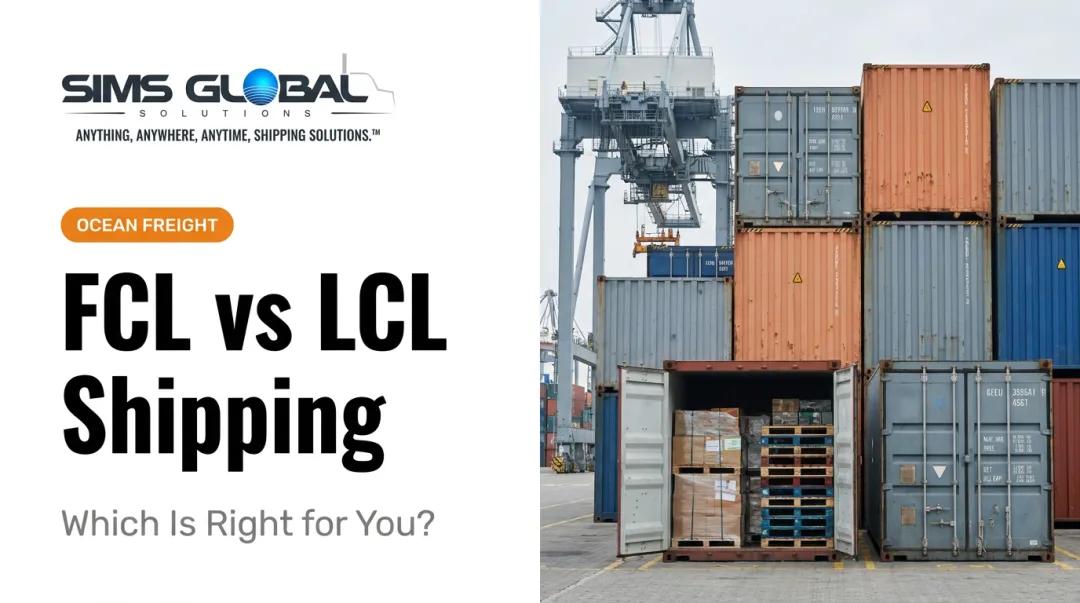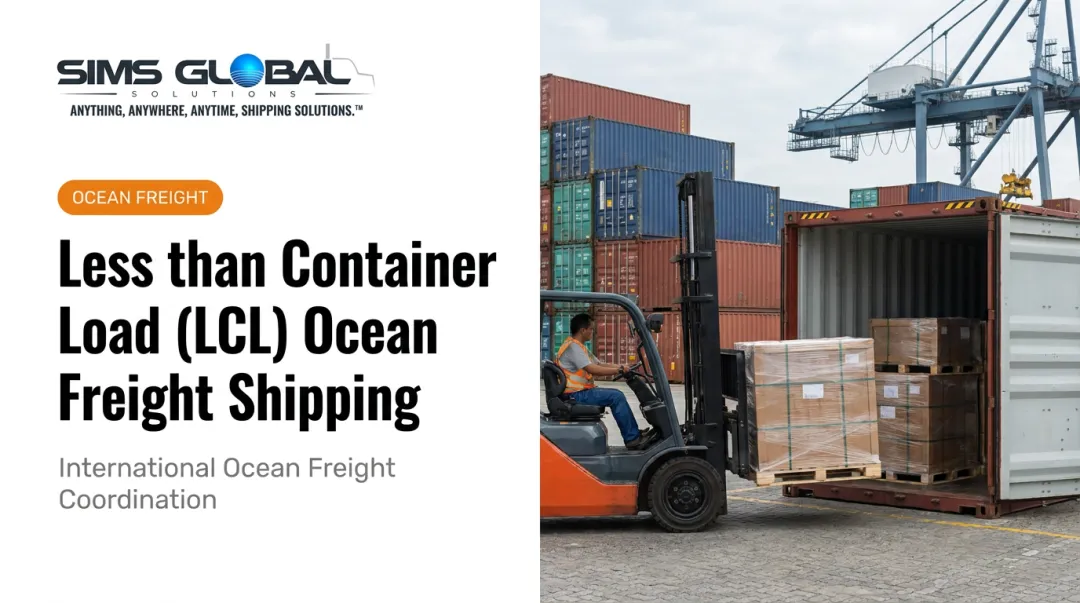

Pick wrong, and you could pay for space you don't need or watch your cargo sit stuck at port. Full Container Load (FCL) is one of the two main ways to move goods by ocean freight, and it's often the right call for growing businesses moving real volume.
This guide breaks down what FCL actually means, how it stacks up against LCL, what containers and costs look like, and what happens once that container hits a US port. Let's get into it.
Key Takeaways
- FCL means exclusive container use: you book, load, and seal a whole container for your cargo alone
- Pricing is flat per container, not based on cubic meters or pallet count
- 15+ CBM typically marks the tipping point where FCL beats LCL on cost and speed
- Ocean transit runs roughly 20-45 days depending on the lane, so build in buffer time
- Drayage delays after port arrival are a leading cause of costly demurrage and detention fees
What Is FCL Shipping?
FCL stands for Full Container Load. It's an ocean freight method where one shipper books, loads, and seals an entire container exclusively for their own cargo, from origin all the way to destination.
Here's the part that trips up new shippers: FCL doesn't mean the container has to be physically full. Maersk defines FCL through exclusivity, not fill level. You're paying for the whole box, not the space you use inside it.
That's a different pricing model than most freight shippers are used to:
- FCL pricing is a flat rate per container, regardless of how much cargo is loaded inside
- Volume-based pricing (used for shared shipments) charges by cubic meter or weight
If you book a 40-foot container and only fill half of it, you still pay the full-container rate. That trade-off matters, and we'll cover exactly when it makes sense later on.
How Does the FCL Shipping Process Work?
An FCL shipment moves through six operational handoffs before it reaches your warehouse:
- Booking and carrier selection — You reserve the container with your chosen ocean carrier or through a freight partner
- Loading and sealing at origin — Cargo is loaded into your assigned unit, and the seal number becomes part of your shipment documentation
- Export customs clearance — Required filings must be submitted before the carrier's cutoff
- Ocean transit — The sealed container moves port-to-port under the carrier's sailing schedule
- Import customs clearance — US filing and clearance must happen before your cargo can legally be released
- Inland delivery — The container is picked up, moved via drayage, and eventually unloaded

Timing varies a lot by lane. Maersk's general ocean freight benchmark spans 20 to 45 days, and that's before you factor in customs delays or peak season congestion. Faster premium services exist on specific lanes, but don't assume they're the default. Plan for the wider range, not the best-case scenario.
FCL Terminology Every Shipper Should Know
Two acronyms show up constantly in FCL booking conversations:
- TEU (Twenty-foot Equivalent Unit) — represents one standard 20-foot container, used to measure ship and port capacity
- FEU (Forty-foot Equivalent Unit) — represents one 40-foot container, equal to 2 TEU
Neither term tells you how much cargo weight you can actually load. That depends on the container's tare weight, maximum gross mass, and any road or terminal restrictions at your destination.
So what does "40 FCL" mean? It simply refers to a shipment booked in a full 40-foot container, reserved solely for one shipper, regardless of how much of that space actually gets used. It's a booking designation, not a fill requirement.
FCL vs LCL: Which Ocean Freight Method Fits Your Shipment?
LCL, or Less than Container Load, is the alternative to FCL. Instead of booking an entire container, your cargo shares space with other shippers' goods inside one shared container.
Industry professionals use cubic meters (CBM) as a quick gut-check for which method fits. Maersk describes FCL as typically the better fit at 15+ CBM, while LCL suits smaller shipments — often under 15 CBM or roughly 2-3 pallets.
That 15 CBM mark is a guidepost, not a hard rule. Your actual break-even shifts based on lane rates, season, cargo weight, and inland charges.
Here's how the two methods compare across the factors that matter most:
| Factor | FCL | LCL |
|---|---|---|
| Cost model | Flat rate per container | Charged by volume/space used |
| Transit speed | No consolidation delays; faster overall | Consolidation and deconsolidation add handling time |
| Handling/damage risk | Fewer touchpoints, exclusive use | More handling; shares space with other shipments |
| Flexibility | Best for consistent, larger volumes | Better for smaller, irregular shipments |
Choose FCL when you have:
- Larger shipment volumes (15+ CBM)
- High-value or fragile cargo that benefits from fewer handling points
- Firm delivery deadlines with little room for delay
Choose LCL when you have:
- Smaller loads that wouldn't justify a full container's cost
- Cost sensitivity that outweighs a slightly longer or less predictable transit
- Flexible timelines
The right choice comes down to your specific cargo, budget, and how tight your delivery window is. Sims Global Solutions' ocean freight team can review your lane specifics and confirm which option delivers the better value.
FCL Container Types and Sizes
Three dry container sizes cover most FCL shipments. Here's how they stack up:
| Container | Dimensions | Approx. Internal Volume | Approx. Payload Limit |
|---|---|---|---|
| 20' Standard | 20' x 8' x 8'6" | 33.2 CBM | ~28.2 metric tons |
| 40' Standard | 40' x 8' x 8'6" | 67.7 CBM | ~28.8 metric tons |
| 40' High Cube | 40' x 8' x 9'6" | 76.4 CBM | ~28.6 metric tons |

The 20' is your go-to for dense, heavy cargo. The 40' Standard and High Cube work better for bulkier, lower-density goods that need more room to breathe (literally, in the case of the High Cube's extra vertical clearance).
Beyond standard dry containers, a few specialized options exist for unique cargo:
- Reefer containers: temperature-controlled units for produce, frozen goods, and pharmaceuticals
- Open top containers: roof access for oversized machinery or cargo that can't fit through standard doors
- Flat rack containers: platform-style equipment for heavy or oversized loads that exceed standard dimensions
Your container choice ultimately comes down to three things: cargo volume, weight limits, and whether your goods need special handling. Always double-check the container's safety plate and booking confirmation before loading. Carrier fleets vary, and published specs are planning references, not guarantees for every unit.
Pros and Cons of FCL Shipping
FCL isn't automatically "better" than LCL. It's better for certain situations. Here's the honest breakdown.
The benefits:
- Reduced handling means lower damage risk since your cargo isn't loaded and unloaded alongside other shipments
- Faster, more direct transit with no consolidation or deconsolidation steps
- Better cost efficiency as your container fills up, because you're paying a flat rate either way
- Greater cargo security with exclusive container use from seal to delivery
The drawbacks:
- Higher relative cost for small loads, as you're paying full-container rates even at partial capacity
- Inventory and storage pressure, given that you need enough product ready to justify a full container
- Unloading equipment requirements at destination — someone needs to be ready to receive and process a full container, not just a few pallets
The math works in your favor once your shipment volume climbs. Below that point, you're often better off exploring LCL or holding off until you have more product ready to ship.
How Much Does FCL Shipping Cost?
FCL pricing starts as a flat rate per container, not a per-cubic-meter charge. That's the core answer. A standard 40-foot container on a major trade lane typically runs $2,000 to $6,000, and that flat rate moves based on several layered factors:
- General Rate Increases (GRIs) : carrier-announced rate bumps tied to specific trades and effective dates
- Peak season surcharges : added during high-demand shipping windows
- Fuel adjustments (BAF) : bunker fuel-related charges that carriers revise periodically
- Port congestion : busier terminals often mean added costs and longer dwell times
Beyond the base rate, budget for these additional line items:
- Customs clearance fees
- Demurrage charges : costs for containers left too long inside the marine terminal past free time
- Detention charges : fees for holding onto carrier equipment too long after pickup
The Federal Maritime Commission's 2024 final rule requires carriers to follow specific invoicing timelines and content standards for demurrage and detention billing, giving shippers more protection than in years past. Still, the best defense is avoiding the charges altogether by planning your inland move before the container even arrives.
From the Port to Your Warehouse: Why Drayage Matters After FCL Arrival
Here's something a lot of first-time shippers overlook: your FCL shipment isn't finished when it clears the port. It still needs to move inland via drayage to reach your warehouse or distribution center.
A surprising number of shipments rack up unnecessary costs right at this handoff. Delays in scheduling that inland leg are a common trigger for demurrage and detention fees, the exact charges that erase the cost savings FCL is supposed to deliver.
Common causes of drayage delays include:
- Slow customs release or documentation errors
- Limited truck or chassis availability at the terminal
- Warehouse receiving windows that don't line up with container pickup
- Port congestion that pushes back appointment scheduling
Having an experienced trucking and drayage partner lined up before your container arrives matters so much for this reason. Sims Global Solutions supports businesses moving FCL containers inland with drayage and intermodal services, backed by a nationwide warehousing network spanning 33 million square feet across 96 locations.

That combination gives shippers a place to land cargo quickly and the trucking capacity to move it there fast, instead of coordinating trucks and warehouse space separately while free time runs out.
Frequently Asked Questions
What is FCL in ocean freight?
FCL stands for Full Container Load, meaning one shipper books an entire ocean container exclusively for their own cargo. It moves from origin to destination without sharing space with other shippers' goods.
What does 40 FCL mean?
It refers to a shipment booked in a full 40-foot container reserved solely for one shipper. The container doesn't need to be completely full since you're paying for exclusive use of the space, not the volume inside it.
How much does FCL cost?
FCL uses flat, per-container pricing rather than per-unit volume charges. That base rate is then influenced by factors like peak season surcharges, fuel adjustments, and port congestion.
What is the difference between FCL and LCL?
FCL gives you exclusive use of an entire container, while LCL means your cargo shares a container with shipments from other businesses. FCL costs more for small loads but offers faster, more direct handling.
How long does FCL shipping take?
Ocean transit typically runs 20 to 45 days depending on the origin, destination, and route conditions. Faster premium services exist on select lanes, but they're the exception rather than the standard.
Can you ship a partially filled container as FCL?
Yes. Shippers often choose FCL even with extra room to protect fragile or high-value cargo, lock in faster transit, and skip the extra handling stops that come with consolidated freight.