Wind energy keeps growing, and someone has to move the hardware. The U.S. added 6,474 MW of land-based wind capacity in 2023, pushing cumulative capacity to 150,492 MW, according to the Department of Energy's 2024 Land-Based Wind Market Report. Every megawatt of that growth translates into blades, towers, and nacelles that need a road-legal path from factory to field.
This article breaks down why these hauls are so complicated, the trucks and trailers built for the job, what it costs, the permitting and safety rules involved, and how to pick a heavy haul partner who can actually get it done.
Key Takeaways
- Modern turbine blades often exceed 240 feet, longer than a football field.
- A single turbine needs multiple truckloads for its blades, tower, and nacelle.
- Permitting is handled entirely at the state level; no federal oversize permit exists.
- Specialized extendable, steerable trailers make these extreme lengths road-legal.
- Asset-based carriers access capacity that pure brokerages often cannot secure.
Why Hauling Wind Turbine Blades Is So Challenging
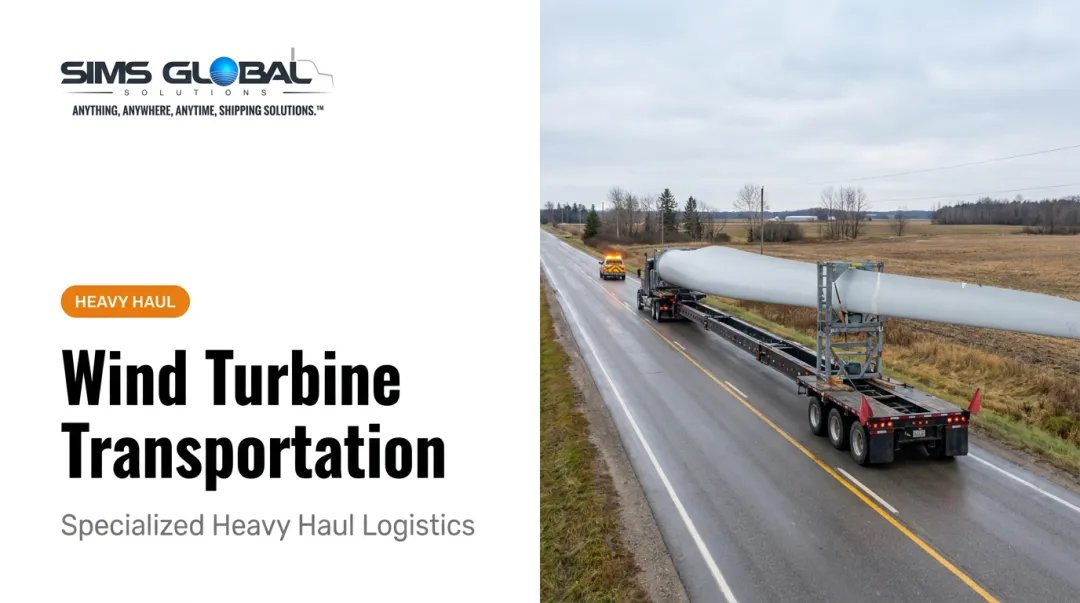
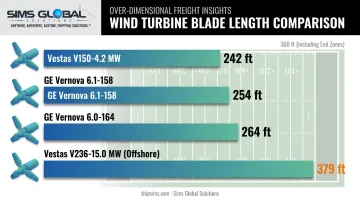
Blade dimensions have grown fast. Vestas' V150-4.2 MW onshore model uses a 73.7-meter (242-foot) blade, while GE Vernova's larger onshore platforms reach 77.4 to 80.4 meters (254 to 264 feet). Offshore blades push even further, with Vestas' V236-15.0 MW model specifying a 115.5-meter (379-foot) blade, well beyond a football field's 360 feet including end zones.
| Turbine Model | Blade Length | Comparison |
|---|---|---|
| Vestas V150-4.2 MW (onshore) | 242 ft | Longer than most city blocks |
| GE Vernova 6.1-158 (onshore) | 254 ft | Nearly 85 yards |
| GE Vernova 6.0-164 (onshore) | 264 ft | Almost a full football field |
| Vestas V236-15.0 MW (offshore) | 379 ft | Longer than a football field, end zones included |
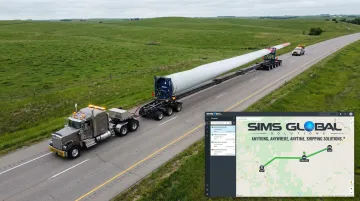
One turbine, many truckloads. A single installation needs separate shipments for each blade, multiple tower sections, and the nacelle (the heavy housing that sits atop the tower). None of these components can share a trailer, so a wind farm project generates a steady stream of individual heavy haul moves rather than one big shipment.
Roads Weren't Built for This
Rural highways present real obstacles:
- Low bridge clearances that force detours
- Tight intersections that a 150-foot rig can't turn through without swinging wide
- Raised "humped" railroad crossings that can ground out a long trailer
- Utility lines and signage positioned for standard truck heights, not blade-hauling rigs
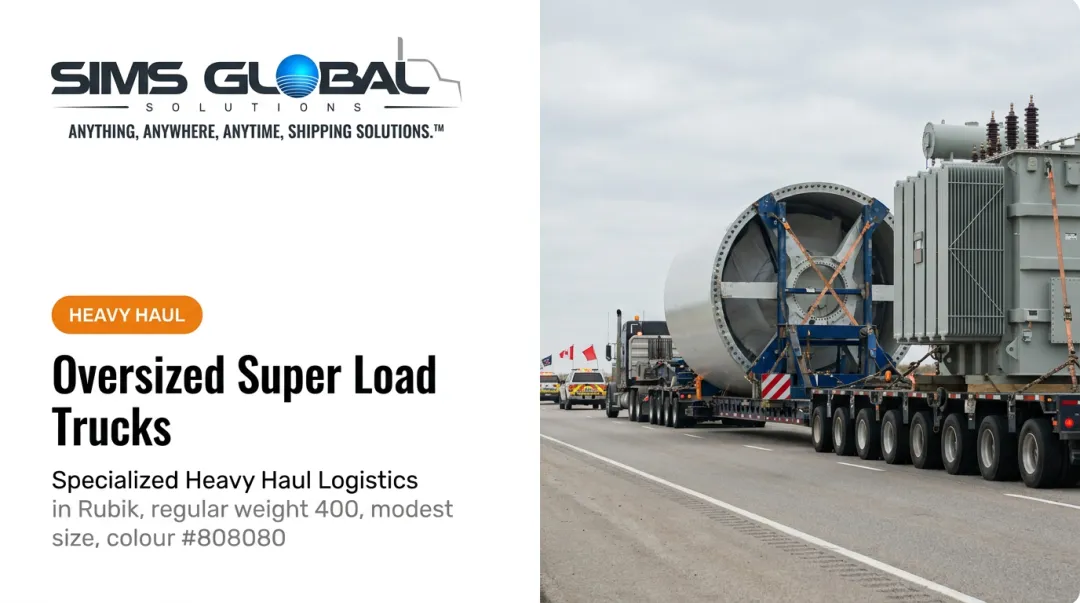
Because of these constraints, a single blade delivery typically moves as a convoy: a lead escort, the haul truck, and a trailing escort travel in sequence, using radio coordination to warn oncoming traffic and flag obstacles before the rig arrives.
The Specialized Trucks and Trailers Used for Blade Hauling
Standard flatbeds can't handle a 240-foot blade. The industry relies on purpose-built rigs instead.
Typical setup: a heavy-duty tractor pulling an extendable blade trailer. Trail King's TKEFX models, for example, extend from a compact 53 feet up to 144 feet 5 inches, with larger configurations reaching 173 feet using a pull-out extension. These trailers carry rated capacities up to 85,000 pounds.
Steerable Axles Make Tight Turns Possible
Turning, not overall length, poses the real engineering challenge for these rigs. A rigid 150-foot trailer would drag its tail through ditches on every curve. Manufacturers solve this with:
- Rear-steer axles that pivot the trailer's tail end independently of the front
- Self-steering dollies, like those on XL's BladeMate system, which keep the rear aligned with the kingpin through curves
- Hydraulic turntable steering that lets an operator manually adjust trailing-axle angle at especially tight intersections
This is what allows a rig carrying a component longer than a city block to navigate a rural crossroads without the blade tip clipping a utility pole.
What Does a Windblade Truck Driver Actually Do?
Steering technology only solves half the equation. Hauling blades isn't a job for a standard OTR driver. It requires a Class A CDL, the license federally mandated for any combination vehicle with a gross combination weight rating of 26,001 pounds or more where the towed unit exceeds 10,000 pounds. Beyond the CDL itself, drivers typically need:
- Several years of dedicated oversize/overweight or heavy haul experience
- Familiarity with RGN and multi-axle trailer handling
- The ability to coordinate constantly with pilot and chase escort vehicles
- Comfort with extended time away from home, since these projects often move in sequence across a wind farm build
Pilot and escort vehicles run ahead and behind the rig, warning oncoming traffic, checking clearances in real time, and flagging any obstacle the survey missed. Sims Global Solutions pairs this with real-time GPS tracking across its owned heavy haul fleet, letting dispatch monitor a convoy's position and react quickly if a road closes or weather shifts mid-route.
How Much Does It Cost to Transport a Wind Turbine Blade?
There's no flat rate for hauling a wind blade. Costs shift based on distance, the number of states crossed, how many permits are required, and how much the route needs modifying before the load can pass.
Permit fees vary significantly by state. A few documented examples:
- Iowa: $35 for a single-trip permit, $70 for round trip
- Colorado: $30 for a single-trip oversize permit (plus $10 per axle if overweight), or $250 to $400 for annual permits
Multi-state routes require separate approval, plus separate fees, from every state crossed, since no federal oversize/overweight permit exists.
Beyond the Permit Fee
Several other factors drive total cost up:
- Route modifications: Arkansas's DOT has documented road widening, obstacle removal, and driveway adjustments for wind hauls, with the shipping party covering costs
- Escort vehicles: pilot cars are typically billed hourly, and larger loads may need multiple escorts or police escort in certain jurisdictions
- Bridge analysis: some structures need engineering review before a heavy load crosses
- Cargo insurance: a single blade can represent a multi-million-dollar asset, so adequate coverage matters
Sims Global Solutions offers A+ rated supplemental cargo insurance built for high-value freight like this, protecting shippers against costly claims if something goes wrong mid-route.
Skimping on any of these line items to save money upfront tends to backfire the moment a route survey turns up a bridge that can't support the load.
Permits, Route Planning and Safety Considerations
Permitting for oversize loads is a state-by-state process. The Federal Highway Administration confirms the federal government does not issue oversize or overweight permits. Each state sets its own rules, fees, and thresholds.
Once those permits are secured, route surveys are where the real planning happens. Minnesota, for example, requires a physical route survey for any load exceeding 175 feet long, 20 feet wide, or 16 feet high. Surveyors check every bridge, turn, and utility line along the path, confirming there's at least 6 inches of vertical clearance and a foot of lateral clearance at the widest point.
When Things Go Wrong
Not every haul goes smoothly. In June 2025, a wind turbine blade being transported on I-70 near Hagerstown, Maryland struck a guardrail, crossed into oncoming lanes, and was clipped by another tractor-trailer, shutting down all four lanes for hours. Investigators haven't publicly confirmed the exact cause.
What it does confirm is why federal cargo securement rules exist in the first place. Every commercial vehicle hauling oversized freight must secure that cargo so it can't shift, blow loose, or fall from the trailer. That standard becomes non-negotiable when the cargo is 250 feet of composite blade traveling at highway speed.
Weather and Seasonal Limits Add Complexity
Cargo securement isn't the only safety variable. Scheduling gets harder in certain months:
- Some states, including Illinois, prohibit oversize movement during snow, ice, or reduced visibility from fog or heavy rain
- Frost laws in states like Wisconsin restrict heavy loads on certain roads roughly from mid-December through early May
- Night moves are often restricted or require additional escort coverage depending on load width
A good heavy haul partner, such as Sims Global Solutions' asset-based heavy haul team, builds flexibility into the schedule from the start, rather than discovering a seasonal road closure the week of pickup.
Choosing the Right Heavy Haul Partner for Wind Energy Shipments
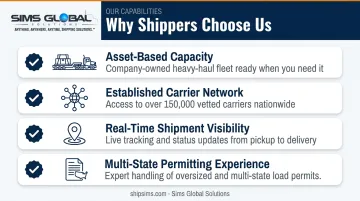
Not every logistics provider can handle this kind of freight. When evaluating a partner for wind component shipments, look for:
- Asset-based capacity — a company that owns trucks and trailers isn't at the mercy of the open market when equipment gets tight
- An established carrier network for the loads their own fleet can't cover
- Real-time shipment visibility so you know exactly where a blade or tower section is at any point in a multi-week project
- Multi-state permitting experience and a track record of route surveys done right the first time
Sims Global Solutions' Heavy Haul Trucking division combines its own fleet of specialized assets with the SimsTrak Transportation Management System, giving customers real-time tracking and quoting on complex loads. That owned-fleet advantage matters here.
As Billy, Corporate Sales Manager – Heavy Haul Trucking at Sims Global Solutions, puts it:
"The company trucking assets have opened up countless opportunities that a traditional freight brokerage would have a difficult time tapping into."
That's the core difference in play. A broker-only company depends entirely on third-party carriers who may not have the right trailer available or may decline a complex load altogether.
Sims pairs its owned equipment with a network of over 35,000 truckload carriers, giving it the flexibility to secure capacity for multi-load turbine shipments that traditional brokerages often can't access.
With nationwide service coverage and multi-modal capabilities, Sims Global Solutions coordinates the full sequence a single wind project demands. Blades, tower sections, and nacelle arrive in the order the build site actually needs them.
Frequently Asked Questions
How much does it cost to transport a wind turbine blade?
Costs vary by distance and the number of states crossed. State permit fees alone can range from roughly $30 to several hundred dollars per route, and escort vehicles, route modifications, and cargo insurance add further to the total.
What is a windblade truck driver?
A windblade truck driver holds a Class A CDL and has substantial oversize/overweight or heavy haul experience. They're trained to operate extendable blade trailers and coordinate closely with pilot and escort vehicles throughout the move.
How long is a wind turbine blade?
Modern onshore blades commonly run between 240 and 265 feet, while offshore models can exceed 375 feet. Either way, that's longer than a standard football field measured end zone to end zone.
Do wind turbine blades require special permits?
Yes. Oversize and overweight permits are required in every state, since no federal permit exists. Permit fees and route survey requirements vary by state and by the specific route traveled.
How many trucks does it take to move one wind turbine?
A single turbine typically requires several separate truckloads: one per blade, multiple loads for tower sections, and another for the nacelle. None of these oversized components can share a trailer.
What's the difference between a blade trailer and a standard flatbed?
Blade trailers extend to well over 100 feet and use steerable rear axles or self-steering dollies to navigate turns. Standard flatbeds have fixed lengths and lack the steering systems needed for extreme-length loads.