
Introduction
Freight budgets keep taking hits from every direction lately. Rising per-mile costs, unpredictable truck capacity, and mounting pressure to cut emissions are pushing more shippers to take intermodal transportation seriously.
Everyone repeats the same pitch: intermodal saves money and reduces your carbon footprint. But that claim only means something once you look at actual freight lanes and real KPIs, not marketing slides.
This article breaks down the concrete advantages of intermodal transportation, when they matter most, and how shippers can put that value to work.
Key Takeaways
- Intermodal pairs rail's cost efficiency with trucking's flexibility for shipments over 500 miles
- Core benefits: lower cost per mile, reliable capacity, reduced emissions, fewer handling touchpoints
- Value compounds for high-volume shippers running consistent freight with flexible delivery windows
- Sims Global Solutions gives shippers intermodal, truckload, LTL, and drayage access through one partner, no juggling vendors
What Is Intermodal Transportation?
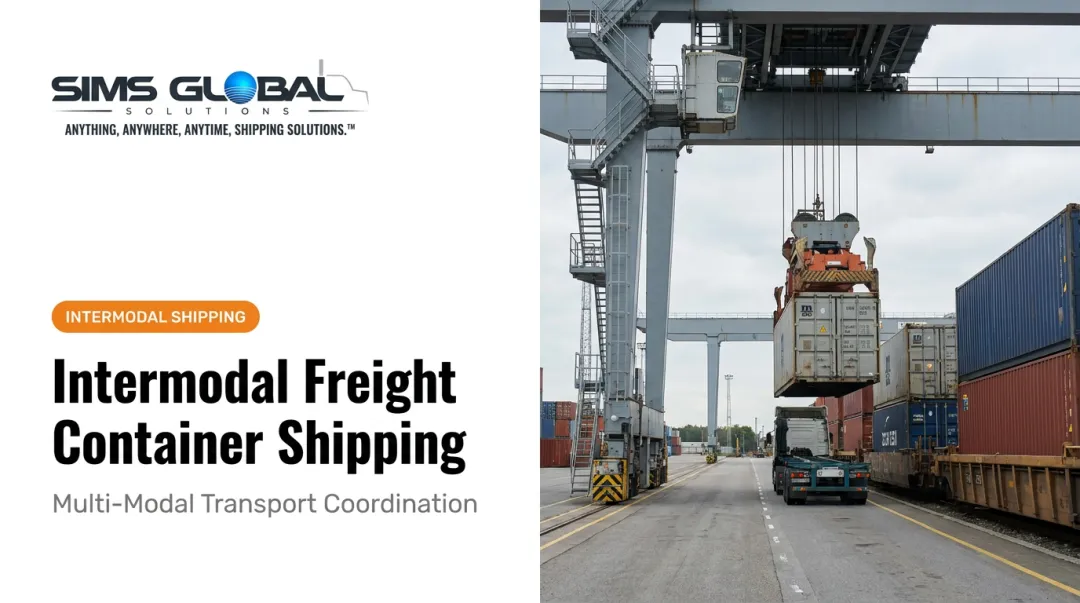
Intermodal transportation moves freight in the same container across two or more transport modes, typically truck-rail-truck, without unloading or repacking the cargo. Once loaded, the container stays sealed until it reaches its destination.
This mode works best under specific conditions:
- Long-haul domestic freight, generally 500+ miles
- High-volume shipments that can fill or nearly fill a container
- Lanes near intermodal rail ramps, since drayage distance affects both cost and feasibility
Intermodal works best as a lane-optimization tool rather than a universal replacement for truckload, since some lanes qualify and others don't. The difference usually comes down to distance, volume, and ramp access.
That's why providers like Sims Global Solutions offer intermodal as one option inside a broader network that includes truckload, LTL, drayage, and warehousing. Shippers can match the mode to the actual need instead of forcing every load into one shipping method.

Key Advantages of Intermodal Transportation
Shippers measure these advantages against outcomes they already track daily: cost per mile, capacity availability, damage and loss rates, and emissions data. Each one's impact shifts based on shipment distance, volume, and how much flexibility you have in your delivery window.
Cost Efficiency on Long-Haul Lanes
Rail is dramatically more fuel-efficient than trucking over long distances. Combine that with short truck drayage legs on either end, and total transportation spend drops compared to running the entire distance over the road.
Here's how it plays out operationally:
- Rail handles the bulk of the mileage at a lower cost per ton-mile
- Trucks only manage the short first-mile and last-mile legs
- The combination reduces total spend without sacrificing container integrity
Providers like Sims Global Solutions coordinate both the rail leg and the drayage legs through one carrier network, keeping that handoff from adding extra cost or delay.
How much can shippers actually save? FreightWaves SONAR's 2025 domestic intermodal index reported a 23% national-average savings versus truckload, including fuel surcharges. That said, savings vary sharply by lane. The same report showed only a 9% savings on the Los Angeles-Dallas corridor, so don't assume a flat percentage applies everywhere.
This variability matters for budgeting. Shippers with consistent volume, think three or more loads weekly on a given lane, can model actual savings per corridor rather than guessing at a blanket discount.
KPIs impacted: cost per mile, total transportation spend, freight budget variance
When it matters most: shipments traveling 500+ miles with steady, recurring volume on the same lane.
Reliable Capacity, Even in Tight Markets
A single intermodal train carries roughly the equivalent of 280 truckloads. That's capacity that doesn't depend on finding available drivers, which matters a lot when truck capacity gets tight.
Driver availability remains a real constraint. The American Trucking Associations estimated a shortage of 80,000 drivers in 2021, projecting it could exceed 160,000 by 2030. Whatever the exact current number, the trend line points toward continued tightness in truck capacity during peak seasons.
Intermodal offers a hedge against that:
- Rail scheduling follows fixed timetables, not driver availability
- Predictable transit windows support better production and inventory planning
- Shippers reduce exposure to spot-market price spikes during capacity crunches
KPIs impacted: on-time capacity fulfillment, order fill rate, supply chain resilience
When it matters most: high-volume shippers, or anyone shipping during peak season when truck capacity tightens fastest.
Lower Emissions and Sustainability Gains
Rail moves freight using a fraction of the fuel trucking requires per ton-mile. That efficiency translates directly into a smaller carbon footprint for every shipment that moves by rail instead of road.
The numbers back this up. U.S. freight railroads moved one ton of freight an average of 472 miles per gallon in 2019, making rail 3-4 times more fuel-efficient than trucking. The same research found that shifting freight from truck to rail can lower greenhouse gas emissions by up to 75% on average.
Sustainability isn't optional anymore for a lot of shippers. A 2024 survey found 94% of transportation executives said consumer demand for sustainable products made emissions reduction a top priority that year. Shifting long-haul miles from truck to rail supports those ESG commitments without slowing down delivery performance.
KPIs impacted: carbon footprint per shipment, fuel spend, ESG scorecards
When it matters most: companies with public sustainability targets or customers requiring emissions reporting.
Secure, Low-Handling Cargo Movement
Intermodal containers stay sealed from origin to destination. The container itself transfers between rail and truck, but nobody touches the freight inside.
This matters more than it might seem at first glance:
- Fewer handling events mean fewer opportunities for damage, loss, or theft
- Multi-stop trucking routes create more touchpoints for risk, while sealed containers reduce tampering during transit
Cargo liability coverage on intermodal moves is often structured to accommodate higher-value freight, which matters if you're shipping electronics, aerospace components, or specialty retail goods. Fewer handling events generally mean fewer opportunities for claims to occur in the first place, even though exact claims-reduction percentages vary by carrier and equipment.
KPIs impacted: damage/loss rate, cargo claims volume, insurance costs
When it matters most: high-value, fragile, or theft-prone freight where each handling touchpoint carries real risk.

What Happens When Intermodal Is Overlooked?
Shippers who default to truckload-only strategies often miss savings that are sitting right in front of them on long-haul lanes.
The costs compound over time:
- Higher per-mile spend on lanes that would have qualified for intermodal savings
- Greater exposure to driver shortages and spot-market rate spikes
- Missed sustainability targets that competitors using intermodal are already hitting
There's also a negotiating cost: shippers who never evaluate their lane mix end up over-relying on a single mode. When capacity tightens, they have far less leverage than shippers who can shift freight between modes as conditions change. Sims Global Solutions helps shippers evaluate that lane mix and access both truckload and intermodal capacity, keeping leverage intact.
How to Get the Most Value from Intermodal Transportation
Intermodal delivers the strongest return when shippers evaluate it lane-by-lane, not as a blanket policy. Before committing, check three things: distance, volume, and how flexible your delivery window really is.
A few practical steps:
- Screen each lane individually - distances of 500+ miles with consistent volume are your best candidates
- Build in flexible pickup and delivery windows - intermodal transit times can vary slightly more than dedicated truckload, so rigid windows create friction
- Reassess regularly - lane conditions, rail service quality, and truck capacity shift throughout the year
Working with a multi-modal freight partner makes this process far less painful. Sims Global Solutions offers intermodal alongside truckload, LTL, drayage, and warehousing under one platform, allowing shippers to shift freight between modes as conditions change without renegotiating with a new vendor every time.
Real-time tracking through the company's TMS also keeps visibility consistent, no matter which mode is moving the freight.
Conclusion
Intermodal's core value comes from combining rail's cost and fuel efficiency with trucking's flexibility on the first and last mile. That combination makes it a genuine strategic lever for long-haul, high-volume freight.
These advantages compound for shippers who keep evaluating and applying intermodal on the right lanes instead of treating it as a one-time decision. Treat it as an ongoing part of a diversified shipping strategy, backed by a partner like Sims Global Solutions that can shift freight across modes as your needs change.
Frequently Asked Questions
What is an important benefit of intermodal modes of transport?
One of the biggest benefits is cost savings on long-haul freight, driven by rail's fuel efficiency over long distances. Trucking still handles the flexible first- and last-mile delivery on each end.
What is the primary purpose of intermodal freight transport?
Its primary purpose is moving sealed containers across multiple transport modes without repacking the cargo inside. This reduces handling, cost, and transit risk compared to breaking freight down between modes.
What is the difference between intermodal and multimodal transportation?
Intermodal keeps freight in the same container across modes, often under separate contracts for each leg. Multimodal transport can involve repacking and is typically managed under a single contract with one operator responsible for the whole move.
How much can intermodal shipping save compared to trucking?
Savings vary by lane. A 2025 FreightWaves SONAR index found a 23% national-average savings versus truckload, though some corridors, like Los Angeles-Dallas, saw savings closer to 9%.
What industries benefit most from intermodal transportation?
Retail, manufacturing, automotive, and building materials industries benefit most. These sectors typically ship high-volume, long-distance freight that isn't extremely time-sensitive.
What are the disadvantages of intermodal transportation?
Intermodal often means slightly longer transit times than dedicated truckload, along with service limited to areas near rail ramps. Some equipment configurations also carry lower weight capacity than standard dry-van truckload.