That's the gap Conestoga gooseneck trailers fill. They pair a retractable tarp system with a gooseneck-style connection, giving shippers flatbed flexibility with dry-van-level protection.
The gooseneck configuration adds another layer of value: better stability and a tighter turning radius than a standard bumper-pull setup. For heavy, oversized, or high-value freight moving through tight yards or construction sites, that maneuverability matters.
This guide breaks down what these trailers are, where they shine, how they stack up against flatbeds and RGNs, and how to actually find one when you need it.
Key Takeaways
- Conestoga gooseneck trailers combine sliding curtains with gooseneck stability for oversized, weather-sensitive loads
- They load side and top like a flatbed, then seal cargo like a dry van
- Limited availability versus standard flatbeds typically means higher rates
- A broker with a vetted carrier network makes booking this equipment easier on short notice
What Is a Conestoga Gooseneck Trailer?
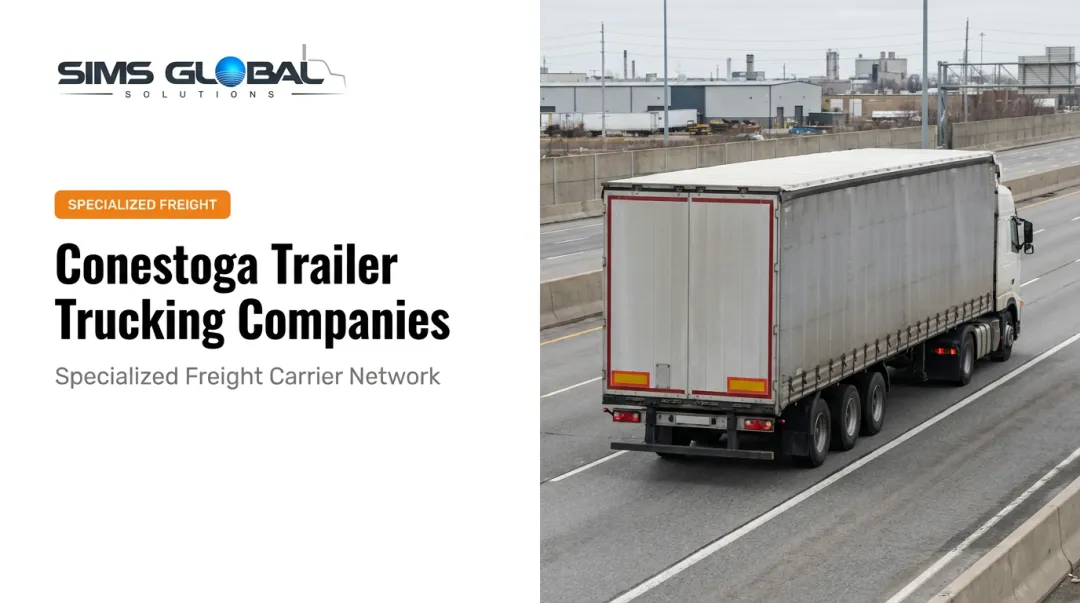
At its base, a Conestoga is a flatbed deck fitted with a sliding tarp system, often called a tarp boom, that runs on rails along the length of the trailer. Crews retract the curtain to load from the side or top, then close it to fully enclose the freight for transit.
The "gooseneck" part changes how the trailer connects to the tow vehicle, and the terminology gets a little tricky. On smaller flatbed-style trailers, a gooseneck uses an in-bed ball-and-coupler connection over the tow vehicle's rear axle, similar to how a pickup tows a horse trailer. On commercial 48-53 ft semitrailers, though, the standard coupling is actually a fifth-wheel-and-kingpin connection, where the tractor's fifth wheel engages the trailer's kingpin as the pivot point.
Either way, the connection point sits differently than a bumper-pull hitch, and that difference reshapes handling.
How the Gooseneck Hitch Changes Handling
Moving the pivot point over the rear axle (rather than behind the bumper) delivers a few practical advantages. According to CURT's comparison of gooseneck and fifth-wheel setups, this positioning improves weight balance, reduces trailer sway, and tightens the turning radius compared to receiver-hitch towing.
For freight moving through industrial yards or tight construction sites, that maneuverability isn't a nice-to-have. It's often the difference between a smooth delivery and a stuck truck.

The Sliding Tarp System Explained
The curtain rides on a framed assembly, typically steel wheels on a V-groove track, that never touches the cargo itself. That's an important distinction. The tarp shields freight; it doesn't press against or shift it.
Retract the system, and the deck opens up for forklift or crane access from the side or top. Close it, and the freight is sealed against rain, wind, and road debris, no manual tarping required.
Types, Dimensions & Capacity
Conestoga gooseneck trailers generally come in three deck configurations:
- Standard flatbed gooseneck Conestoga - highest deck, most common configuration
- Step-deck gooseneck Conestoga - lower deck for taller cargo clearance
- Double-drop gooseneck Conestoga - lowest deck, built for the tallest freight
Most run 48-53 ft in length and roughly 8.5 ft wide, matching federal National Network width standards. Capacity varies by build, but carrier planning benchmarks put flatbed Conestogas around 44,000 lbs and step-deck or double-drop configurations closer to 41,000 lbs, according to ATS's breakdown of Conestoga trailer specs.
The tarp, tracks, bows, and bulkhead hardware do add tare weight versus a bare flatbed, which reduces usable payload somewhat. Always confirm exact figures with your carrier or manufacturer before finalizing a load plan, since these numbers vary by build.
Top Benefits & Best Use Cases for Conestoga Gooseneck Trailers
Freight stays protected without sacrificing loading flexibility. That's the core value here, and the specific benefits go further.
Weather protection without manual labor. Once the curtain closes, cargo is shielded from rain, wind, and debris, no tarping crew required. That also removes a genuine safety risk. Washington State's Department of Labor & Industries documented a fatal fall during manual flatbed tarping in 2017, a stark reminder of why eliminating that step matters.
Faster loading. Because the deck opens from the side or top, forklifts and cranes can access freight directly. Chameleon Innovations notes that retracting the curtain provides side and overhead access, similar to a standard flatbed, cutting the dock time a rear-loading dry van would require.
Security and discretion. A closed curtain conceals cargo shape and contents. For high-value or sensitive freight, that matters just as much as weather protection.
Reduced wind drag. An enclosed shell moves more efficiently through the air than an open, manually tarped flatbed on long hauls, trimming fuel costs over distance.

Industries & Cargo That Benefit Most
Certain freight types are almost tailor-made for this equipment:
- Heavy machinery and industrial equipment
- Steel and metal coils (rust prevention is critical)
- Lumber and building materials
- Glass and fragile items
- Electronics with exposed sensors
- Automotive and aerospace components
This lines up closely with sectors Sims Global Solutions regularly serves, including material handling, aerospace & defense, and event and exhibit freight. These industries need both protection and flexible loading, and they rarely have room to compromise on either.
Conestoga Gooseneck vs. Other Trailer Options
Choosing the right equipment means understanding the tradeoffs, and here's how the Conestoga gooseneck stacks up against the alternatives:
| Equipment | Loading Access | Weather Protection | Best For |
|---|---|---|---|
| Conestoga gooseneck | Side, top (curtain retracted) | Full enclosure when closed | Weather-sensitive, oversized freight |
| Bumper-pull Conestoga | Side, top | Full enclosure when closed | Similar freight, less stability needed |
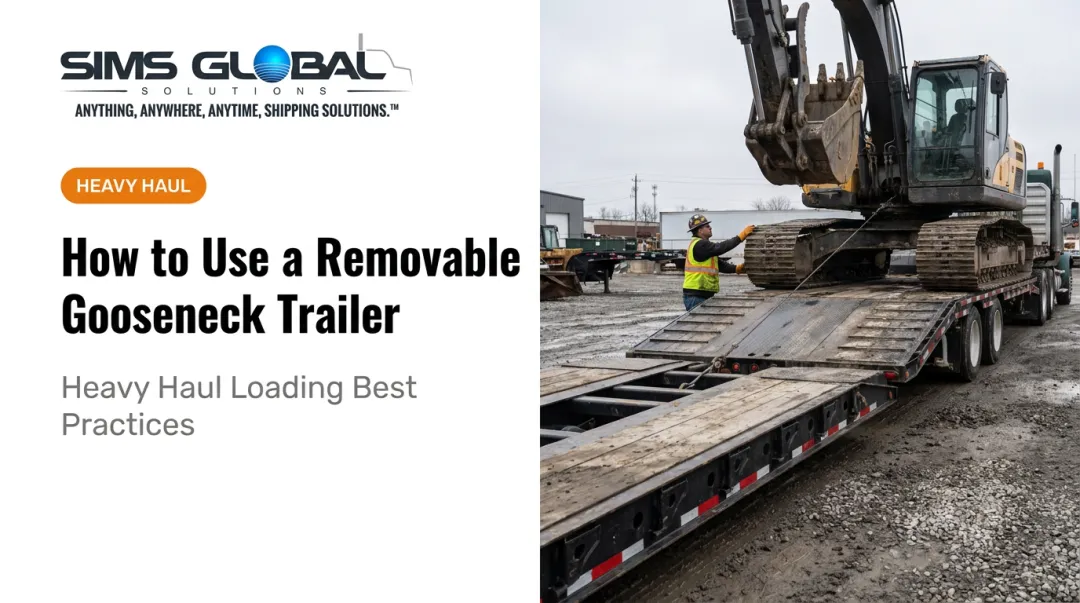
| RGN (removable gooseneck) | Drive-on ramps | Minimal, usually open | Self-propelled, tall equipment |
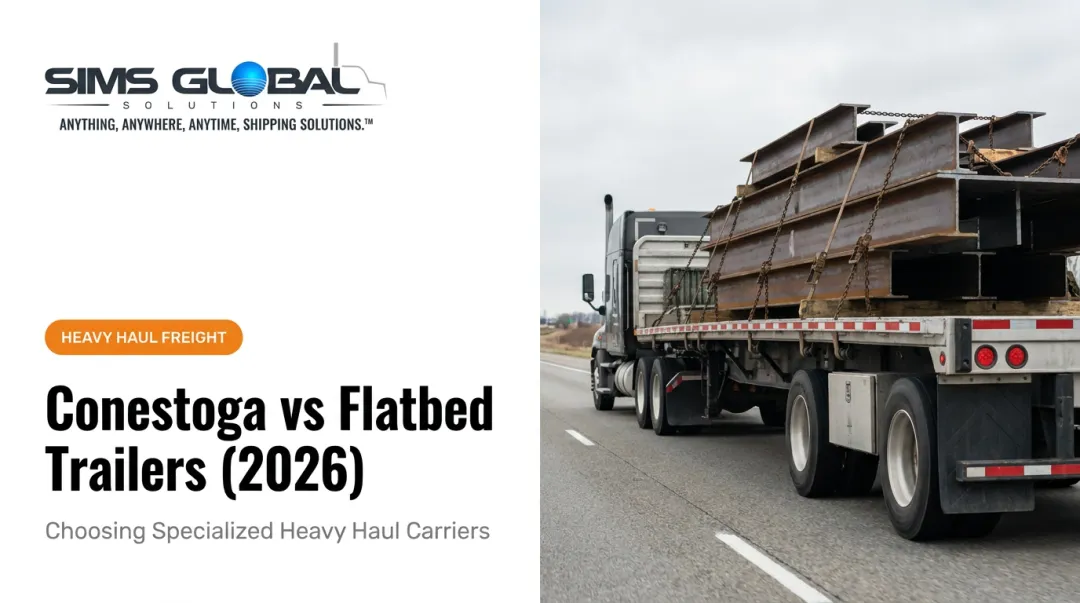
| Standard flatbed | Side, top, rear | None | Cost-sensitive, weather-tolerant loads |
| Dry van | Rear only | Full enclosure | Palletized freight, dock loading |
Versus a bumper-pull Conestoga: The gooseneck version offers better stability and a tighter turning radius, though it comes with a slightly shorter usable deck length and more complex hitch mechanics.
Versus RGN trailers: RGNs are built for drive-on loading of self-propelled equipment and greater height capacity. Conestoga goosenecks prioritize weather protection with crane or forklift-based loading instead. Once the tarp retracts, however, a Conestoga gooseneck can be side-loaded like a standard flatbed, offering the same access with added protection when closed.
Versus standard flatbeds and dry vans: Flatbeds are cheaper and more widely available but leave freight exposed. Dry vans protect fully but restrict loading to the rear doors only. The Conestoga gooseneck sits in the middle, offering both flexibility and protection.
That middle-ground advantage comes with a tradeoff: because it's specialty equipment, nationwide capacity runs tighter than standard flatbeds or vans. This scarcity directly affects both cost and how far in advance you need to book.
Are Conestoga Gooseneck Trailers Worth the Investment?
The honest answer: it depends on what you're shipping and how often.
The costs are real. Expect a higher upfront or rental cost than a standard flatbed, driven by the tarp system and gooseneck hardware. Ongoing maintenance adds up too, including regular track cleaning and tarp tension checks to prevent rail wear.
The savings can offset that. Consider what you're avoiding:
- Fewer damage claims from weather exposure
- Reduced labor costs from eliminating manual tarping
- Faster loading and unloading cycles
- Command premium rates for specialized freight capacity
Carrier estimates suggest Conestoga service generally runs 10-15% above standard equipment costs. Whether that premium pays for itself depends on your freight profile.
Base the decision on three factors:
- Freight type - Is your cargo genuinely weather-sensitive or high-value?
- Shipment frequency - Are you moving this kind of freight regularly, or is this a one-off?
- Regional availability - Can you actually source this equipment reliably in your lanes?
Cost alone shouldn't drive the decision. A shipper moving fragile aerospace components weekly has a very different calculation than one shipping occasional lumber loads.
Partnering with a broker like Sims Global Solutions, which taps into a network of 150,000+ vetted carriers, makes it easier to secure Conestoga capacity in tight lanes.

Finding a Reliable Carrier for Your Conestoga Gooseneck Shipment
Because Conestoga gooseneck trailers are niche equipment, standard spot-market load boards often come up short. Sourcing this equipment reliably requires a broker or carrier with a genuinely deep, vetted network, not just a wide one.
This is where partnering with an established 3PL pays off. Sims Global Solutions combines a vetted carrier network with owned equipment and real-time visibility, helping surface hard-to-find equipment like Conestoga goosenecks faster than a typical load-board search.
Sims Global Solutions offers:
- A network of 150,000+ vetted carriers, backed by an in-house Carrier Procurement Team that vets equipment and capacity before it reaches shippers
- An asset-based heavy haul fleet, giving shippers owned capacity alongside brokered options for oversized and specialized freight
- SimsTrak, a proprietary Transportation Management System that provides real-time tracking from pickup through delivery
- Dedicated agent support that keeps specialized, high-value freight monitored throughout transit
For freight that can't afford delays or damage, this combination of network depth and visibility bridges the gap between finding equipment and delivering it intact, on time.
Frequently Asked Questions
Are Conestoga gooseneck trailers worth it?
They're worth it for shippers regularly moving weather-sensitive, high-value, or oddly shaped freight. Weigh the higher upfront or rental cost against reduced damage claims, faster loading, and premium rate potential for your specific freight profile.
Who manufactures Conestoga gooseneck trailers?
Recognized names in Conestoga and rolling-tarp systems include Aero Industries, Shur-Co, Chameleon Innovations, Utility Trailer, and MAC Trailer. Verify current model availability directly with the manufacturer before purchasing or specifying equipment.
Can a Conestoga gooseneck trailer be side loaded?
Yes. Once the retractable tarp slides back, the deck opens for side and top loading via forklift or crane, functioning much like a standard flatbed during the loading process.
What is the difference between a standard Conestoga and a Conestoga gooseneck trailer?
The tarp and curtain system itself is the same across both. The difference is the hitch connection, which changes how the trailer attaches to and handles behind the tow vehicle.
How much weight can a Conestoga gooseneck trailer haul?
Planning benchmarks run around 44,000 lbs for flatbed configurations and roughly 41,000 lbs for step-deck or double-drop builds. Confirm exact capacity with your carrier, since tarp hardware reduces payload versus a bare flatbed.
How do I get a quote for shipping freight on a Conestoga gooseneck trailer?
Contact our team at Sims Global Solutions with your freight's dimensions, weight, and route details. Reach their team at 855-326-8671 or ContactSims@ShipSims.com for a tailored quote.