Introduction
Flatbed and lowboy trailers both haul freight out in the open, no walls, no roof. But treat them as interchangeable and you're asking for trouble.
Pick the wrong one, and you risk permit violations or height clearance failures at that one overpass nobody warned you about. Worse, you could end up with equipment that simply won't fit where you need it to go.
That risk multiplies at scale. Trucks moved 72.7% of U.S. freight by weight in 2024, hauling 11.27 billion tons across the country, according to ATA's American Trucking Trends 2025 report. A huge share of that tonnage rides on open-deck trailers like flatbeds and lowboys.
This guide breaks down the real differences: deck height, weight capacity, cost, and loading method, so you know exactly which trailer fits your next shipment.
Key Takeaways
- Flatbed trailers: flat, elevated deck for fast, side-loading of standard freight
- Lowboy trailers: low deck built for tall equipment and heavy loads
- Deck height, not just weight, usually decides which trailer you need
- Choosing incorrectly risks permit fines, transit delays, or cargo damage
- An asset-based heavy-haul provider helps match the right trailer before booking
Flatbed vs. Lowboy Trailers: Quick Comparison
Before diving into specifics, here's how the two stack up side by side.
| Factor | Flatbed | Lowboy |
|---|---|---|
| Cost | Lower operating cost, simpler build | Higher cost due to drop-deck engineering |
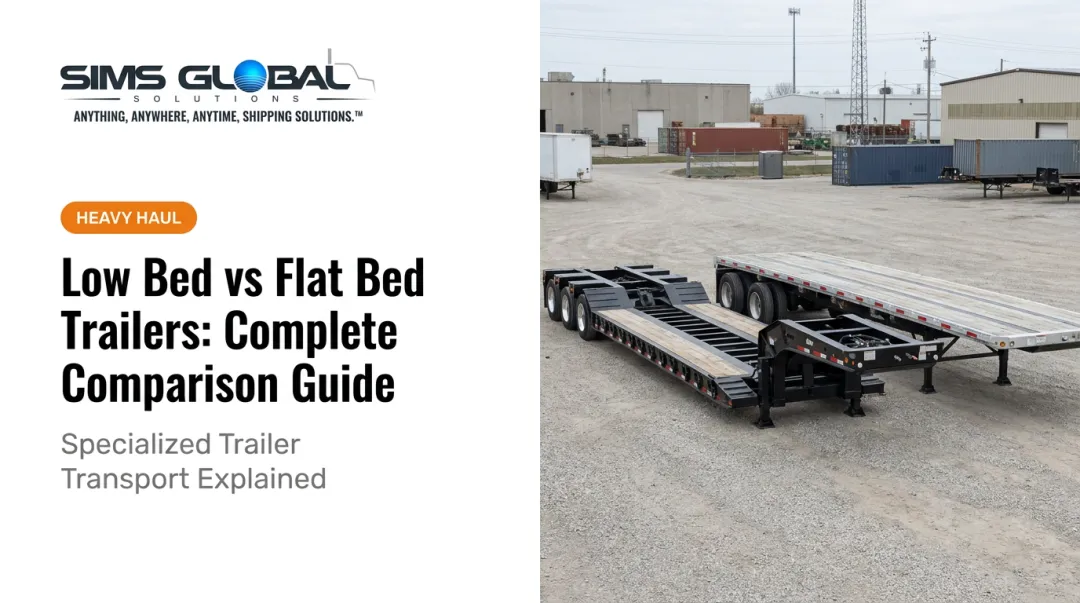
| Deck height | Roughly 5 feet off the ground | As low as 18–24 inches, depending on the model |
| Weight capacity | Moderate, suited to standard legal loads | Built for heavy freight, scales up with added axles |
| Best for | Lumber, steel, standard machinery | Bulldozers, excavators, oversized industrial gear |
| Loading | Any side, via crane or forklift | Driven, rolled, or winched on with minimal ramp angle |
A note on height limits: there's no single federal vehicle-height law. The Federal Highway Administration confirms that states set their own overall-height limits, ranging from 13.6 to 14.6 feet.
Subtract a flatbed's roughly 5-foot deck height from that range, and cargo needs to stay near 8.5 feet tall to avoid permits in many states. Lowboys exist precisely because that math doesn't always work.
What Is a Flatbed Trailer?
A flatbed is an open, flat-bodied semi-trailer with no sides, no roof, and no drop in deck height. It's the workhorse of open-deck freight, common across manufacturing plants, construction supply yards, and material handling operations.
Core benefits:
- Multi-side loading: forklifts and cranes can approach from any angle, not just the rear
- Faster load and unload times compared to enclosed trailers, since there's no need to back into a dock
- Lower cost per mile thanks to simpler construction and fewer specialized components
Common flatbed subtypes include step decks, Conestogas (curtain-side flatbeds), and side-kit configurations. Each solves a slightly different problem, but the core deck design stays the same.
Use Cases of Flatbed Trailers
Flatbeds dominate wherever freight is tall enough to need open-air hauling but not so tall it breaks state height limits. Think construction steel, lumber bundles, and standard-height machinery.
Industries where flatbeds show up constantly:
- Retail and furniture: bulky, palletized goods that don't need weather protection for short hauls
- Construction: FreightWaves notes flatbeds regularly move large wooden frames and commercial-construction components loaded straight off a forklift
- Material handling: pallet racking, conveyor systems, and warehouse equipment
- Agriculture: tractors, implements, and irrigation equipment moved seasonally during planting and harvest
On cost, flatbed rates have historically run higher per mile than dry van. According to DAT's flatbed trucking benchmark data, flatbeds average $3.07 per mile versus $2.27 for dry van, a premium that reflects the specialized handling this freight requires. For the right freight, a flatbed still beats an enclosed trailer on load speed and flexibility.
What Is a Lowboy Trailer?
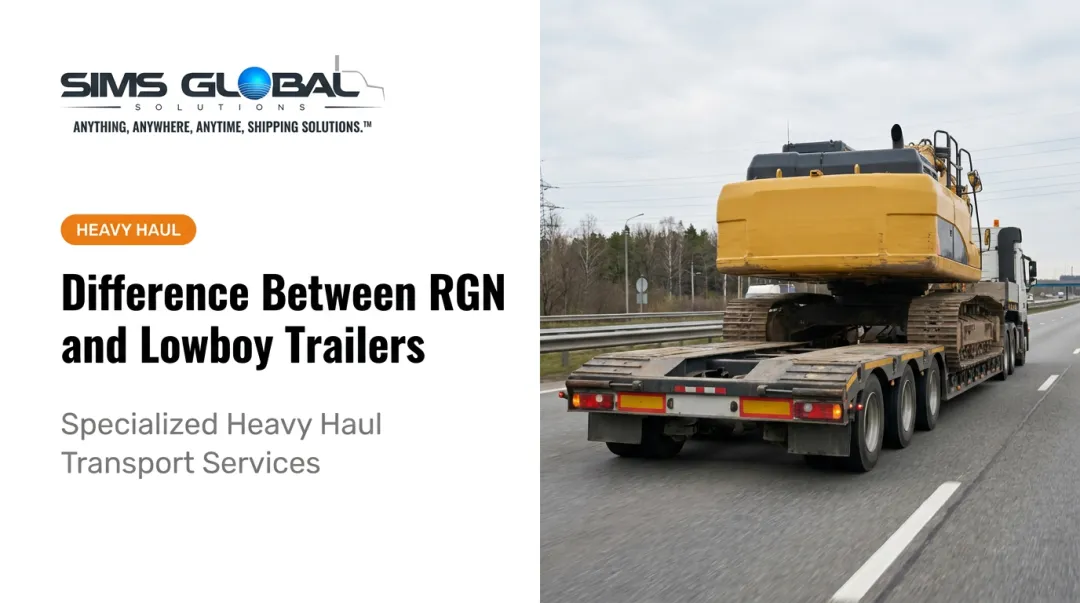
A lowboy is a heavy-duty, double-drop-deck semi-trailer designed for freight too tall or too heavy for a standard flatbed. The deck drops between the axles, sitting far closer to the pavement.
Why that matters operationally:
- Lower center of gravity improves stability when hauling top-heavy equipment
- Easier loading for self-propelled machinery like excavators, which can drive on with minimal ramp angle
- Height compliance: a lower deck buys back the clearance a tall load needs
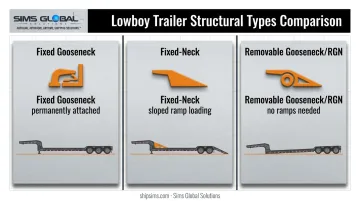
Lowboys come in a few structural flavors:
- Fixed gooseneck: permanently attached, loads from the rear
- Fixed-neck: similar rear-loading design, often using sloped ramps
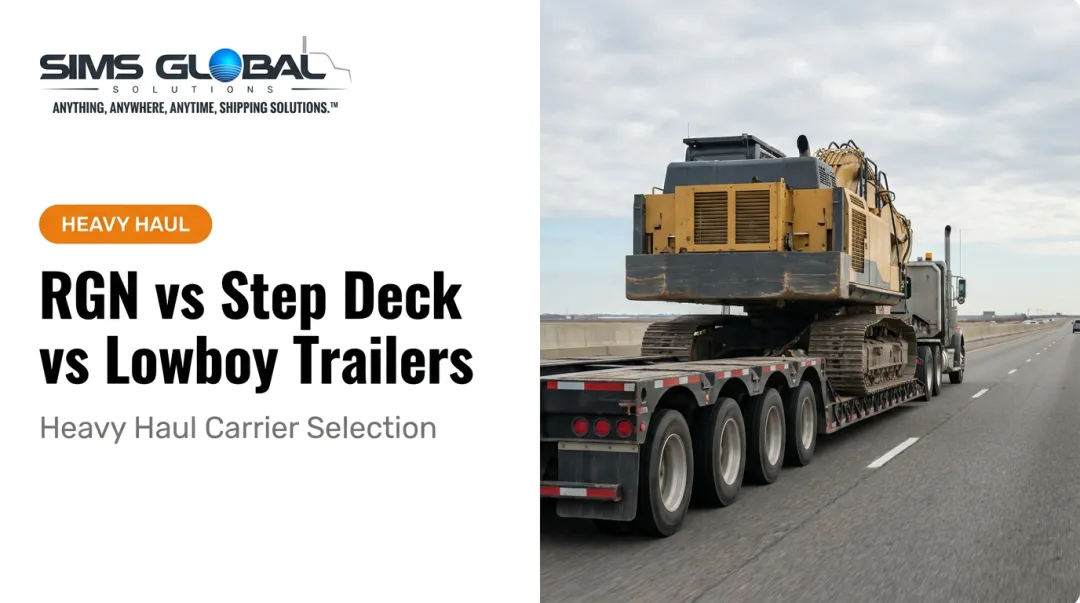
- Removable gooseneck (RGN): the neck detaches entirely, letting equipment drive or roll straight onto the front of the lowered deck without ramps at all
Use Cases of Lowboy Trailers
Lowboys step in exactly where flatbeds hit a wall, literally or legally. Bulldozers, excavators, and outsized industrial equipment that exceed standard flatbed height limits all need this design.
Industries that lean on lowboys most:
- Aerospace and defense: oversized components with tight tolerances and strict handling requirements
- Mining: heavy processing equipment that's both tall and extremely heavy
- Construction equipment manufacturing: bulldozers, cranes, and graders shipped direct from the factory floor
- Material handling: large-scale industrial systems too heavy for standard trailers
Weight capacity is where lowboys really separate from flatbeds. Federal interstate limits cap gross vehicle weight at 80,000 pounds, with 20,000 pounds per single axle and 34,000 pounds per tandem, subject to the Bridge Formula.
Add axles, though, and permitted capacity climbs fast. Texas permit tables, for example, allow legal weight to rise from 25,000 pounds on a single axle up to 81,400 pounds across a five-axle group, depending on spacing and tire width. That's the entire logic behind multi-axle lowboys: more axles, more distributed weight, higher legal capacity.
One caution worth flagging: a trailer's structural rating (what the manufacturer says it can carry) isn't the same as its legal payload (what the law and your permit allow on a given route). Always check both before booking.
Flatbed vs. Lowboy: Which One Should You Choose?
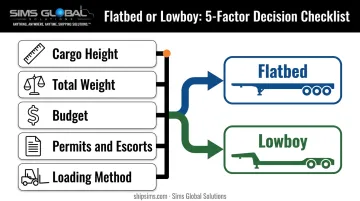
The decision usually comes down to five factors:
- Cargo height: does it clear 8.5 feet, or does it need a dropped deck?
- Total weight: will it fit within standard axle limits, or does it need multi-axle distribution?
- Budget: lowboys cost more to operate; only pay for that capability if you need it
- Permits and escorts: taller, heavier loads often trigger state permit and escort requirements
- Loading method at pickup: can equipment be craned on, or does it need to drive on under its own power?
Choose a flatbed if your cargo fits standard height and weight limits and cost efficiency is the priority.
Choose a lowboy if your equipment exceeds roughly 8.5 feet in height, needs a lower center of gravity for stability, or requires drive-on loading.
Real-World Example: Choosing the Right Trailer
Picture a material handling equipment manufacturer shipping a large industrial press across state lines. The unit clears standard flatbed weight limits easily, but its height pushes right up against the legal ceiling once you factor in the trailer's own deck height.
Loaded on a standard flatbed, that shipment faces a real risk: a permit rejection at the state line, or worse, a low bridge strike mid-route. Either scenario means delays, rerouting, and potentially steep fines.
Switching to a lowboy solves the problem at the source. Dropping the deck by two to three feet buys back exactly the clearance the load needs, without touching the cargo itself. Paired with a properly surveyed route and the right permits in hand, that same shipment moves through without a single height-related hold-up.
This is the kind of call Sims Global Solutions' Heavy Haul Trucking team makes routinely. SGS runs its own fleet of RGN, lowboy, and multi-axle trailers alongside a network of over 150,000 vetted carriers.
That combination lets the team match equipment to trailer type before a shipment ever leaves the yard, rather than discovering a mismatch on the road. SimsTrak, the company's proprietary TMS, then provides real-time visibility into where the load is and whether it's tracking to plan.
The takeaway: choosing the right trailer upfront prevents the permit rejections, bridge strikes, and rerouting that come with the wrong one. If you're planning an oversized or heavy shipment, talk to Sims Global's Heavy Haul team before you book.
Conclusion
Neither trailer wins outright. A flatbed handles the bulk of standard freight at a lower cost. A lowboy exists for the loads that would otherwise get stuck, literally, under a bridge or over a weight limit.
The right call always traces back to three details:
- Cargo height
- Cargo weight
- Compliance rules for your specific route
Get those straight, and the trailer choice follows.
Working with an experienced logistics partner like Sims Global Solutions takes the guesswork out of that decision, protecting your budget and your shipment while keeping you compliant.
Frequently Asked Questions
What is a flatbed lowboy trailer?
"Flatbed lowboy" generally refers to a lowboy: a heavy-duty, double-drop-deck version of a flatbed built to haul taller, heavier freight closer to the ground.
How much weight can you haul on a flatbed lowboy trailer?
A standard two-axle lowboy typically handles around 40,000 pounds. Adding axles can push legal capacity up to 80,000 pounds or more, depending on configuration and permits.
What is the 60/40 rule for trailers?
It's a general weight-distribution guideline for balancing loads across a trailer's axles, helping maintain stability and axle-weight compliance. It's not an official federal regulation, but a widely used industry practice.
What is the difference between a lowboy and an RGN trailer?
An RGN is a specific type of lowboy with a detachable gooseneck. That feature lets equipment drive or roll onto the deck without ramps.
Can a lowboy trailer haul the same freight as a flatbed?
Mostly, yes. Lowboys can handle most flatbed-appropriate freight, but the reverse isn't true — flatbeds can't accommodate the taller or heavier loads lowboys are built for.
How do I know if my equipment needs a lowboy instead of a flatbed?
Measure your equipment's total height and weight against standard flatbed limits, roughly 8.5 feet and moderate tonnage. Exceed either, and a lowboy is likely the safer, more compliant choice.