Introduction
A container leaving a factory in Shenzhen rarely reaches a warehouse in Ohio on a single truck. It moves by ship, then rail, then road, often switching hands three or four times before delivery.
That complexity creates real headaches for shippers: juggling multiple carrier contracts, chasing down separate tracking numbers, and absorbing unpredictable costs when one leg runs late.
The World Bank's 2023 Logistics Performance Index found that international trade routes average 44 days end-to-end, with the biggest delays clustering at seaports, airports, and multimodal transfer points.
This guide breaks down what multimodal transport actually means, how it differs from intermodal shipping, and why the right logistics partner can turn a fragmented process into one accountable relationship.
Key Takeaways
- Multimodal transport bundles multiple modes under one contract with one provider.
- Intermodal shipping uses one container but needs separate contracts for each leg.
- Shippers gain simplified billing, clearer visibility, and faster rerouting during disruptions.
- Documentation and compliance grow more complex across road, rail, sea, and air.
- An in-house multimodal provider removes the coordination burden.
What Is Multimodal Transport?
Multimodal transport is the movement of freight using **two or more transport modes** (road, rail, sea, or air) under a single contract with one provider responsible for the entire journey. You sign one agreement, get one bill of lading, and hold one company accountable from pickup to final delivery.
That single point of contact matters more than it might seem. Instead of tracking down three separate carriers when a shipment stalls, you call one provider who already knows where the freight is and what happened.
The Multimodal Transport Operator's Role
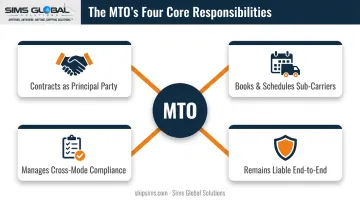
The entity coordinating all of this is called a Multimodal Transport Operator (MTO). An MTO doesn't need to physically operate every truck, train, or vessel involved. Instead, it:
- Contracts on its own behalf as the principal party, not as an agent
- Books and schedules sub-carriers for each leg of the route
- Manages compliance requirements across every mode
- Remains liable for the shipment even when a subcontractor mishandles a leg
This last point comes from the framework established in the UN Convention on International Multimodal Transport of Goods, adopted in Geneva in 1980. Under that framework, the MTO's liability period runs from the moment it takes charge of the goods through final delivery, regardless of how many sub-carriers touch the freight along the way.
The 1980 Convention, however, has never entered into force. The UN treaty registry lists only six signatories and eleven parties, well short of the 30 required. In practice, shippers rely on the terms written into their multimodal transport contract, sometimes incorporating the UNCTAD/ICC Rules for Multimodal Transport Documents, rather than treaty law.
Unimodal shipping, by contrast, uses a single mode from origin to destination. It works fine for short, domestic hauls. Once a shipment crosses oceans or spans thousands of miles through varied terrain, unimodal options run out of reach, and multimodal coordination becomes necessary.
Multimodal vs. Intermodal Transport: What's the Difference?
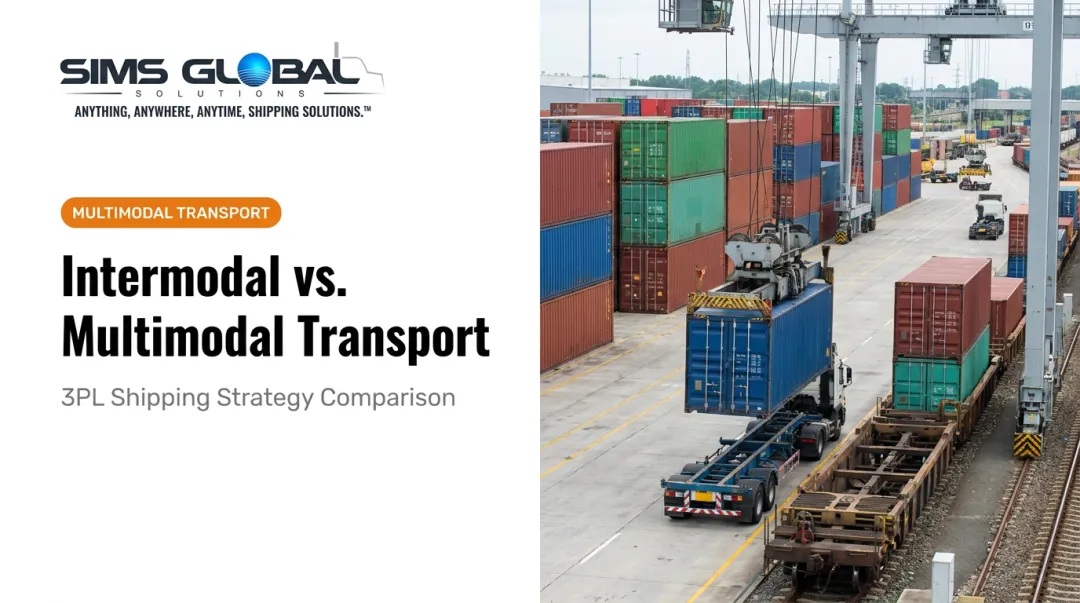
Multimodal and intermodal transport get used interchangeably, yet they describe distinct contractual structures. Multimodal transport puts one provider in charge of the entire shipment under a single contract, no matter how many modes carry the freight.
Intermodal transport moves freight across multiple modes too, but each leg operates under a separate contract with a separate carrier. You might hire an ocean carrier for the sea leg, a rail company for inland transport, and a trucking company for the final mile. That adds up to three separate contracts and three points of contact, each one a chance for miscommunication to creep in.
| Factor | Multimodal | Intermodal |
|---|---|---|
| Contract structure | One contract, one provider | Separate contract per leg |
| Accountability | Single MTO liable end-to-end | Liability splits by carrier and leg |
| Documentation | One bill of lading | Multiple bills of lading |
| Cargo handling | May shift containers between modes | Typically stays in same loading unit |
| Best for | Shippers wanting simplicity | Shippers comfortable managing multiple vendors |
Intermodal shipping commonly relies on standardized containers built to ISO specifications, letting the same box move from ship to rail car to truck chassis without unloading the cargo inside. That standardization keeps handling costs down but doesn't change who's contractually responsible if something goes wrong.
So which approach fits your business?
- Choose multimodal if you want one provider accountable for the whole route and prefer fewer vendor relationships to manage.
- Choose intermodal if you have the internal bandwidth to coordinate multiple carriers directly and want more control over negotiating each leg separately.
Most shippers without a dedicated logistics team lean toward multimodal because it hands coordination to a single point of contact, the role a 3PL like Sims Global Solutions fills as your multimodal transport operator.
Common Modes and Real-World Examples of Multimodal Transport
Modes Typically Combined in Multimodal Shipping
Every mode brings something different to a route, and combining them well depends on what the shipment needs:
- Road: flexible last-mile delivery, reaches locations rail and sea can't
- Rail: cost-effective for bulk or long-haul freight over land
- Sea: the most economical option for high-volume international cargo
- Air: fastest option when speed outweighs cost for time-sensitive goods
Examples of Multimodal Transport in Action
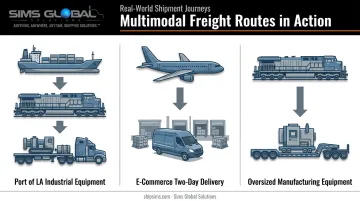
Picture a shipment of industrial equipment arriving by ocean vessel at the Port of Los Angeles. The port completed a $73 million on-dock rail expansion in 2024, letting containers transfer directly from ship to rail car without a truck touching them at the terminal.
From there, the shipment rides rail inland before switching to a truck for final delivery to a distribution center.
A different scenario: an e-commerce brand promising two-day delivery on a bulky item combines air freight for the long-distance leg with regional trucking for the final stretch. This keeps delivery promises without the cost of flying the shipment the entire way.
A third case involves oversized manufacturing equipment moving from a coastal port by rail to an inland rail yard, then transferring to a specialized heavy-haul trailer for the final leg to a factory floor. This rail-to-heavy-haul combination is common in material handling and industrial sectors, and it's the kind of specialized move Sims Global Solutions handles directly through its own heavy-haul fleet.
Key Benefits of Multimodal Transport for Shippers
Coordinating multiple modes under one provider delivers advantages that go beyond convenience:
- Time savings. One provider managing the full route catches scheduling conflicts before they cause delays, instead of discovering them after a missed connection.
- Cost-efficiency. An experienced broker with access to a large carrier network (some manage relationships with 150,000+ carriers) typically secures better rates than a shipper booking each leg independently.
- Simplified accountability. One contract means one party answers for the shipment. No finger-pointing between carriers when something goes wrong.
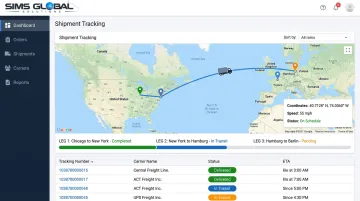
- Improved visibility. Modern multimodal providers run integrated tracking platforms, such as a proprietary TMS with real-time GPS updates, giving shippers status across every leg rather than checking three separate systems.
- Access to remote locations. Combining modes reaches destinations a single mode can't service, such as inland facilities with no direct rail or sea access.
- Faster risk response. When weather or capacity issues hit one mode, a coordinated plan can reroute the shipment quickly instead of waiting on approval from a separate carrier.
The common thread: multimodal transport shifts the coordination burden from the shipper to the provider. That's the entire value proposition.
Challenges to Consider and Best Practices for Multimodal Shipping
Multimodal shipping isn't without friction points. Shippers should plan for these before they become problems:
- Documentation load. More modes mean more paperwork: customs forms, dangerous goods declarations, and mode-specific compliance documents.
- Tracking blind spots. UN/CEFACT research on multimodal visibility found that unclear handover points between modes create tracking gaps, leaving shippers guessing during transitions.
- Ripple-effect delays. A late vessel arrival can cascade into missed rail slots and truck appointments down the line.
Best practices that help:
- Plan contingencies upfront by knowing your backup routing before a delay hits, not after.
- Use integrated tracking technology, like Sims Global Solutions' SimsTrak platform, that follows the shipment across every mode transition, not just within one leg.
- Build strong carrier relationships so transitions between modes happen smoothly instead of through cold handoffs.
- Understand mode-specific regulations: road, rail, sea, and air each carry different compliance rules, and assuming one mode's paperwork satisfies another is a common (and costly) mistake.
How Sims Global Solutions Simplifies Multimodal Shipping
Coordinating multiple modes gets a lot easier when one provider actually owns every piece of the puzzle. Sims Global Solutions offers true multimodal capability in-house, including truckload, LTL, expedited, intermodal, drayage, and warehousing, so clients sign one contract and get one accountable partner across every leg of the journey.
That matters because the biggest multimodal headaches come from managing too many vendors at once: tracking gaps, miscommunication at handoffs, and scattered documentation. Sims removes that layer.
The company's proprietary SimsTrak Transportation Management System gives shippers real-time visibility across every leg of a multimodal move, addressing the tracking blind spots that trip up shippers managing multiple carriers on their own.
Behind that platform sits:
- A carrier network of 150,000+ vetted carriers, giving flexibility when routing needs to shift
- A dedicated operations team handling the coordination work between modes
- Nationwide warehousing support that fits naturally into multimodal routing plans
Sims works with clients ranging from Fortune 100 companies to specialized sectors like aerospace and material handling, where multi-leg coordination and precise handling requirements aren't optional.
If your shipment needs to move by more than one mode, having a single team accountable for the whole route makes the difference. Three separate carriers pointing fingers at each other lead to delays and confusion, while one accountable partner keeps deliveries smooth.
Frequently Asked Questions
What is multi-mode transport?
Multi-mode (multimodal) transport is the movement of freight using two or more transport modes under a single contract, with one provider managing and taking responsibility for the entire shipment.
What are examples of multi-mode transport?
Common examples include ocean freight transferring to rail at a port and finishing by truck, or air freight combined with regional trucking to meet fast delivery deadlines.
What is the difference between multimodal and intermodal transport?
Multimodal transport uses a single contract covering every mode and carrier involved. Intermodal transport involves separate contracts for each leg, even though the cargo may stay in the same container throughout.
What is the main benefit of multi-mode transport?
The biggest benefit is simplified accountability. One provider manages the entire route, reducing delays and improving communication while often securing better rates than booking each leg separately.
What is a Multimodal Transport Operator (MTO)?
An MTO is the provider that contracts directly with the shipper. It also coordinates carriers and scheduling across every mode, remaining legally accountable for the shipment from pickup through delivery.
Is multimodal transport more expensive than single-mode shipping?
Costs vary by route, volume, and modes involved. Working with an experienced multimodal provider often offsets any premium through negotiated rates and fewer delays, while trimming administrative overhead.