Introduction
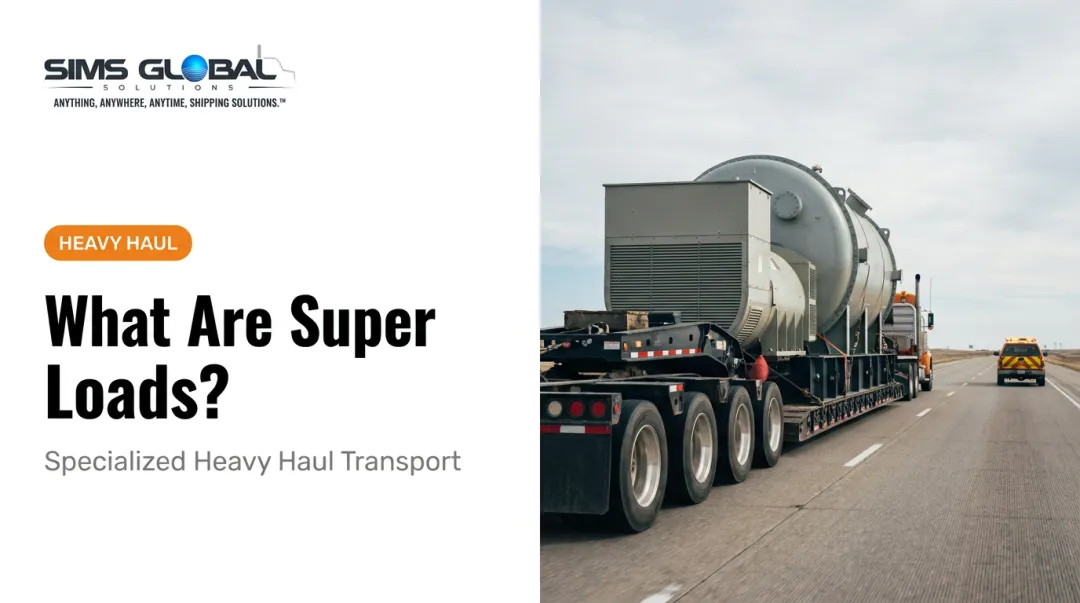
In 2024, Ohio moved a 916,000-pound cold box, an air processing unit for a new Intel chip plant, across nearly 200 miles of rural highway. The load measured 280 feet long, 23 feet wide, and 23 feet high.
State troopers ran rolling roadblocks. Utility crews raised power lines. Traffic signals came down at intersections along the way, according to Transport Topics' coverage of Ohio's super load movements.
That's a super load. And most shippers moving massive, non-divisible equipment don't realize their freight has crossed into that territory until permits get rejected or costs balloon unexpectedly.
The confusion is understandable. Every state defines "super load" differently. What triggers extra permits, surety bonds, and law enforcement escorts in Pennsylvania looks nothing like the rules in Washington or Texas.
This guide breaks down super load thresholds, how they differ from standard oversized loads, state-specific rules (with a close look at Pennsylvania), the transport process from permit to delivery, and what actually drives cost.
Key Takeaways
- Super load thresholds vary by state, not a single federal cutoff
- Non-divisibility is the legal foundation — cargo can't be split without cost or damage
- Pennsylvania sets super load status above 201,000 lbs, 160 feet, or 16 feet wide
- Multi-state moves need separate permits, escorts, and bonding in every state crossed
- Costs hinge on permits, escorts, bonds, and route modifications, not mileage alone
What Qualifies as a Super Load? Understanding Weight and Size Thresholds
A super load is a non-divisible shipment that exceeds the standard oversize thresholds set by individual state departments of transportation. It can cross the line by width, height, length, weight, or a combination of these dimensions. There's no single federal definition; each state sets its own bar.
That said, patterns show up across the country. Most states set super load triggers somewhere in this range:
- Width: Over 16 feet
- Height: Over 16 feet (though not every state includes a height trigger)
- Length: Roughly 100 to 160 feet total
- Weight: 200,000 lbs. or more
Washington, for instance, classifies a super load as anything over 16 feet wide, 16 feet high, 125 feet in load length, or 200,000 lbs, according to the Washington State Department of Transportation. Pennsylvania's thresholds sit differently, which we'll cover shortly.
The Non-Divisible Requirement
Federal regulation defines "non-divisible" cargo as freight that can't be broken into smaller, legally sized shipments without:
- Compromising its intended use or function
- Destroying its value
- Requiring more than 8 work hours to dismantle and reassemble
A wind turbine blade can't be cut in half and bolted back together on-site. A 916,000-pound cold box can't be split into three legal loads. That's what makes these shipments non-divisible, and it's the legal basis every super load permit application rests on.
Common Examples of Super Load Cargo
Real-world super loads tend to fall into a few recognizable categories:
- Wind turbine blades and tower sections
- Industrial process equipment, cold boxes, and reactors
- Large transformers and automotive presses
- Aerospace and defense components
- Structural steel and heavy industrial machinery
These loads typically require multi-axle trailer configurations, think dollies, bridges, and drop decks, to spread weight across enough axles to protect roadway surfaces and bridge structures. The right configuration isn't optional. It's often the deciding factor in whether a state approves a route at all. Sims Global Solutions runs its own fleet of RGN, lowboy, and multi-axle trailers built for exactly this kind of freight, giving shippers a configuration ready to go instead of scrambling to find one after a permit gets denied.

Super Load vs. Oversized Load: What's the Difference?
Not every oversized shipment is a super load. Standard oversize loads are common on U.S. highways and generally move with far less friction. Here's how the two compare:
| Factor | Standard Oversize Load | Super Load |
|---|---|---|
| Typical width | Around 8.5 ft (federal National Network baseline) | Often 16+ ft |
| Typical length | Varies by configuration | 100-160+ ft |
| Typical weight | Up to 80,000 lbs gross (federal baseline) | 200,000+ lbs |
| Permits needed | Single-state permit | Permits from every state crossed |
| Escorts | Rarely required | Pilot cars, sometimes police escorts |
| Infrastructure changes | Rare | Utility lifts, signal removal, road closures |
| Processing time | Days | Days to over a month |
| Bonds | Uncommon | Required in some states (PA, NY, TX) |
The permitting gap is the biggest practical difference. A standard oversize load usually needs one permit from one state. A super load moving through five states needs five separate permits, and the federal government doesn't issue any of them. FHWA has confirmed that OS/OW permitting is a state-by-state function, not a federal one.
Super loads also draw more attention on the ground. Multiple pilot cars, high-pole vehicles to check overhead clearance, and law enforcement escorts become standard rather than exceptional. In some cases, utility companies need advance notice to temporarily raise power lines or remove traffic signals, work that rarely comes up for a standard oversize permit.
Finally, super load permits simply take longer, since engineering reviews for bridge weight limits, route surveys, and multi-agency coordination all add time that a routine oversize application doesn't require.
State-by-State Super Load Regulations: Pennsylvania Spotlight
Every state writes its own super load rulebook. A load that qualifies in one state might be a routine oversize permit two states over. Washington's threshold, for example, includes a specific height trigger (over 16 feet) that Pennsylvania's definition doesn't use at all.
That mismatch is exactly why shippers moving freight across state lines need to check every jurisdiction on the route individually, not assume one state's rule applies everywhere.
What Is Considered a Superload in Pennsylvania?
Under Pennsylvania Code Title 67, Chapter 179, a super load is any non-divisible vehicle, combination, or load exceeding:
- 201,000 lbs. gross weight
- 160 feet total length
- 16 feet total width
Pennsylvania also requires:
- File preliminary applications at least 3 weeks before the planned move
- Pay a $50 base fee plus $10 per county in the route for preliminary submissions
- Secure a registration bond (Form M-936B) of at least $2,000, or $5,000 for monthly billing accounts
- Provide additional project security, such as an individual bond or letter of credit, if the move affects highways or bridges
Permit Timelines Vary Widely by State
Beyond Pennsylvania's specific weight, length, and fee requirements, processing time is one of the least predictable parts of super load planning nationwide. A few examples:
- Colorado: Superload Single Trip Permits typically process in 3-5 business days
- California: No fixed timeline is published for single-trip super load applications; expect "additional processing time" beyond standard permits
- Louisiana: Loads over 16 feet 5 inches high require pre-approved routing at least 48 hours in advance
That range, from a few business days to open-ended review windows, is why experienced routing matters. A shipper assuming a one-week national average can end up with a stalled load and no backup plan. Interstate moves compound this further: each state requires separate authorization, and there's no FMCSA-issued permit that covers multiple states at once.
The Super Load Transport Process: From Permit to Delivery
Moving a super load follows a sequence that starts weeks, sometimes months, before the truck ever moves.
- Route survey and permit acquisition: Teams check every bridge, overhead line, tight turn, and rail crossing on the proposed route before filing for permits.
- Trailer and axle configuration: Cargo weight and dimensions determine whether the load needs RGN trailers, multi-axle dollies, or drop decks.
- Traffic control planning: Planners schedule pilot cars, high-pole vehicles, and, when required, law enforcement escorts, coordinating with utility and municipal agencies as needed.
- Loading and inspection: Crews clean, measure, and weigh the cargo with precision, since inaccurate dimensions cause most permit rejections.
- Escorted transport: The load moves with banners, escort vehicles, and flashing lights, often restricted to specific hours or speeds set by the permit.
- Delivery and closeout: Crews unload the cargo and document any route restoration obligations if infrastructure was altered along the way.

Shipper Responsibilities Before the Truck Moves
Permit rejections almost always trace back to the same handful of issues:
- Submitting inaccurate dimensions or weight on the application
- Omitting axle configuration data
- Skipping equipment cleaning or inspection before measurement
- Leaving out documentation for multi-state routing
Getting these details right the first time avoids the costly delays that come with resubmitting an application mid-route. Partnering with an experienced heavy-haul provider, such as Sims Global Solutions, helps catch these issues early through in-house permit expertise and route surveys.
What Affects the Cost of Hauling a Super Load?
Super load pricing rarely comes down to just miles and fuel. Several variables stack on top of standard line-haul costs:
- Permit fees: Rates vary sharply by state, from flat single-trip charges to added highway maintenance fees
- Surety bonds: Required in states like Pennsylvania, New York, and Texas, though amounts and triggers differ by state and carrier status
- Escort and pilot car fees: Rates scale with load width, height, and total route length; multiple escorts for extreme dimensions add up quickly
- Trailer rental: Specialized RGN or multi-axle equipment isn't cheap to lease when it's not part of an owned fleet
- Cargo insurance: High-value equipment often needs supplemental coverage beyond standard cargo policies
- Route modifications: Utility line lifts, temporary signal removal, and road closures are billed as part of the project, not folded into a flat rate
Permit costs vary widely, as this comparison shows:
| State | Permit Type | Approximate Fee |
|---|---|---|
| Colorado | Superload Single Trip Permit | ~$800 |
| Texas | Superheavy single-trip permit | ~$60 + highway maintenance fee |
Because every one of these factors depends on the specific load and route, a real quote requires real project details, not a generic per-mile estimate.
Why Ship Your Super Load with Sims Global Solutions
Coordinating a super load means juggling permits, engineering reviews, and escort logistics across multiple states at once. Sims Global Solutions approaches this differently than a typical freight brokerage.
Owned assets plus a large carrier network. Sims Global maintains its own heavy haul trucking fleet, which, according to Corporate Sales Manager Billy, has "opened up countless opportunities that a traditional freight brokerage would have a difficult time tapping into."
When project-specific equipment isn't available in-house, Sims Global taps its network of over 150,000 vetted carriers to source specialized heavy haul capacity.
Technology built for coordination. The company's proprietary SimsTrak platform gives shippers real-time visibility and consolidated documentation across a move, reducing the back-and-forth that often slows down complex freight.
A dedicated Heavy Haul team. Sims Global's Heavy Haul Trucking division works with clients across aerospace, defense, and material handling, including Fortune 100 companies, guiding them through the permitting and routing decisions that come with high-value, non-divisible freight.
If you're planning a super load move and want a team that understands the difference between a standard oversize permit and a multi-state super load project, reach out to Sims Global Solutions to talk through your specific route and equipment.

Frequently Asked Questions
What size or weight qualifies as a super load for a truck?
Most states set super load thresholds around 16 feet wide or high, over 100 feet long, and 200,000+ lbs. Exact numbers vary significantly by state, so always check the specific DOT rules for your route.
What is considered a super load in Pennsylvania?
Pennsylvania classifies a non-divisible load as a super load if it exceeds 201,000 lbs, 160 feet in total length, or 16 feet in width. The state also requires a registration bond and preliminary applications filed at least 3 weeks in advance.
How long does it take to get a super load permit?
Timelines range from a few business days (Colorado's 3-5 day window) to over a month for complex multi-state moves requiring bridge or engineering review. Louisiana requires only 48 hours' notice for certain overheight routing, but that's the exception, not the rule.
What's the difference between an oversized load and a super load?
Oversized loads typically need one state permit and rarely require escorts. Super loads need permits from every state crossed, often require pilot cars or police escorts, and can trigger surety bond requirements and infrastructure changes.
Do super loads require police escorts?
Many states mandate certified pilot car or law enforcement escorts for super loads based on width, height, or route risk. Pennsylvania, for example, triggers pilot car requirements above 13 feet wide, 90 feet long, or 14 feet 6 inches high.
How much does it cost to transport a super load?
Costs vary widely based on permit fees, bonds, escort requirements, trailer type, and route modifications like utility line lifts. Because every project differs, getting a custom quote from a heavy haul specialist is the only accurate way to budget.