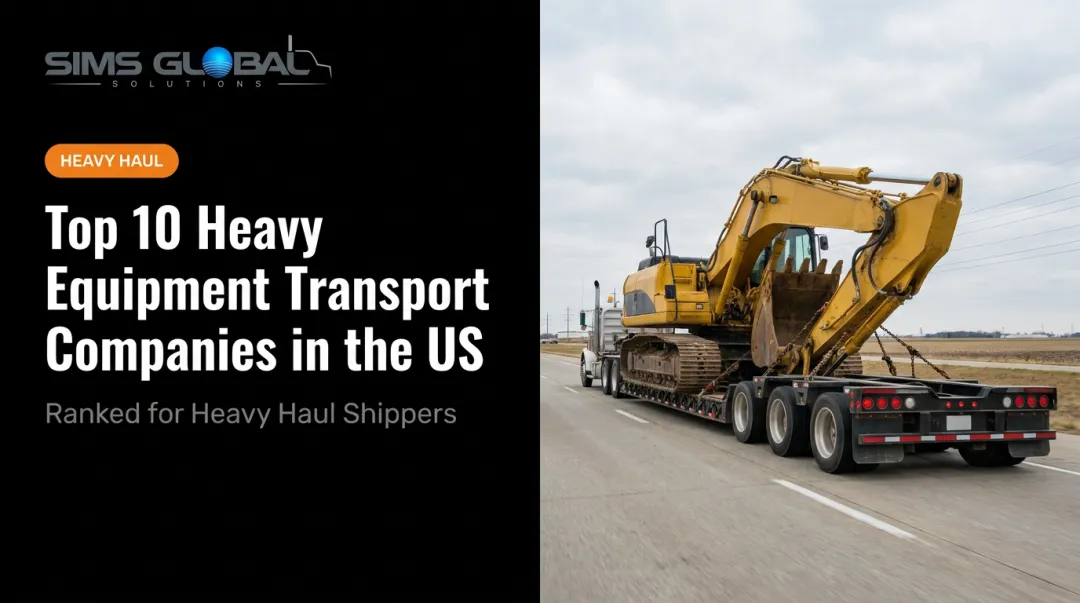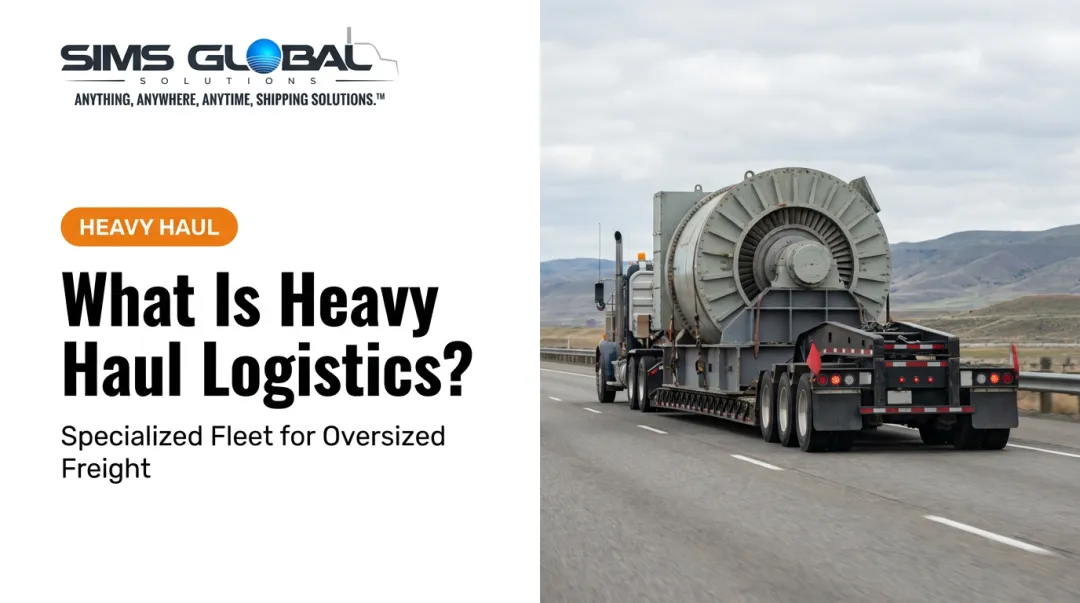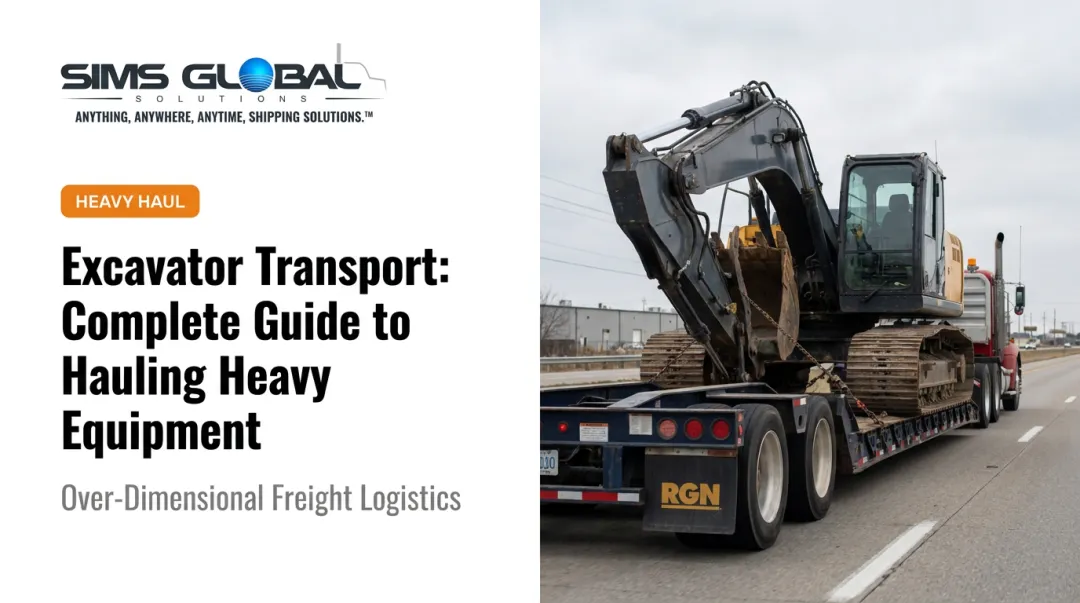

Add in strict federal regulations, security concerns, and mission timelines that don't bend, and you've got one of the most complex freight categories in the country. Oversize permits alone vary by state, and a single missed clearance can stall a convoy for days.
This guide breaks down what a Heavy Equipment Transport System (HETS) actually is, the equipment that requires it, the compliance maze around it, what it costs, and how to pick a logistics partner who won't buckle under the pressure.
Key Takeaways
- HETS covers the M1070/M1000 military tractor-trailer and the civilian network hauling oversized defense cargo
- Compliance requires state permits, DOT securement rules, and ITAR review beyond typical freight
- Costs swing widely based on weight, mileage, permits, and trailer type; there's no flat rate
- An asset-based heavy haul provider cuts down on delays, markups, and compliance guesswork
What Is a Heavy Equipment Transport System?
In the strictest military sense, HETS is a specific vehicle pairing: the M1070 tractor and M1000 semitrailer. The Army built this combination to haul M1-series Abrams tanks, armored vehicles, and self-propelled artillery, and it's rated to move equipment weighing up to 140,000 pounds.
Why not just drive the tank there? Self-deployment chews through tracks, engines, and suspension components. Oshkosh Defense, which manufactures the M1070A1, points out that dedicated transporters exist to reduce wear on combat vehicles during long-distance moves and keep them mission-ready rather than sidelined for maintenance.
The Broader Definition Shippers Need to Know
For logistics professionals and defense contractors, HETS means something wider: any coordinated system of specialized trailers, permits, routing, and carriers used to move oversized defense-related cargo. That's not limited to tanks.
A functioning heavy haul transport system includes:
- Specialized trailers — RGN (removable gooseneck), lowboy, or multi-axle configurations matched to load weight
- Rigging and tie-down equipment rated for the specific cargo
- Escort vehicles for oversized or overweight loads
- Route and permit coordination across every state the load will cross

Defense contractors and aerospace manufacturers lean on this same commercial infrastructure to move non-combat but mission-critical gear: generators, communications equipment, and fabrication machinery that never sees a battlefield but still needs the same careful handling.
Sims Global Solutions supports this exact need, pairing its own RGN and lowboy fleet with permit and escort coordination for aerospace and defense clients moving oversized equipment nationwide.
Types of Heavy Military and Defense Equipment That Require Specialized Transport
Not all defense cargo looks like a tank, but plenty of it weighs like one. Here's a snapshot of common equipment categories and their typical specs, based on U.S. Army Corps of Engineers transportability data:
| Equipment Category | Example | Weight | Dimensions (L x W x H) |
|---|---|---|---|
| Main battle tank | M1A2 Abrams | 128,679 lb | 355 x 144 x 122 in |
| Self-propelled artillery | M109A6 Howitzer | 56,400 lb | 423 x 128 x 128 in |
| Armored recovery vehicle | M88A2 | 129,000 lb | 341 x 135 x 118 in |
| Engineering vehicle | M9 Armored Combat Earthmover | 35,500 lb | 243 x 110 x 105 in |
That's just the combat side. On the manufacturing side, aerospace and defense suppliers regularly ship:
- Oversized tooling
- Fabrication equipment
- Munitions-related machinery
This cargo is just as heavy and dimensionally challenging as combat equipment, minus the armor plating.
A word of caution: figures shift depending on configuration. A tank in "sealift" configuration weighs differently than one in full operational trim. Pre-transport planning has to account for the exact variant, not a generic family spec, because that number determines which trailer and which permits you'll need.
Key Challenges and Compliance Requirements in Military Equipment Transport
This is where military heavy haul separates itself from standard freight. Multiple layers of compliance stack on top of each other, and missing one can shut down a shipment mid-route.
Permitting Complexity
The federal government doesn't issue oversize or overweight permits. That responsibility falls to each state individually, which means a coast-to-coast move might require permit applications through a dozen or more separate agencies. Axle weight limits, bridge clearances, and road restrictions all vary by jurisdiction, and every one of them needs verification before the truck leaves the yard.
Security and Regulatory Compliance
Defense freight carries an added compliance layer. Carriers must follow standard DOT regulations, and when cargo qualifies as a controlled defense article, ITAR guidelines come into play. Not every domestic move of defense-related equipment counts as an ITAR export transaction. But shipments tied to Foreign Military Sales or export activity require registered freight forwarders and specific documentation timelines.
Weight Distribution and Tie-Down Engineering
Federal rules are specific here. Equipment weighing 10,000 pounds or more needs a minimum of four tiedowns, positioned near the front and rear, and the combined working load limit must equal at least half the cargo's weight. Heavier or oddly shaped loads often need five or more securement points to control forward, rearward, and lateral movement.
Route Planning and Communication
Before departure, teams need to confirm:
- Bridge weight limits along the entire route
- Escort vehicle requirements for width and weight thresholds
- CB or two-way radio protocols for convoy communication
- Contingency routes in case of road closures or clearance issues
Military logistics adds one more variable most commercial freight doesn't deal with: mission timing. A delayed shipment isn't just an inconvenience, it can affect operational readiness downstream.

How Much Does It Cost to Transport Heavy Equipment?
There's no flat-rate answer here, and anyone who quotes one without knowing your load specifics is guessing. Heavy haul pricing depends on distance, equipment weight and dimensions, and route complexity.
Major Cost Components
- State permit fees — vary by weight, width, and jurisdiction. For example, Pennsylvania charges $46-$97 for oversize loads plus $0.04 per overweight ton-mile.
- Escort vehicle charges — required for many oversized loads, with costs scaling by hours and mileage
- Specialized trailer and rigging costs — RGNs and multi-axle trailers cost more to deploy than standard equipment
- Supplemental cargo insurance for high-value or sensitive defense equipment
- Fuel surcharges on longer hauls
A Practical Cost-Saving Tip
Brokers who don't own trucking assets often add markup layers you never see itemized. Working with a provider that operates its own heavy haul fleet, like Sims Global Solutions, cuts out some of that brokerage padding and gives you clearer visibility into what you're actually paying for.
Request a custom quote based on your equipment's actual weight, dimensions, and route. Anything else is a placeholder number.
Safety Best Practices for Loading, Hauling, and Unloading Heavy Equipment
Getting a multi-ton asset onto a trailer safely follows a strict, documented protocol.
Before departure:
- Complete a documented risk assessment
- Confirm PPE compliance for the loading crew
- Inspect tires, brakes, and every tie-down point on the trailer
During loading:
- Assign a designated spotter with clear line of sight to the driver
- Confirm ramps are clean, level, and rated for the load
- Load gradually to manage the shifting center of gravity as weight transfers onto the trailer
En route:
- Inspect cargo securement within the first 50 miles, then every 150 miles or 3 hours, whichever comes first
- Chock and immobilize wheels to counter forward, rearward, and sideways forces during transit
- Verify escort or pilot car requirements are met for oversized loads crossing state lines
Skipping any of these steps risks equipment damage, blown schedules, and costly compliance violations.
Why Partner with Sims Global Solutions for Military and Defense Heavy Haul
Sims Global Solutions has spent over a decade building an asset-based logistics operation that serves aerospace, defense, and material handling clients alongside Fortune 100 companies. That combination matters when you're moving equipment that can't afford a scheduling misstep.
Here's what that looks like in practice:
- SimsTrak Transportation Management System provides real-time GPS tracking and streamlined documentation, giving you visibility into exactly where a time-sensitive shipment stands
- An owned fleet plus a network of 150,000+ carriers means we can source the right RGN, lowboy, or multi-axle trailer for your specific load, without waiting on outside capacity to free up
- A+ rated supplemental cargo insurance covers high-value or sensitive equipment that standard liability coverage won't fully protect
- A 24/7 dedicated operations team handles mission-critical scheduling when delays simply aren't an option

Our team understands the compliance standards and security protocols that come with government and military shipments. If you're planning a defense-related heavy haul move, reach out to our heavy haul team for a shipment-specific consultation.
Frequently Asked Questions
What is a heavy equipment transport system?
It refers to specific military tractor-trailer units, like the M1070/M1000, built to haul tanks. More broadly, it also describes any coordinated logistics system used to move oversized defense equipment safely and compliantly.
How much does it cost to transport heavy equipment?
Cost depends on weight, distance, permits, and equipment type, so there's no single flat rate. Request a custom quote based on your specific shipment details for accurate pricing.
What permits are needed to transport heavy military equipment?
You'll need state-specific oversize or overweight permits for every jurisdiction the load crosses, plus route clearance approvals confirming bridge and road capacity along the way.
What type of trailer is used to haul military and heavy defense equipment?
RGN (removable gooseneck), lowboy, and multi-axle trailers are the most common choices, selected based on the equipment's weight and dimensions.
How is security handled during military equipment transport?
Security relies on escort vehicles for oversized loads, continuous GPS tracking, and strict adherence to DOT regulations and any applicable defense-related compliance standards.
Can civilian logistics companies transport military and defense equipment?
Yes. Experienced commercial heavy haul carriers, like Sims Global Solutions, regularly support defense contractors and government-related shipments under proper compliance standards.