Heavy machinery doesn't ship the same way as fresh produce. Liquid chemicals need different containment than oversized construction pipes. Container type isn't a minor detail — it determines whether your cargo arrives intact, on time, and within budget.
This guide breaks down what ocean freight containers are, why type matters, the main options available, and how to match the right container to your shipment.
Key Takeaways
- Ocean freight containers are standardized, ISO-rated steel boxes built for ships, rail, and trucks
- Six main container types serve different cargo needs: dry, high cube, open top, flat rack, reefer, and tank
- The right choice depends on cargo dimensions, weight, temperature needs, and budget, not just availability
- An experienced freight partner helps shippers avoid costly container mismatches and port delays
What Are Ocean Freight Containers?
Ocean freight containers are standardized, reusable steel boxes built to ISO specifications, letting them move between ships, rail cars, and trucks without ever unloading the cargo inside. That interchangeability is the entire point — a container loaded in Shanghai can roll off a ship in Los Angeles and onto a truck chassis within hours.
These boxes are the backbone of global trade. According to UNCTAD's 2025 seaborne trade data, maritime transport moves over 80% of goods traded worldwide, and containers carry the bulk of manufactured and packaged goods within that total. That trade volume relies on a simple design.
Nearly every container variation is built on two base footprints:
- 20-foot containers: roughly 33 cubic meters of capacity
- 40-foot containers: roughly 67 cubic meters of capacity
Specialty types like reefers, flat racks, and tanks build on these two dimensions, modified for specific cargo needs. The container functions as a logistics tool: the right type protects your goods and controls your cost per shipment, while also determining how your booking gets handled at the port.
Types of Ocean Freight Containers
Container "type" refers to structural differences (roof design, wall construction, floor reinforcement, insulation) built to handle specific cargo characteristics. It's not just about size.
Get this wrong and you risk denied bookings, cargo damage, or unexpected handling surcharges once your shipment reaches the terminal.
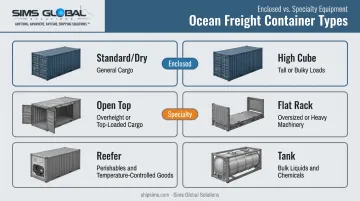
Standard (Dry/General Purpose) Container
This is the default container for general cargo: a fully enclosed, weatherproof box with a rigid roof, solid walls, and a flat floor. It has no special features: no temperature control, no open sections. That's exactly why it's the most versatile and widely available option on the market.
Best for: boxed goods, retail products, furniture, and palletized cargo that doesn't need special handling.
Limitation: not suitable for oversized, temperature-sensitive, or bulk liquid cargo.
A standard 40ft dry container typically holds a maximum payload around 28,800 kg, according to Maersk equipment specifications. That's plenty for most general freight but a dealbreaker for dense or oversized loads.
High Cube Container
Structurally, this is nearly identical to a standard dry container, just about one foot taller. That extra height adds meaningful volume without changing the footprint.
Maersk's equipment specs show a 40ft high cube offering 76 cubic meters of capacity versus 67 cubic meters in a standard 40ft dry unit, a 9 cubic meter gain. Note that high cubes require gooseneck chassis compatibility for inland trucking, which isn't always available on every route.
Best for: lightweight but voluminous cargo — insulation, furniture, textiles — where cubic space runs out before weight does.
Limitation: maximum gross weight rating stays essentially the same as a standard container. If your cargo is dense and heavy, extra height won't help.
Open Top Container
An open top swaps the rigid roof for a removable tarpaulin or steel bows, allowing cargo to be loaded from above by crane. This solves a specific problem: goods too tall or awkwardly shaped to fit through standard end doors.
Best for: tall machinery, glass sheets, and bulky finished goods that require crane loading.
Limitation: less weatherproof than an enclosed box. The tarpaulin must be properly fitted and undamaged, and cargo typically needs extra lashing and chocking to stay secure during transit.
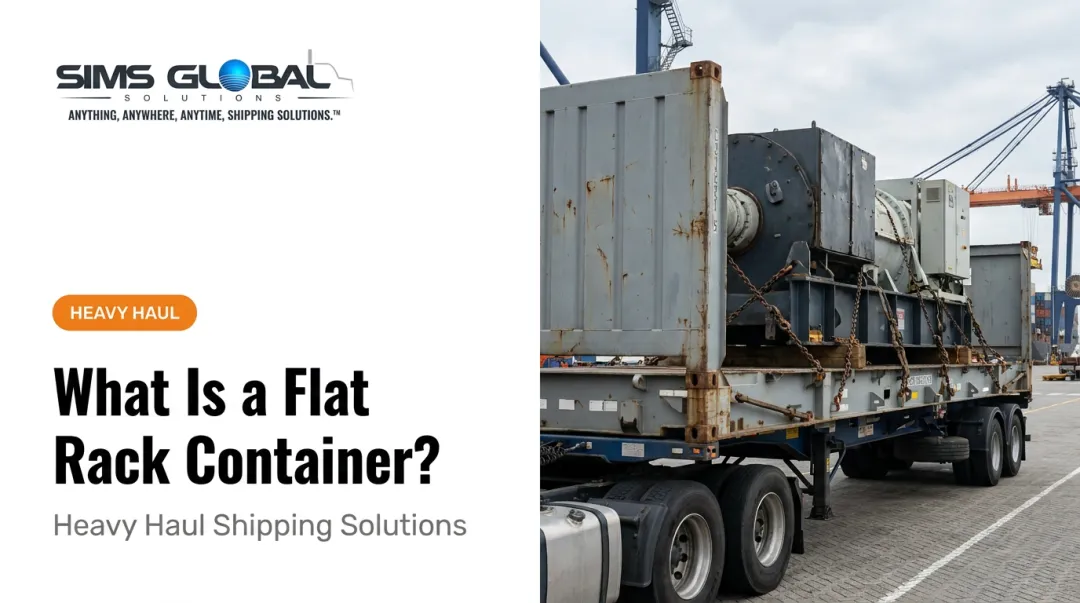
Flat Rack Container
Strip away the sidewalls and roof entirely, and you're left with a flat rack, essentially a reinforced steel platform with collapsible or fixed end walls. There's no enclosed structure at all. It's built purely to secure oversized loads, not to protect boxed freight.
Best for: heavy machinery, vehicles, pipes, and construction materials needing side access or crane loading.
Flat racks can handle serious weight. CMA CGM's out-of-gauge guidance lists payload capacities up to 28 tons for 20ft units and 38 tons for 40ft units, subject to loading charts and carrier approval.
Limitation: cargo sits exposed to weather and needs professional lashing. Because flat racks eat up extra vessel space, surcharges often apply, and carriers typically want two weeks' pre-advice before booking.
Reefer (Refrigerated) Container
A reefer is an insulated container with a built-in refrigeration unit. Unlike passive insulated boxes, it actively regulates temperature and requires continuous external power to do it. Standard units commonly control temperatures from -30°C to +30°C, though specialized freezer models handle even colder ranges.
Best for: perishable goods — produce, meat, dairy, pharmaceuticals — needing an unbroken cold chain from origin to destination.
Limitation: higher upfront and operating costs, dependency on power availability at every leg of the journey (including a portable diesel genset for unpowered inland stretches), and thicker insulated walls that eat into usable interior space.
ISO Tank Container
A cylindrical tank built from anti-corrosive steel, mounted inside a rectangular steel frame so it can stack and handle just like a standard container. It's purpose-built for bulk liquids and chemicals rather than palletized freight.
Best for: food-grade liquids, chemicals, and other bulk liquid cargo requiring specialized containment.
Limitation: fill-level restrictions typically capped around 95% by ITCO guidance, plus mandatory cleaning certificates and periodic testing (every 2.5 and 5 years) tied to the tank's prior cargo history. Not every tank is approved for every product.
Selecting the right container type shapes your entire shipping strategy, from booking approval to landed cost. Sims Global Solutions coordinates container selection and international ocean freight bookings for shippers moving cargo ranging from palletized retail goods to oversized machinery, matching the right equipment to the cargo before it reaches the terminal.
How to Choose the Right Container Type
Container selection should follow cargo characteristics and shipping goals, not habit or the lowest booking price.
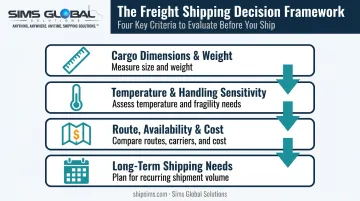
Cargo dimensions and weight. Oversized or heavy freight rules out standard dry containers immediately. If your cargo can't fit through standard doors or exceeds weight-per-cubic-meter norms, you're looking at a flat rack or open top instead.
Temperature and handling sensitivity. Beyond size and weight, perishable goods, pharmaceuticals, and anything fragile or climate-sensitive need a reefer or a specialized insulated unit. There's no workaround here: get this wrong and you risk a total loss.
Route, availability, and cost. Specialty containers come with real trade-offs:
- Reefers require power at every transit point
- Flat racks often carry vessel-space surcharges
- Tank containers may face limited availability on certain trade lanes
Long-term needs. Are you shipping once, or repeatedly? One-time shippers usually lease per shipment. High-volume, repeat shippers sometimes find ownership more cost-effective over time, but that decision involves maintenance, storage, and repositioning costs that go beyond the purchase price.
Matching all of this correctly takes experience most shippers don't build overnight. Sims Global Solutions has operated as a multi-modal logistics provider since 2010, coordinating drayage, warehousing, and international freight movement across a nationwide network. That combination, moving containers from the port through inland transport and into final delivery, is where a lot of shippers run into friction and where an experienced partner earns its value.
Common Mistakes to Avoid When Choosing a Container
Even experienced shippers fall into predictable traps. Watch for these:
- Over-ordering specialty equipment. Booking a flat rack or reefer when a standard dry container would work adds cost with zero benefit.
- Ignoring weight limits and load distribution. Overweight cargo or poor load balance leads to penalties at the port, or worse, structural damage in transit.
- Skipping availability and certification checks. Failing to confirm container availability, CSC seaworthiness certification, or physical condition before booking can delay a shipment before it ever leaves origin.
Under the International Convention for Safe Containers, every intermodal container needs a valid CSC Safety Approval Plate and periodic structural examination. Skip that check, and you risk a rejected booking right at the terminal gate.
Conclusion
Ocean freight containers aren't one-size-fits-all. Each type solves a specific cargo problem:
- Dry containers handle general cargo.
- High cubes add extra vertical volume.
- Open tops and flat racks solve access and oversized cargo problems.
- Reefers protect temperature-sensitive shipments through the cold chain.
- Tanks move bulk liquids safely.
Matching the right type to your cargo's actual characteristics, not just what's on the yard that day, prevents damage, avoids delays, and keeps costs predictable. When the decision gets complicated, partnering with a logistics provider like Sims Global Solutions that coordinates both the ocean container and the inland drayage side makes the process considerably smoother.
Frequently Asked Questions
How much does a 20 ft ocean freight container cost?
Cost depends on whether it's new or used, and whether you're buying or leasing. New 20ft units typically run $2,500–$5,000, while used units cost less. Get a current quote based on your specific needs and location.
How much does a 40 ft ocean freight container cost?
40ft containers cost more than 20ft units due to their larger size, generally $3,500–$7,000 new. Final pricing depends on condition, container type, and current market rates.
Which shipping containers are seaworthy for ocean freight?
Seaworthy containers must carry a valid CSC (Container Safety Convention) Safety Approval Plate and pass structural inspection before ocean transit. Containers without current certification can be denied at the terminal.
Who owns ocean freight containers?
Containers are typically owned by ocean carriers, leased through dedicated leasing companies, or in some cases owned directly by the shipper (known as shipper-owned containers, or SOCs).
What is the difference between a 40ft container and a 40ft high cube container?
A 40ft high cube stands roughly one foot taller, adding about 9 cubic meters of usable volume. Maximum weight capacity stays about the same, so the difference benefits volume, not weight.
Can I buy or lease an ocean freight container instead of booking one per shipment?
Yes, both options exist. Leasing suits one-off or short-term shipping needs, while buying tends to make more sense for repeat, high-volume shippers who can offset the upfront cost through consistent use.