
Demand for this kind of service isn't slowing down. U.S. retail e-commerce sales hit $1,192.6 billion in 2024, up 8.1% from the year before, according to Census Bureau data. That growth pushes shippers toward leaner inventories and tighter delivery expectations, which means less room for error when something goes wrong.
This guide breaks down what expedited trucking actually is, how it differs from hot shot trucking, and how to tell if it's the right call for your business.
Key Takeaways
- Expedited trucking is a service level defined by tight time windows, not a truck type
- It differs from hot shot trucking in equipment, load size, and capacity sourcing
- Dedicated capacity and fewer handling touchpoints lower risk for time-critical, fragile freight
- Owned assets, broad carrier networks, and 24/7 support cut risk when timing is non-negotiable
What Is Expedited Trucking, Exactly?
Expedited trucking prioritizes speed and reliability for freight with strict delivery deadlines. Standard over-the-road (OTR) shipping runs on flexible timelines with built-in slack, but expedited freight doesn't get that luxury.
The biggest operational difference comes down to routing. Expedited loads typically move direct, with minimal stops or transfers. Traditional LTL freight, on the other hand, routes through multiple terminals and hubs, picking up delays at every stop.
Common triggers for expedited shipping include:
- Production line shortages threatening a shutdown
- Medical or pharmaceutical deadlines tied to patient care
- Event and exhibition deadlines with no flexibility
- Product recalls requiring immediate replacement parts
- A missed standard shipment that needs a fast recovery

What Makes Freight a Good Candidate for Expediting
Not every shipment needs this treatment, but freight becomes a strong candidate when it's time-sensitive, high-value, fragile, or simply irreplaceable on short notice. Think aerospace parts, medical devices, or the one piece of staging equipment a concert can't go on without.
One myth needs clearing up: expedited doesn't mean reckless speed. It means tighter scheduling, dedicated equipment, and disciplined execution, not unsafe driving. Drivers still follow the same hours-of-service rules and safety standards as any other commercial carrier.
Trucking still moves the vast majority of freight in this country. Trucks carried roughly 72.7% of U.S. freight tonnage in 2024, according to the American Trucking Associations. Expedited service builds on that foundation. It just moves faster, with fewer stops along the way.
Expedited Trucking vs. Hot Shot Trucking
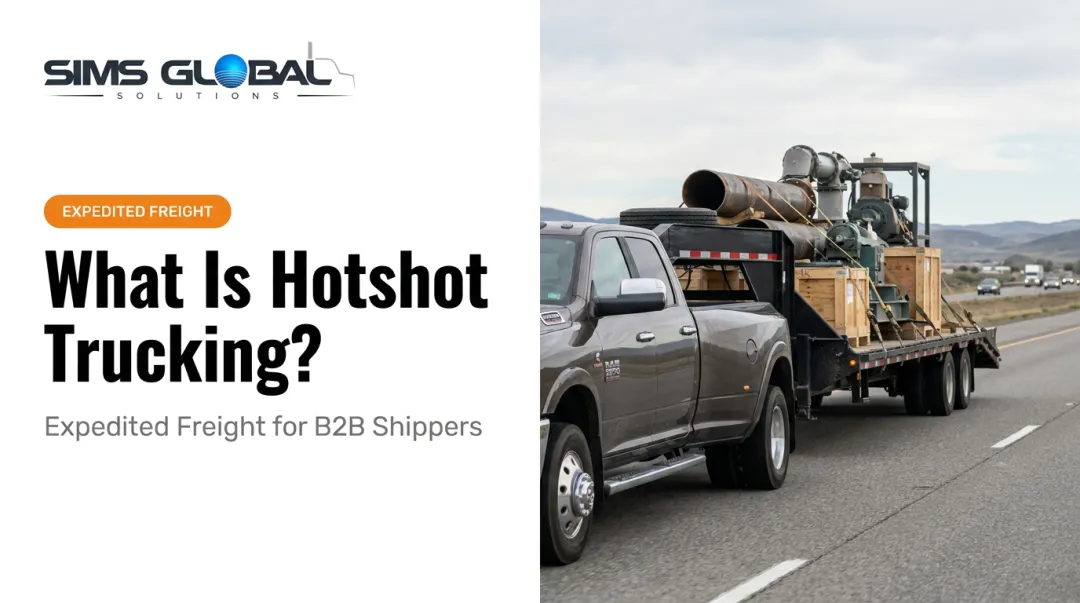
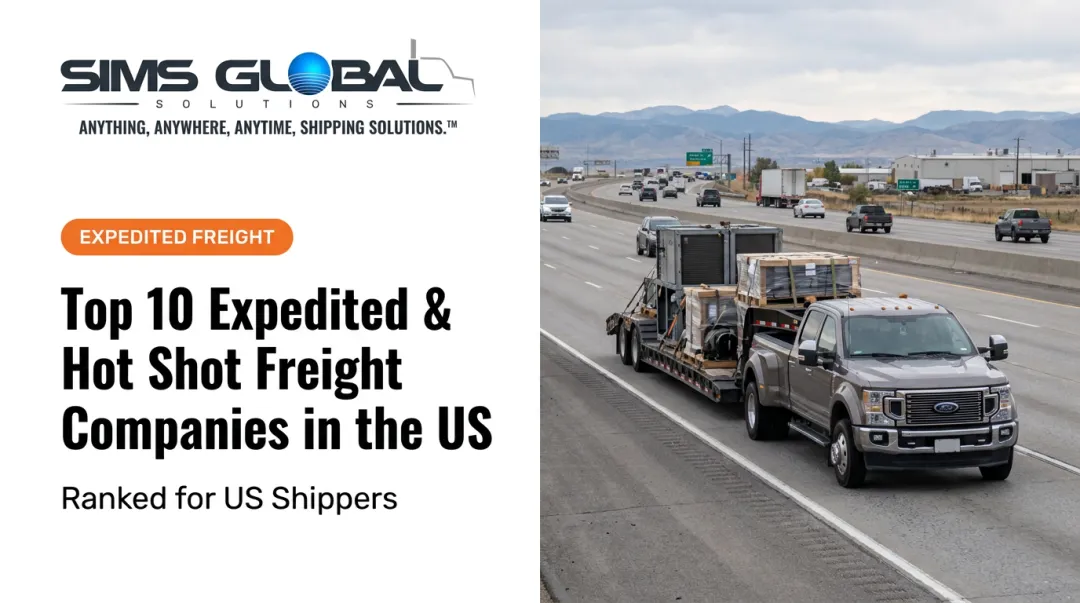
These two terms get used interchangeably, but they're not the same thing. Hot shot trucking is a specific niche within the broader urgent-freight world, and mixing up the two can lead to the wrong equipment showing up for your load.
| Attribute | Hot Shot Trucking | Expedited Trucking |
|---|---|---|
| Typical equipment | Medium- to heavy-duty pickups with flatbed or gooseneck trailers | Cargo vans, sprinter vans, straight trucks, tractor-trailers |
| Load profile | Smaller loads like farm equipment or appliances | Freight that can't be delayed, reloaded, or handled loosely |
| Sourcing | Often pulled from public load boards | Sourced through carrier relationships and broker networks |
| Best fit | Single, smaller loads needing quick pickup | Time-critical freight of any size, van to full truckload |
The sourcing gap matters more than most shippers realize. Hot shot loads are relatively easy to find on public boards built specifically for that niche.
Expedited loads are harder to source this way, since most load boards are built around traditional full truckload freight. That's where broker relationships become the deciding factor. Brokers with deep carrier networks, like Sims Global Solutions' 150,000+ vetted carriers, can close that gap in hours instead of days.
Vehicle Types Used in Expedited Freight
Equipment selection comes down to size, weight, and how fragile or urgent the cargo is. Here's how the three main categories typically break down:
- **Cargo vans and sprinter vans** – Best for small, urgent parcels or freight needing 1-3 pallets of space. Fast to load, fast to move, minimal handling.
- Straight trucks (box trucks) – Used for LTL expedited freight too large or oddly shaped for a van. Common configurations run 22-26 feet, with gross vehicle weight ratings up to roughly 26,000 lbs for non-CDL models.
- Tractor-trailers – Reserved for expedited full truckload freight or oversized, longer pieces. These operate under federal weight rules, generally capped at 80,000 lbs gross vehicle weight on the Interstate system, subject to axle limits and the bridge formula.

That 26,000-lb figure for straight trucks is a common equipment spec, not a hard federal ceiling. Federal Interstate weight limits and a truck's own gross vehicle weight rating are two separate things, and confusing them can lead to booking the wrong equipment for a heavier load.
Sims Global Solutions helps shippers match loads to the right equipment, drawing on 150,000+ vetted carriers and its own heavy-haul fleet for specialized needs.
Top Benefits of Expedited Trucking for Your Business
The core value of expedited trucking comes down to fewer touchpoints and tighter control over the shipment from pickup to delivery.
Key advantages include:
- Direct delivery with fewer handling stops, lowering the risk of damage, loss, or misrouting compared to multi-stop LTL
- Real-time tracking and proactive dispatch updates that give shippers visibility at every stage
- Strong fit for high-stakes industries like aerospace, medical devices, retail, technology, and live events, where a delay creates outsized risk
- Flexibility for last-minute shipments that standard scheduled freight can't accommodate
- Reduced downtime risk, preventing production stoppages, stockouts, or contractual penalties tied to late delivery
Ground vs. Air: Where Expedited Trucking Wins
Air freight isn't always the faster or cheaper option, especially for regional and shorter-distance moves. A 2024 trade analysis from AJOT points out that expedited ground can move directly without airline schedules, airport cutoffs, or added handling points. That makes it a strong option for shorter routes, while air freight still holds the advantage for very long-distance or international moves.
This regional edge plays out in aerospace, where a grounded aircraft offers one of the clearest real-world examples. A single failed component can trigger an Aircraft on Ground event, where a missing part keeps a plane out of service and risks flight cancellations. Sims Global Solutions' expedited and hot shot services exist for exactly this scenario, moving that part fast without waiting on the next flight out.
How to Choose the Right Expedited Trucking Partner
Not every provider handles urgent freight the same way. A few factors separate the ones who can deliver when timing is tight from the ones who can't.
- Owned trucking assets, not just a broker network. Asset-based providers can often secure capacity faster than brokerage-only competitors when the clock is running.
- A wide carrier network for backup capacity. Sims Global Solutions works with a network of 150,000+ carriers, including 35,000+ truckload carriers, so coverage doesn't disappear during a capacity crunch.
- Real-time tracking backed by real technology. SimsTrak, our proprietary platform, combines TMS, CRM, and shipment visibility in one place so shippers aren't chasing status updates.
- 24/7 support and a dedicated operations team. Urgent freight problems don't wait for business hours, so a live contact on the operations side is always available.
- Cargo insurance built for high-value freight. Sims Global Solutions offers A+ rated supplemental cargo insurance for shipments where the stakes are higher than standard.
- Multi-modal flexibility. A partner offering TL, LTL, expedited, intermodal, and warehousing can pivot strategy mid-shipment if conditions change.

That last point matters more than it sounds. A shipment that starts as expedited LTL might need to shift to a dedicated truck if a delay happens upstream. Partners with only one mode in their toolkit can't make that call.
Frequently Asked Questions
What is the difference between hot shot and expedite?
Hot shot trucking uses pickup-based equipment for smaller loads, usually sourced from public load boards. Expedited trucking uses dedicated vans, straight trucks, or tractor-trailers for freight that can't be delayed or reloaded.
How much more does expedited trucking cost compared to standard freight?
Costs vary by distance, urgency, and equipment type. Expedited freight typically costs more than standard LTL or FTL due to dedicated capacity, but it's still cheaper than air freight for comparable distances.
What types of cargo typically need expedited trucking?
Common examples include medical supplies, production parts, event equipment, and other time-sensitive or high-value goods where a delay creates real business risk.
How quickly can expedited trucking deliver my shipment?
Timelines depend on distance and equipment, but expedited freight is often same-day or next-day. The speed comes from direct routing, not from driving faster.
Do I need a broker to arrange expedited trucking, or can I book directly with carriers?
Direct booking is possible, but working with a broker like Sims Global Solutions gives faster access to vetted capacity, tracking tools, and support when timing is critical.
Is expedited trucking available for both LTL and full truckload shipments?
Yes. Expedited service can apply to both LTL and FTL shipments, depending on freight size and how urgent the delivery window is.