
Rigging equipment doesn't get much attention until something goes wrong. Between 2011 and 2017, cranes were involved in 297 workplace fatalities in the U.S., averaging 42 deaths per year, according to BLS crane fatality data. More than half of those deaths were struck-by incidents involving falling objects or loads set in motion by a crane.
This guide breaks down the equipment types, the step-by-step rigging process, the OSHA rules that govern the work, and why getting your gear and machinery to the job site on time matters just as much as the lift itself.
Key Takeaways
- Slings, shackles, hoists, spreader bars, and cranes form the backbone of every safe lift
- Precise load calculations and clear rigger-operator communication drive every successful lift
- OSHA 1926.251 and Working Load Limits set the compliance floor for rigging safety
- Reliable heavy-haul transport gets rigging gear and machinery to and from job sites
What Is Rigging Equipment in Construction?
Rigging equipment is the collective term for the gear used to lift, secure, and move loads too large or awkward to handle by hand. Think slings, hooks, shackles, hoists, and the hardware that connects them.
The word "rigging" carries two meanings on a job site:
The physical equipment refers to the wire rope slings, chains, shackles, and hardware themselves.
The act of rigging means setting up a lifting system, attaching it correctly, and preparing a load for the hoist.
Here's what that looks like in practice: a wire rope sling wraps around a structural steel beam, connects to a shackle, and the shackle hooks to a crane's load line. That's rigging in action.
Rigging isn't the same as lifting. Rigging is the setup, securing, and connection work. Lifting is the actual hoisting action once the rigger has confirmed everything is properly attached and balanced.
On a typical construction site, rigging equipment handles:
- Structural steel beams and columns
- Precast concrete panels
- Rooftop HVAC and mechanical units
- Heavy machinery and generators
- Modular building sections
Types of Essential Rigging Equipment for Heavy Lifting
Different loads call for different gear. Choosing the wrong sling or an undersized shackle can cause equipment to fail under load.
Slings, Wire Ropes & Chains
Slings are the direct connection between the load and the lifting device, and the material matters:
- Wire rope slings hold up well in harsh outdoor environments and heavy-duty industrial lifts
- Chain slings handle high heat, abrasion, and repeated heavy use better than most alternatives
- Synthetic slings (nylon or polyester webbing) protect fragile or finished surfaces where metal would scratch or dent

Capacity depends on the sling's material, hitch type, leg count, and the angle at which it's rigged.
Regular inspection is non-negotiable. OSHA requires that slings be inspected before use on every shift. Construction wire rope slings must be removed once visible broken wires exceed 10% of total wires in any eight-rope-diameter length.
Shackles, Hooks & Connecting Hardware
Shackles, rigging hooks, and eye bolts are what join a sling to a load or to a crane hook. Matching each piece's Working Load Limit to the actual lift is the single most important step in this category.
Common types include:
- Screw pin shackles: quick to install and remove, ideal for temporary rigging
- Bolt-type safety shackles: secured with a nut and cotter pin, preferred when the pin can't risk loosening under vibration
- Choker hooks — allow a sling to cinch around a load
- Eye hooks — used where a fixed connection point makes sense
Every piece needs a legible, permanently marked capacity rating. If you can't read the rating, don't use the hardware.
Hoists, Cranes, Spreader Bars & Turnbuckles
Hoists (manual chain hoists or powered electric units) move loads vertically with precision. Cranes handle the heavier lift:
| Crane Type | Best For |
|---|---|
| Mobile crane | Flexible, short-duration lifts across a site |
| Crawler crane | Heavy lifts on soft or uneven ground |
| Tower crane | High-rise vertical construction |
Spreader bars and lifting beams distribute weight across multiple points, keeping long or awkward loads (like precast panels) balanced during the hoist. Turnbuckles let riggers fine-tune tension and alignment on complex lifts where precision matters more than speed.
The Rigging Process: How Riggers Safely Lift Heavy Loads
Every safe lift follows the same core sequence, whether it's a single beam or a multi-ton generator.
- Assess the load. Calculate weight, dimensions, and center of gravity before selecting any gear. Getting this step wrong undermines everything that follows.
- Select the equipment. Match slings, hooks, and hoists to the load's weight limit and account for site conditions like wind, ground stability, and overhead clearance.
- Secure the load. Choose the right hitch:
- Vertical hitch: a single-leg direct connection
- Choker hitch: the sling wraps around and tightens on the load
- Basket hitch: the sling cradles the load with both ends supported, spreading the weight evenly
- Communicate clearly. Hand signals, two-way radios, and a designated signal person keep the operator and ground crew synced throughout the lift. OSHA requires a qualified signal person whenever the operator's view of the load or path is obstructed.
- Execute and inspect. Lift slowly at first to confirm balance and control, monitor for shifting throughout, then inspect equipment again before storage.

Skipping any one of these steps is where things go wrong. A load that's rigged fast but not rigged right is a load waiting to fail.
Safety Rules, Regulations & Common Rigging Mistakes
OSHA 1926.251 governs rigging equipment for material handling and sets the minimum standard every construction site must meet. The regulation centers on Working Load Limits (WLL) — the maximum load a piece of equipment can safely handle, permanently marked by the manufacturer. OSHA's standard treats this marking as the equipment's rated capacity and prohibits exceeding it under any circumstance.
The 4 basic rules of rigging:
- Inspect all equipment before every use, and remove anything showing wear, corrosion, or damage
- Never exceed the rated load capacity marked on the equipment
- Maintain clear, continuous communication between the rigger, signal person, and operator throughout the lift
- Keep all personnel clear of suspended loads at all times
Common mistakes that lead to incidents:
- Overloading gear beyond its marked capacity
- Skipping pre-shift inspections to save time
- Communicating poorly between the ground crew and the crane operator
- Using unmarked or unidentifiable hardware
- Standing or working under a suspended load
Avoiding these mistakes takes more than a checklist; rigging itself is physically demanding and mentally exacting work.
A rigger needs to read load charts, calculate center of gravity on the fly, and make split-second judgment calls, all while wearing PPE in tough weather.
OSHA doesn't mandate a universal certification, but it does require employers to confirm a rigger's qualifications match the specific lift. That's why most serious contractors invest in certified training programs like NCCCO (the National Commission for Certification of Crane Operators).
Why the Right Heavy-Haul Transport Partner Matters for Rigging Equipment
Rigging gear and the machinery it lifts don't materialize on-site. Wire rope slings, spreader bars, hoists, and the generators or HVAC units being installed all have to get there, often on tight delivery windows tied to crane rental schedules and crew availability.
Getting that equipment on the road is only part of the challenge. Federal weight and width thresholds determine when a load needs specialized handling in the first place.
Interstate System limits cap gross vehicle weight at 80,000 pounds and standard width at 102 inches, according to FHWA freight regulations. Anything beyond those figures needs state-specific permit review before it ever leaves the yard.
That's where a heavy-haul partner earns its keep. Sims Global Solutions runs a hybrid model: company-owned assets for standard oversized loads, backed by a brokerage network of 150,000+ vetted carriers when a load exceeds that capacity.
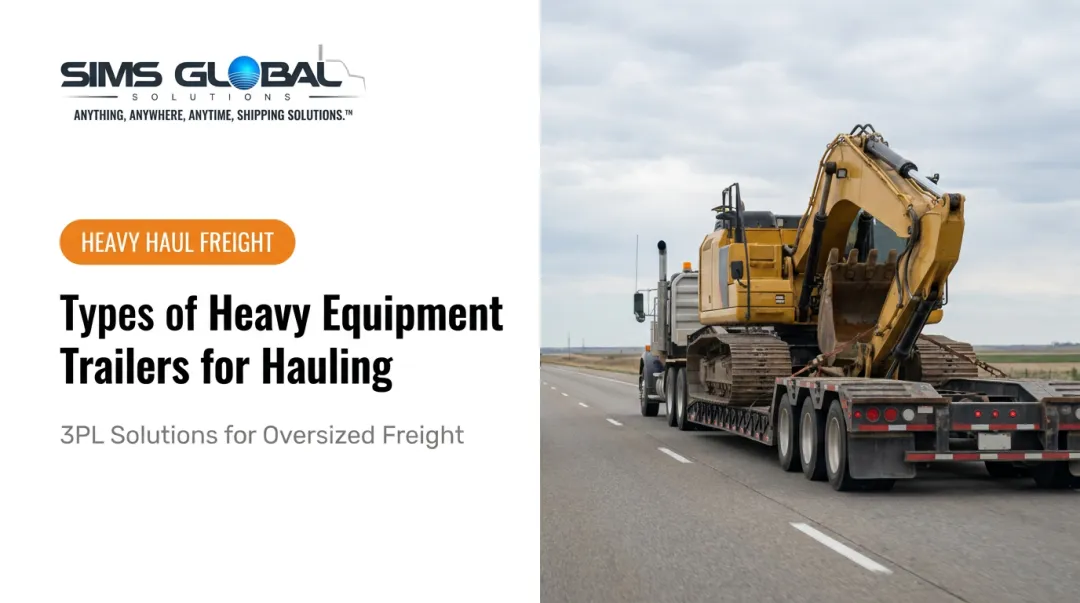
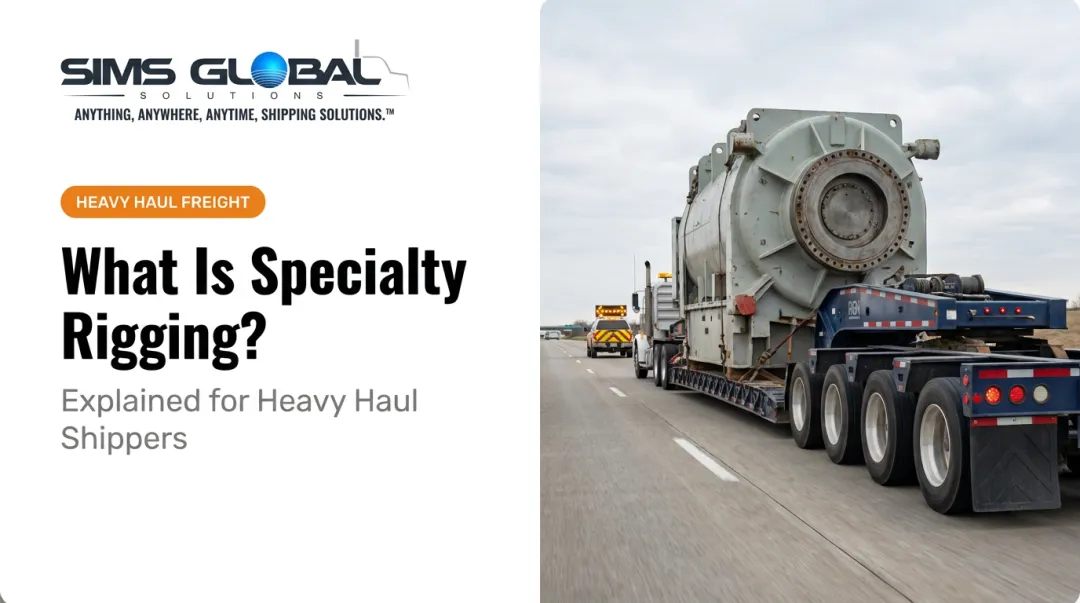
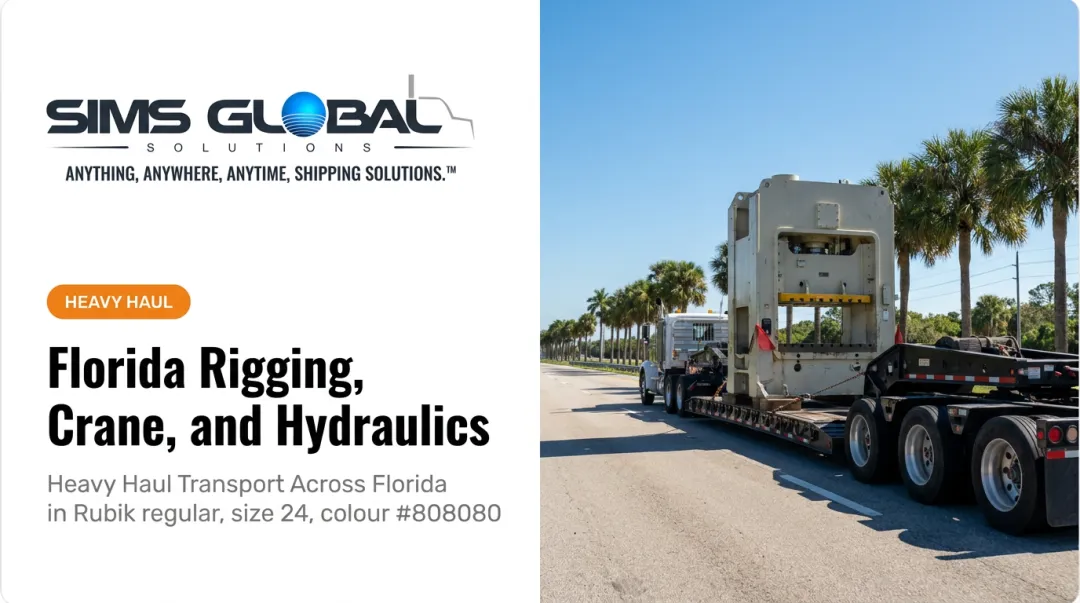
- Company-owned heavy-haul assets: RGN, lowboy, and multi-axle trailer capacity for oversized rigging equipment and machinery
- SimsTrak Transportation Management System: real-time GPS tracking so contractors know exactly where their equipment is relative to the delivery window
- A+ rated supplemental cargo insurance for high-value equipment in transit
- Dedicated operations support covering equipment selection, route planning, permitting, and en-route coordination across all 50 states

A missed delivery window on rigging gear can stall an entire crew. Coordinating that transport with a carrier that understands oversized freight, not just standard truckload, keeps the schedule intact.
Frequently Asked Questions
What is an example of rigging?
A common example is rigging a wire rope sling and shackle to a structural steel beam, then lifting it into place with a crane. The same setup works for hoisting HVAC units or heavy machinery.
Is a rigger a hard job?
Yes. Riggers work in demanding physical conditions, carry significant safety responsibility for every person near a lift, and need technical training or certification to qualify for complex loads.
What are the 4 basic rules of rigging?
Inspect equipment before every use, never exceed the rated load capacity, maintain clear communication throughout the lift, and keep personnel clear of suspended loads.
What is the most commonly used rigging equipment in construction?
Slings, shackles, and hoists see the most use across job sites. They form the core connection system between a load and the crane or hoist doing the lifting.
How often should rigging equipment be inspected?
OSHA requires inspection before use on every shift, plus additional checks as needed during use. Alloy-steel chain slings also need a documented thorough inspection at least every 12 months.
Who handles transporting heavy rigging equipment and machinery to a job site?
Moving oversized rigging equipment requires an experienced heavy-haul carrier with the right trailers, permits, and route planning. Sims Global Solutions provides heavy-haul trucking through its own fleet and a nationwide carrier network.