Introduction
Every non-perishable shipment moves one of two ways: by truck for the entire haul, or via intermodal, a rail-and-truck combination. Trucks carried an estimated 11.27 billion tons of U.S. domestic freight in 2024 — about 72.7% of the nation's total freight weight, according to the American Trucking Associations.
Intermodal service handles a large share of the remainder, especially on long-haul lanes. Yet picking the wrong mode is costly: it can inflate freight spend, blow through delivery windows, or expose freight to extra handling and damage risk.
This guide breaks down what intermodal and dry van actually are, where each one wins, and how to decide between them without guessing.
Key Takeaways
- Intermodal blends rail and truck drayage for long-haul, cost-driven freight.
- Dry van keeps freight in one truck for faster, direct door-to-door delivery.
- Intermodal usually wins on cost-per-mile past 500 miles; dry van wins on speed.
- Distance, urgency, and freight value should drive your mode decision, not habit.
- Many shippers switch between both modes depending on lane, season, and fuel prices.
Intermodal vs Dry Van: Quick Comparison
Before diving deep into each mode, here's how they stack up across the factors that matter most to shippers.
| Factor | Intermodal | Dry Van |
|---|---|---|
| Cost | Lower cost-per-mile on long hauls; rates ran 10%-20% cheaper than truckload in 2024-2025 | Higher cost-per-mile, but no rail handoff fees, chassis charges, or ramp dwell time |
| Transit Time | Longer overall transit; rail scheduling and drayage on both ends add days | Faster and more predictable with one truck, one driver, minimal handoffs |
| Flexibility & Accessibility | Limited to lanes with rail ramp access and container availability | Reaches virtually any dock nationwide, no rail dependency required |
| Equipment & Capacity | Relies on rail-owned containers and chassis pools that tighten during peak season | Draws from a larger trailer pool across carrier and broker networks, easing short-notice sourcing |
| Environmental Impact | ~20.72g CO2 per ton-mile, per EPA SmartWay's 2024 tool | ~108g CO2 per ton-mile midpoint for non-SmartWay truckload |
Rate data comes from FreightWaves' Intermodal Contract Savings Index; emissions figures are from EPA SmartWay's 2024 Logistics Tool.
What Is Intermodal Shipping?
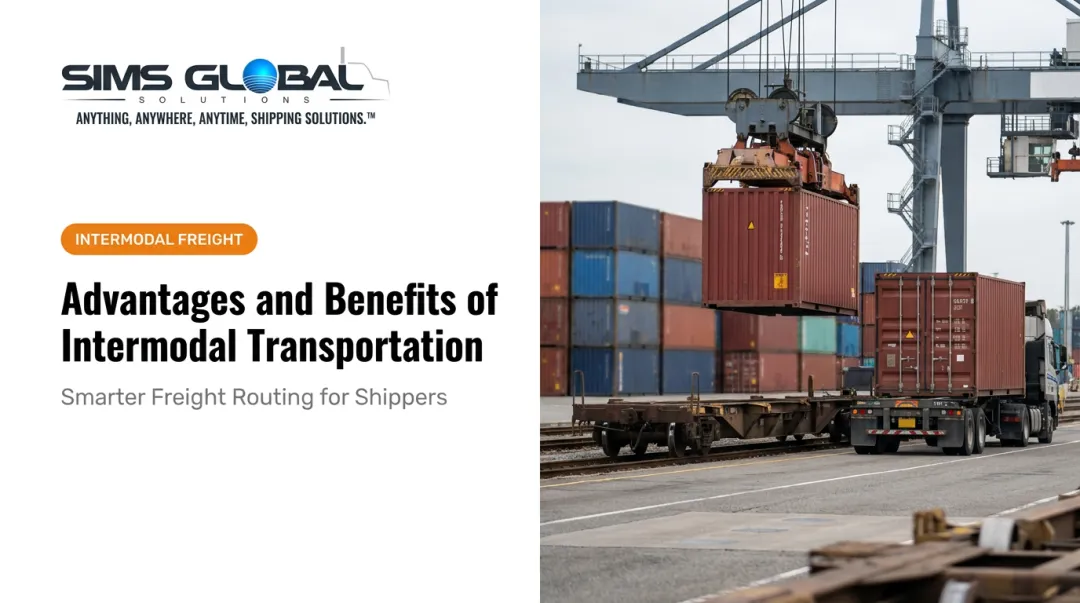
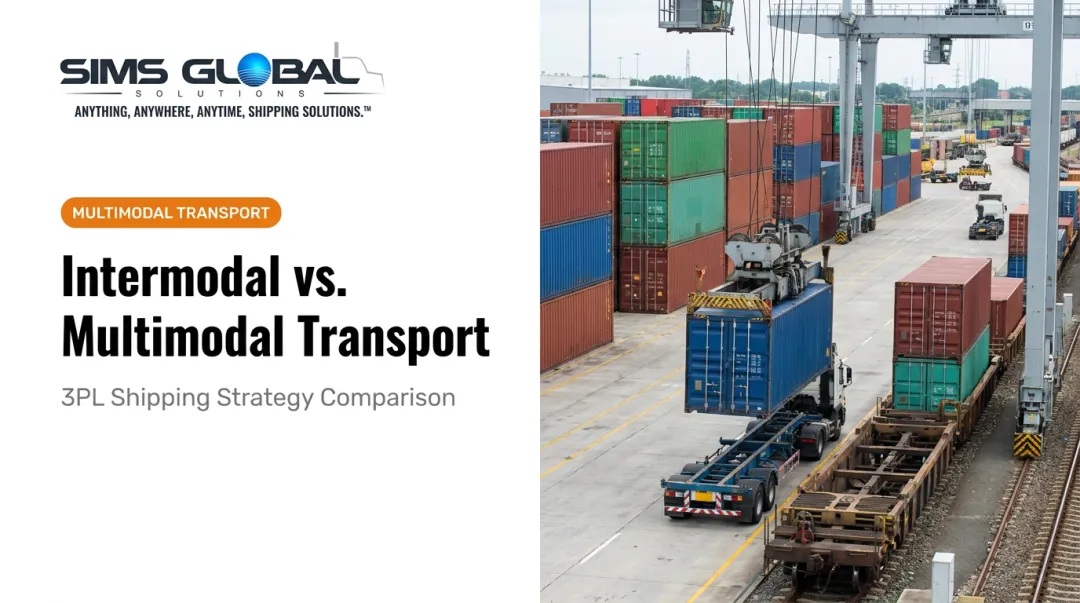
Intermodal freight moves in a standardized container that transfers between rail and truck without anyone touching the cargo inside. A truck drays the container to a rail ramp, the railroad hauls it across the long-haul portion, and another truck drays it to the final dock. The box never opens in between.
Why shippers use it:
- Rail moves freight more fuel-efficiently over long distances, which translates into savings on lanes over 500 miles.
- It sidesteps highway congestion and driver-availability crunches that hit dry van capacity hardest.
- It offers an alternative capacity source when truckload rates spike during peak shipping season.
Domestic intermodal volume is also growing. The Intermodal Association of North America (IANA) recorded 8,472,063 North American domestic-container moves in 2024, up roughly 5.3%-5.4% year over year, with Q4 2024 alone posting a 6.5% increase.
Two variations matter here:
- Domestic intermodal uses 53-foot containers on flatcars for U.S.-only moves.
- International ocean intermodal uses 20- or 40-foot ocean containers that continue inland by rail after arriving at a port.
Use Cases of Intermodal
Intermodal fits best when your freight has a flexible delivery window and travels a long distance. Think 500+ mile lanes where a few extra days in transit don't hurt your operation.
Industries that lean on intermodal heavily include:
- Big-box retail replenishment, where distribution centers restock on a predictable cycle
- Non-perishable consumer goods, from paper products to packaged foods
- Manufacturing inputs that feed production lines on a longer planning horizon
Kimberly-Clark expanded its intermodal usage from 42,000 loads in 2006 to 95,500 loads in 2013, according to EPA's SmartWay program.
That shift delivered an estimated $355 million in cumulative transportation-cost savings and cut diesel use by 62 million gallons.

At Sims Global Solutions, intermodal sits alongside truckload, LTL, and drayage as part of the multi-modal toolkit shippers can tap through the company's carrier network. This gives retail and consumer goods clients a cost lever on long-haul lanes without giving up visibility.
What Is Dry Van Shipping?
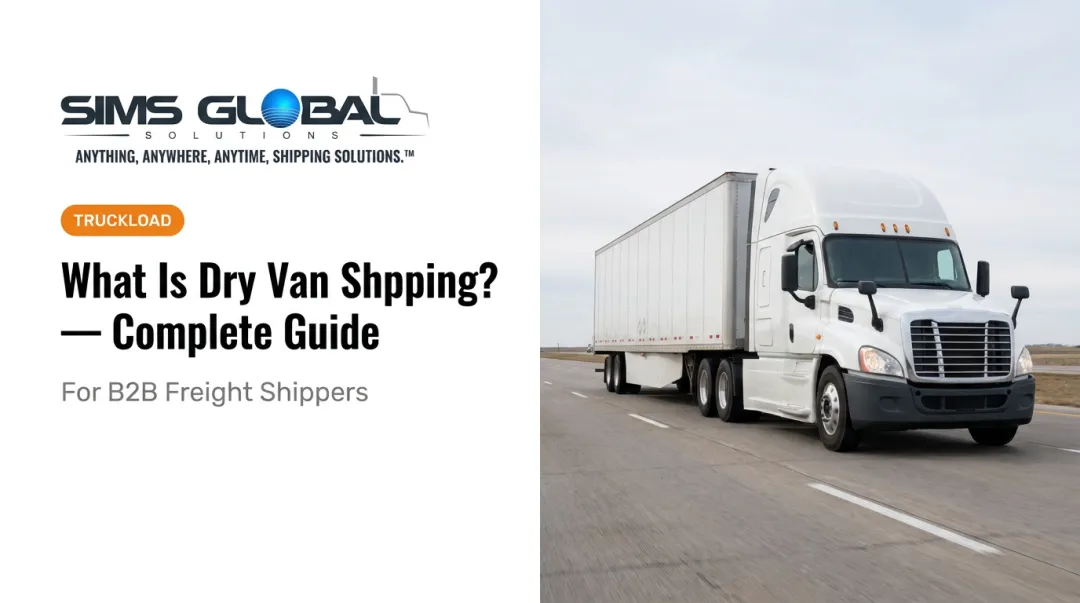
Dry van shipping uses an enclosed, non-refrigerated trailer, most commonly 53 feet long, hauled by a single truck from pickup to delivery. There's no mode transfer, no rail ramp, no container swap. The trailer that picks up your freight is the trailer that drops it off.
Why manufacturers and retailers rely on it:
- The enclosed trailer protects cargo from weather and reduces theft exposure compared to open-deck freight.
- Point-to-point routing means faster, more predictable transit than any multi-leg move.
- Dry van equipment is the most widely available trailer type in North America, which makes short-notice capacity easier to find.
That widespread availability extends to the equipment itself, which comes in a few configurations.
Trailer variations include:
- 53-foot standard trailers, the workhorse of the industry
- 28-foot "pup" trailers, often paired in tandem for LTL networks
- Straight or box trucks, used for local and regional delivery runs
Use Cases of Dry Van
Dry van earns its keep on short-to-medium haul, time-critical freight and just-in-time manufacturing supply chains where a missed window shuts down a production line.
Industries where dry van dominates:
- E-commerce fulfillment, where speed to the distribution center matters
- Automotive parts, feeding assembly plants on tight schedules
- Medical device manufacturing, where consistency and protection are non-negotiable
- Event logistics, where a single delay can cancel a show
Truckload service also carries a real reliability bar. Transport Topics reports that shippers commonly require an **87% on-time performance standard for prepaid truckload shipments**. A 2024 Triumph benchmark put truckload's composite service score in the 85-86 range for the first half of the year. Dry van's single-trailer, no-handoff model is a big reason it can hit those numbers consistently.
For time-sensitive freight, this is where Sims Global Solutions' asset-based fleet and broker network of over 150,000 vetted carriers come into play, giving shippers a direct route to capacity without waiting on rail ramp schedules.

Intermodal vs Dry Van: Which Should You Choose?
There's no universal answer here. The right mode depends on a handful of factors you should weigh for every shipment, not just once per contract cycle.
Factors to evaluate:
- Distance - Under 500 miles generally favors dry van; over 500 miles starts favoring intermodal.
- Time sensitivity - Hard delivery windows push you toward dry van's direct routing.
- Fuel price volatility - Rising diesel costs widen intermodal's cost advantage.
- Freight value and fragility - High-value or high-touch freight often does better with fewer handoffs.
- Budget flexibility - If cost matters more than speed, intermodal usually wins on long lanes.
Quick rule of thumb:
Choose intermodal when you're optimizing for cost on a flexible-timeline, long-haul lane. Choose dry van when speed, direct routing, or careful handling matters more than shaving pennies per mile.
The Kimberly-Clark case above shows what's possible when a shipper commits to intermodal at scale, but most companies don't operate at that volume. What they need instead is the ability to compare both options lane by lane, shipment by shipment.
That's the gap a multi-modal freight partner fills. Sims Global Solutions runs both intermodal and dry van/truckload capacity through its proprietary SimsTrak TMS, giving shippers rate and capacity visibility across modes instead of locking into one option out of habit. Rather than guessing which mode fits a given lane, you get a side-by-side view and let the numbers decide.
Ready to compare modes? Reach out to a Sims Global Solutions freight expert for a side-by-side rate comparison across intermodal and dry van before your next shipment moves.
Conclusion
There's no permanent winner between intermodal and dry van. The right call depends on your specific lane, your timeline, and your budget that week. Many experienced shippers don't pick one mode and stick with it. They shift between intermodal and dry van as fuel prices and capacity change.
That flexibility pays off in lower freight costs and more predictable transit, with fewer damage claims along the way. Working with a partner like Sims Global Solutions, which handles both modes under one roof instead of juggling separate rail and trucking contacts, removes the friction of switching when conditions shift.
Frequently Asked Questions
What is an intermodal van?
An "intermodal van" typically refers to the domestic container used in combined rail-and-truck shipments, not a standard over-the-road dry van trailer. These containers sit on rail flatcars for the long-haul leg , and trucks dray them at each end.
What is the difference between intermodal and trucking?
Intermodal uses rail for the long-haul portion and trucks only for first- and last-mile drayage. Traditional trucking, like dry van, uses one truck for the entire door-to-door journey with no rail involved.
Is intermodal cheaper than trucking?
Usually, yes, especially on long hauls and when fuel prices climb. Domestic intermodal has averaged 10%-20% lower contract costs than truckload recently, though added drayage and rail dwell time can eat into savings on shorter lanes.
How long does intermodal shipping take compared to dry van?
Intermodal typically takes longer because it involves rail scheduling plus two separate drayage legs. Dry van offers faster, more direct point-to-point delivery with no handoffs in between.
Can you switch between intermodal and dry van for the same shipment?
Shippers often alternate modes based on season, fuel costs, and urgency rather than sticking to one permanently. Working with a multi-modal broker like Sims Global Solutions makes that switch seamless instead of requiring separate carrier relationships.
What size is a standard dry van trailer?
The most common dry van trailer measures 53 feet long and typically holds 42,000 to 45,000 pounds of cargo across roughly 26 standard pallets. Manufacturer payload ratings can run higher, but legal highway limits and tare weight bring the practical range down.