
Introduction
Your delivery volume just doubled. Customers want faster turnarounds, your current vehicle can't keep up, and now you're staring at two options: a box truck or a Sprinter van.
This decision affects more than parking convenience. It shapes your cargo capacity, licensing requirements, fuel bills, and whether your drivers can even legally operate the vehicle you choose.
Get it wrong, and you're either paying for space you don't need or turning away freight you can't fit.
This guide breaks down the real differences between box trucks and Sprinter vans across cost, capacity, and use case. Match the vehicle to your actual shipment needs, not just your budget.
Key Takeaways
- Cargo capacity and licensing separate these vehicles more than anything else
- Sprinter vans win for urban, last-mile, and light-freight runs
- Box trucks handle palletized, bulky, or heavier regional freight better
- Some 26-foot box trucks still fall under the CDL weight threshold
- Businesses unsure of their fit can access both vehicle types through an asset-based freight partner
Box Truck vs Sprinter Van: Quick Comparison
Here's the side-by-side breakdown before we go deeper into each vehicle.
| Factor | Box Truck | Sprinter Van |
|---|---|---|
| Upfront cost | Higher; chassis-cab pricing starts near $69,995 before the box is added | Lower; complete cargo van starts around $48,990 |
| Cargo capacity | 12-26 ft enclosed box; supports pallets | 319-533 cu. ft. depending on roof height and wheelbase |
| Payload | Chassis body-payload allowance up to roughly 16,264 lbs (before box/equipment) | 3,704-6,812 lbs depending on configuration |
| Licensing | May require a CDL at heavier GVWR classes | Drivable with a standard license |
| Maneuverability | Wider turning radius, tougher in tight streets | Nimble, easier to park in dense areas |
The cost gap widens once you factor in insurance. Box truck insurance runs $231 to $950 per month, or $2,772 to $11,400 annually, depending on truck size, coverage, and driving history.
Licensing is where the math gets specific, too. Federal rules set the Class B CDL threshold at 26,001 lbs GVWR or GVW, whichever is greater, for a single vehicle. Some 26-ft-capable box truck chassis sit at exactly 25,950 lbs, keeping them just under that line on weight alone.
What is a Box Truck?
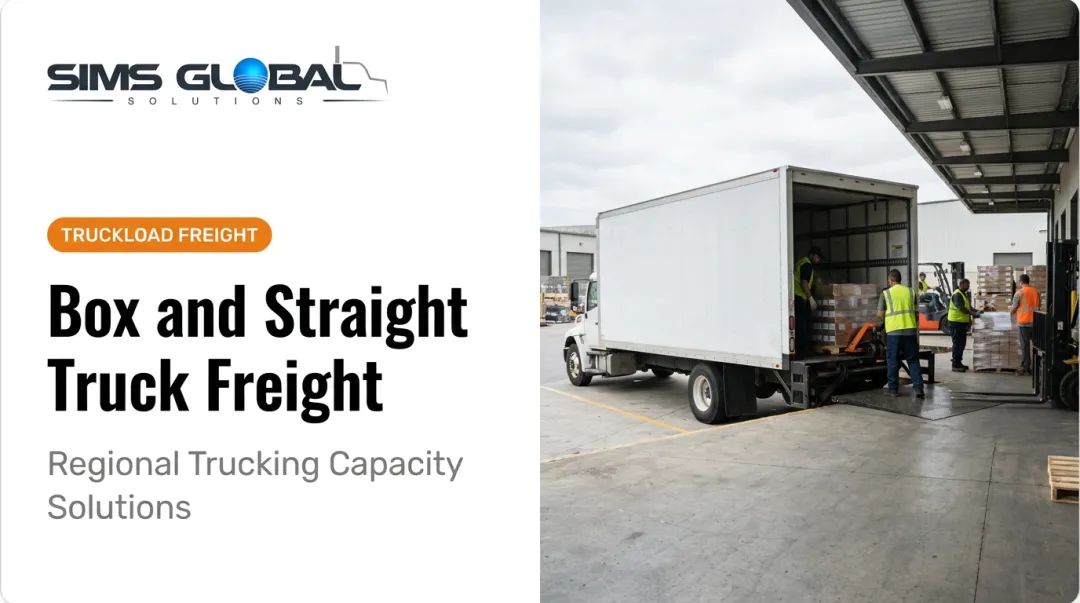
A box truck is a straight truck with an enclosed cargo box mounted directly on the chassis. There's no separate trailer to hitch, no articulation point to manage. It's one unit, built for hauling bulk and palletized freight without weather exposure.
The design has real advantages:
- Weatherproof cargo space that protects goods from rain, wind, and road grime
- Higher payload capacity than a van, especially in 20-26 ft configurations
- Roll-up rear doors that speed up loading and unloading
- Dock-height compatibility for warehouses running forklift operations
Box trucks typically come in 12, 16, 24, and 26-foot lengths. A 12-footer suits small local moves; a 26-footer handles multi-pallet regional freight. The trade-off is fuel consumption, maintenance costs, and the possibility of CDL requirements once fleets cross into heavier GVWR classes.
Use Cases of Box Trucks
Box trucks dominate industries that move bulk goods on a regional scale:
- Moving and delivery companies handling furniture and appliances
- Wholesale distributors restocking retail locations
- Equipment haulers transporting machinery or materials
- Warehousing and fulfillment operations running scheduled routes
The regional-freight fit shows up in real fleet data: one Texas delivery operation, for example, runs more than 100 Isuzu 20-ft box trucks, with drivers covering 100 to 300 miles per day on standardized routes. That kind of mileage and load consistency is exactly where box trucks earn their higher upfront cost back.

What is a Sprinter Van?
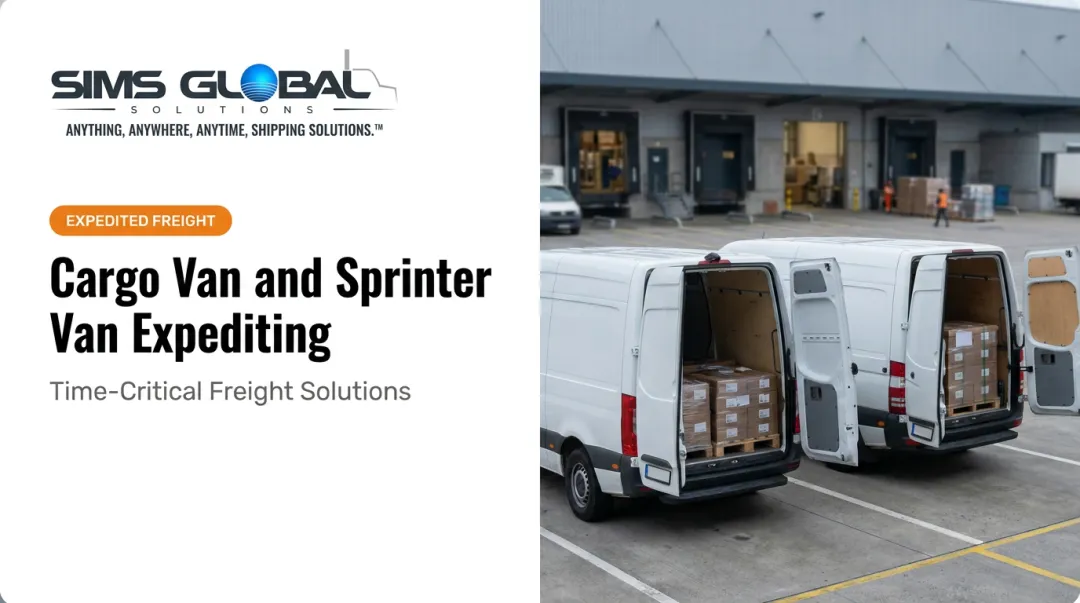
A Sprinter van is a tall, narrow cargo van built for frequent stops and tight city streets. Unlike a box truck, the driver steps straight from the cab into the cargo area, no walking around to a separate box.
That layout matters for last-mile and light-freight work:
- Better fuel efficiency than a heavier box truck
- Easier parking in dense urban environments
- Lower operating costs across insurance and maintenance
- Faster cab-to-cargo access during multi-stop routes
Configuration changes the numbers considerably. A 144-inch wheelbase standard-roof Sprinter offers 319 cu. ft. of cargo space and roughly 4,211 lbs of payload. A 170-inch extended high-roof version jumps to 533 cu. ft. but drops payload to about 3,704 lbs.
The limitation is straightforward: Sprinter vans can't handle oversized or heavy bulk freight, no matter the configuration.
Use Cases of Sprinter Vans
Sprinter vans show up wherever speed and frequency matter more than volume:
- Couriers and e-commerce last-mile providers
- HVAC, electrical, and plumbing trade fleets
- Mobile service businesses needing daily multi-stop routes
- Time-sensitive small-parcel delivery operations
Fleet history backs the fuel-savings case. Frito-Lay added more than 1,200 Sprinters to its route fleet and saw 17 MPG, over 50% better than the vehicles they replaced. Cox Enterprises reported an even bigger jump, an 85% MPG increase, after converting more than 1,500 service vans to Sprinters.
Box Truck vs Sprinter Van: Which Is Better for Your Business?
The right answer depends on four factors:
- Cargo weight and volume - palletized or bulky loads favor box trucks
- Delivery radius - regional hauls suit box trucks; urban routes suit Sprinter vans
- Driver licensing - heavier box trucks may require a CDL-holding driver
- Available budget - Sprinter vans cost less upfront and to operate
Choose a box truck when you're hauling palletized freight over regional distances or need dock-height loading at a warehouse.
Choose a Sprinter van when speed, fuel savings, and access to tight urban delivery points matter more than raw capacity.
Many growing businesses don't pick just one. They blend both vehicle types, or they skip vehicle ownership altogether and lean on a freight partner's carrier network.
Sims Global Solutions, for example, combines an owned heavy-haul fleet with access to over 150,000 vetted carriers. This lets shippers pull the right capacity, whether that's straight-truck delivery, LTL, or full truckload, without buying a single vehicle.
Real-World Example: Matching Vehicle to Shipment Needs
Picture a regional furniture retailer that bought two 26-ft box trucks to handle deliveries across three states. Order volume grew, but so did the number of small, single-item urban drops mixed in with bulk shipments.
The box trucks struggled with those small urban stops:
- Tight alleys slowed delivery windows
- Fuel costs climbed from unnecessary trips in an oversized vehicle
- Drivers burned hours navigating routes a smaller van would handle in half the time
The fix wasn't buying a Sprinter van outright. Instead, the retailer split its freight: bulk regional shipments stayed on the box trucks, while small urban drops moved through a logistics partner with access to lighter-duty capacity on demand.
The result was fewer missed delivery windows and lower cost-per-shipment on the urban routes, without adding a second vehicle class to manage and maintain.
Working with a partner like Sims Global Solutions makes that kind of split possible. SimsTrak and the carrier network match each shipment to the right equipment, instead of forcing every load onto the same truck.

Conclusion
Neither vehicle wins outright. A box truck makes sense for bulky, regional, palletized freight. A Sprinter van makes sense for fast, urban, light-parcel routes. The right call depends on what you're shipping, how far it's going, and where your business stands today.
Choosing correctly cuts operational costs and keeps deliveries reliable. If you're not ready to commit to a fleet purchase, or you manage a mix of freight types, a 3PL like Sims Global Solutions gives you access to nationwide capacity. Whether you need LTL, full truckload, or expedited freight, you get the coverage without owning a fleet.
Frequently Asked Questions
Is it better to get a Sprinter van or box truck?
It depends on your cargo. Sprinter vans suit light, urban, time-sensitive loads, while box trucks handle bulkier or heavier freight more efficiently.
Is a cargo van easier to drive than a box truck?
Yes. Sprinter vans have a lower step-in height and more car-like handling, making them easier to maneuver than a box truck's wider turning radius.
What is bigger than a Sprinter van?
Box trucks, straight trucks, and semi-trucks all exceed a Sprinter van's cargo volume and weight capacity.
What's the most reliable box truck?
Reliability varies by maintenance history and manufacturer, but Isuzu's NRR diesel has won multiple industry fleet awards, including Work Truck's 2025 Medium-Duty Truck of the Year.
Do you need a special license to drive a box truck?
License requirements depend on the vehicle's GVWR. Trucks under roughly 26,000 lbs typically require only a standard license; heavier models may require a CDL.
Which option is more cost-effective for a small business just starting out?
Sprinter vans generally have lower upfront and operating costs, making them a common starting point before scaling to box trucks or outsourcing to a freight partner.